

Awdal’s Stance: A Rejection of Relations with Israel and its Broader Geostrategic and Security Implications:
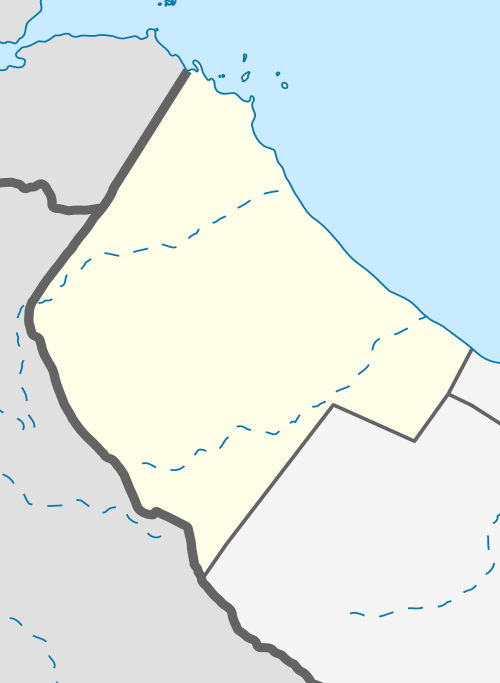
The Awdal region of Somalia occupies a unique and tense position within the Horn of Africa’s fractured political landscape. De jure, a constituent federal member of Somalia, it exists de facto under the administration of the self-declared, unrecognized Republic of Somaliland. It is from this contested space that a forceful political declaration emerges: Awdal’s ideological and political rejection of any relations with Israel and, pointedly, its “Arab vassals.” This position is framed as a defense of continental (African Union), global (UN), and Islamic values (OIC), particularly the Palestinian cause. However, beneath this principled stance lie profound and evident security concerns and geostrategic risks. Recognizing these dangers is essential to understanding why Awdal’s declaration is not merely a foreign policy preference but a perceived existential necessity.
The Core Principled Stand:
At the heart of Awdal’s rejection of relations with Israel is a triad of aligned commitments that reflect its political identity and strategic calculations. First, awaiting an Inter- Somali agreed solution, Awdal reaffirms its loyalty to the Federal Republic of Somalia, whose constitution and long-standing diplomatic tradition categorically reject normalization with Israel in the absence of a just solution for Palestine. This stance serves not only as a declaration of allegiance to the Somali national project but also as a counter-narrative to Somaliland’s unilateral secessionist ambitions, which have explored back-channel communications with Israel. By taking this principled stand, Awdal asserts its Somali identity and positions itself as a defender of national unity in the face of existential dangers due to the blind actions of Hargeisa presidents.
Second, Awdal aligns itself with the predominant consensus within the Islamic and Arab world, framing its rejection of relations with Israel within a broader civilizational and religious context. The Palestinian struggle is viewed as a central justice issue, and Awdal’s stance resonates with the sentiments of millions who see solidarity with Palestine as an essential aspect of Islamic identity. This alignment not only bolsters Awdal’s legitimacy among its constituents but also enhances its standing within the UNO, OIC-the Organization of Islamic Cooperation and the African Union (AU).
Third, Awdal’s position appeals to the principles of international order, referencing the UN and AU’s support for Somali sovereignty and Palestinian self-determination. By invoking these authoritative bodies, Awdal seeks to legitimize its stance on multiple platforms, reinforcing its claim to be a responsible actor in a complex geopolitical landscape.
The Evident Security Dangers and Regional Ramifications:
While Awdal’s principled rejection of relations with Israel is politically potent, it is acutely driven by an assessment of severe security and strategic dangers that would arise from any alternative path.
1. Destabilization of Somalia’s Fragile Unity:
Any move by the de facto administration in Somaliland to formalize ties with Israel would be interpreted by all Somali as a profound act of aggression and a secessionist consolidation. The Federal Government of Somalia (FGS) would be compelled to respond, potentially escalating from diplomatic condemnation to more active measures to assert its sovereignty. This could reignite open conflict between Somaliland and Somalia, with Awdal, as a border region with complex loyalties, becoming a likely flashpoint. For Awdal, being caught in a renewed Somali civil war, fueled by an external geopolitical trigger like Israel, represents a primary security nightmare.
2. Provocation of Militant Islamist Groups:
Al-Shabaab, which remains a potent threat across Somalia, has consistently used anti-Israel and anti-West rhetoric to mobilize support and justify its violence. An open relationship between Somaliland (which controls Awdal) and Israel would provide Al-Shabaab with a powerful new propaganda tool. They could frame Somaliland authorities and their supporters as “apostate agents” of a Zionist-Crusader alliance, justifying increased terrorist attacks within the region. Awdal, perceived as complicit by association, would face a significantly heightened risk of infiltration, bombings, and assassinations, destabilizing any semblance of local governance and security.
3. Regional Geostrategic Entanglement and Proxy Dynamics:
The Horn of Africa is already a theatre for complex rivalries involving Gulf States (Saudi Arabia, UAE, Qatar, Turkey, Egypt and global powers). Israel’s deepening engagement in the region, often aligned with certain Gulf interests, adds another volatile layer. If Somaliland-Israel relations advanced, it could force a realignment of regional dynamics. Egypt, Turkey, Eritrea and Ethiopia might see strategic opportunities or threats, complicating their own regional calculus. Gulf States could split further, with some supporting Somalia’s (and by extension Awdal’s) stance and few others tacitly supporting the Somaliland-Israel axis for their own strategic reasons. Awdal would risk becoming a pawn in a proxy conflict, its territory and politics shaped by external powers with little regard for local welfare.
4. Existential Threat to Awdal’s Political Autonomy:
For Awdal’s own political movements, which often seek greater self-determination within an Independent Somaliland or federal Somalia, association with a Somaliland-Israel pact would be disastrous. It would isolate Awdal from Somaliland or the Somali national project, alienating potential allies in Mogadishu and other federal states, it would legitimize Somaliland’s crackdown on dissent, with authorities in Hargeisa intensifying suppression under the guise of combating “foreign-inspired” instability. This scenario would undermine Awdal’s moral legitimacy, severing its connection to the powerful Islamic solidarity that provides a degree of political protection and rhetorical strength.
Conclusion: A Strategic Imperative Born of Peril:
Awdal’s unequivocal rejection of [any] relations with Israel is therefore far more than a statement of ideological solidarity; it is a preemptive security doctrine. In a context of legal ambiguity, existential threats from terrorism, regional power games, and the ever-present risk of interstate war between Somaliland and Somalia, normalization with Israel is perceived not as a diplomatic opportunity but as a trigger for catastrophic instability.
The declaration serves as a deliberate firewall. By publicly anchoring itself to Somalia’s official policy, the UN and AU’s sovereignty principles, and the Islamic world’s consensus on Palestine, Awdal seeks to inoculate itself against the evident dangers of geostrategic entanglement. It is an attempt to maintain a stabilizing identity in a deeply unstable environment, arguing that the region’s vital interests—indeed, its very security and political future—are inextricably linked to rejecting a relationship that would unleash unpredictable and dangerous forces. In the fraught calculus of the Horn of Africa, for Awdal, a two stage negotiated win-win settlement or a principled non-recognition is the highest form of risk mitigation. This means to start with an inclusive negotiations within Somaliland, and on agreed stance to resume or proceed to Somalia-Somaliland dialogue or negotiations.