
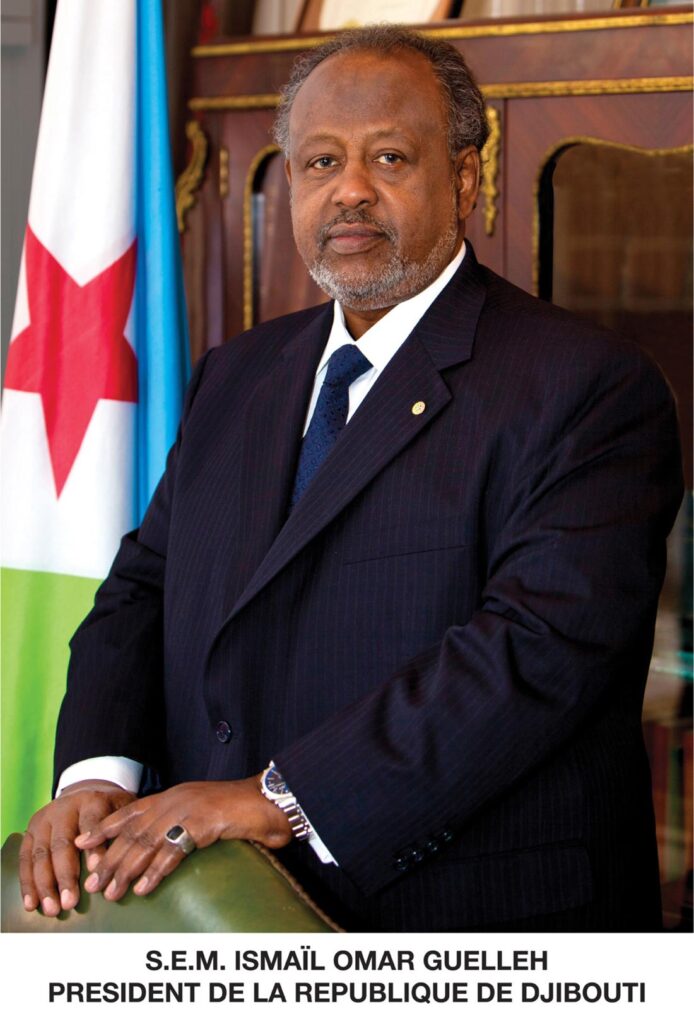
DJIBOUTI CITY — In a year when the world’s most vital waterways were set ablaze and civil war tore apart its neighbors, the Republic of Djibouti did something that geopolitical analysts had unanimously declared impossible: it held a presidential election on time, in peace, without a single reported act of violence.
Polling stations opened at 7 a.m. on the second Friday of April, exactly five years after the last vote. By nightfall, with 98% of ballots counted, incumbent President Ismail Omar Guelleh had secured a sixth term with over 75% of the vote. His sole challenger, Mohamed Farah Samatar of the Coalition for Democratic Initiatives (CDI), issued a concession statement before midnight, congratulating the president and urging calm.
“There was no disturbance. Not one,” said an election observer from the African Union, her voice tinged with disbelief. “In any other year, this would be notable. In 2026, it is a miracle.”
A nation under siege
To understand why this election “should not have been possible,” one must look at the map.
To the East, the Strait of Hormuz has been effectively sealed since February, following the escalation of the Trump-Netanyahu administration’s military confrontation with Iran. Oil prices have quadrupled. Global shipping has been rerouted, where rerouting is possible.
To the North, the Bab el-Mandeb Strait—Djibouti’s own maritime throat—is partially closed. Houthi-affiliated naval units, emboldened by the regional power vacuum, have rendered transit hazardous. The port of Doraleh, the nation’s economic jugular, is operating at diminished capacity.
On land, the news is worse. Ethiopia, Djibouti’s landlocked giant and primary client, has fractured into civil war. The federal government in Addis Ababa controls barely half the country. Along Djibouti’s western border, Afar militias clash with Issa forces in a spillover of Ethiopia’s ethnic conflict.
To the south, the breakaway administration in Somaliland, openly hostile to Djibouti, has mobilized troops along the border amid a fresh Issa-Gadabursi crisis.
“By all rational forecasts, Djibouti should have postponed the election, declared a state of emergency, or collapsed into ethnic violence,” said a Horn of Africa analyst formerly with the Jamestown Foundation. “Instead, they did the opposite. They held the vote as a ritual of defiance.”
The captain versus the challenger
Critics abroad have long accused President Guelleh, 78, of engineering a political system without meaningful alternation of power. His People’s Rally for Progress (RPP) has dominated every parliament since independence from France in 1977. A 2010 constitutional reform removed presidential term limits, and Guelleh won his fifth term in 2021 with over 98% of the vote—a figure widely dismissed as inflated.
But 2026 was different. The challenger, Mohamed Farah Samatar, is no obscure dissident as some
commented. A former civil servant in aviation under Guelleh himself, Samatar hails as Guelleh from prominent and influential parents and commands genuine grassroots support in the districts. His campaign rallies drew thousands.
Yet the result was never close. Provisional results show Guelleh winning every region in Djibouti districts.
“In a normal year, a sixth term would feel like a coup against democracy,” admitted a Western diplomat in Djibouti City, speaking on condition of anonymity. “But this is not a normal year. The people looked at the fire outside their borders and chose the captain they know. Samatar understood that. His concession was not weakness. It was political maturity.”
The Djibouti exception
Perhaps the most astonishing feature of the 2026 election is what did not happen.
Across the border in Ethiopia, Afar and Issa communities are killing each other over grazing land and political representation. In Somaliland, the Issa-Gadabursi conflict has displaced thousands. But inside Djibouti’s borders, members of the same waring clans voted side by side in orderly queues. No militias. No roadblocks. No revenge attacks.
“The difference is trust,” said, a political science professor at the University of Djibouti. “Our ethnic communities have learned that their survival depends on a central state that distributes port revenues and foreign military rents. When the region burns, that bargain becomes more precious, not less. The election was a reaffirmation of that bargain.” It was, as well, rewarding a merit for a leader tested in past achievements amid tumultuous mandates. In Democracy voters, the people, have the say, not whistle blowers, not false alerters.
Djibouti hosts five foreign military bases—France, the United States, China, Japan, and Italy. Those bases continued operations throughout the crisis, injecting hundreds of millions of Dj franc into the local economy even as global trade faltered.
“That’s the dirty secret,” said Horton. “Djibouti’s stability is not purely organic. It is underwritten by foreign powers who need a safe foothold in a collapsing region. The election happened not despite the chaos, but partly because the chaos made Djibouti too valuable to fail.”
What comes next
President Guelleh, speaking from the presidential palace after results were certified, struck a characteristically low-key tone.
“The world expected us to fall,” he said. “We voted instead. This is not a victory of one man over another. It is a victory of patience over panic.”
For Samatar, the loss may prove a beginning rather than an end. By conceding gracefully while the nation was under threat, he earned something his predecessors lacked: credibility as a loyal opposition.
“He will run again in 2031,” predicted Hared. “And if by then the region has stabilized, Djibouti may finally have a real contest. But not this year. This year, survival was on the ballot. And survival won.”
As night fell over the Gulf of Aden, the only sound was the call to prayer mingling with the distant thrum of Chinese naval vessels patrolling the broken strait. The election that should not have happened was over. Djibouti, for one more day, remained standing.
The Horn of Africa Channel editors join Mr Samatar, congratulating the president for the 2026 contest victory and hope him utmost success in delivering Djibouti out of the dangerous crisis our world is witnessing.