
Israel’s Challenged Legitimacy: A Pattern of Defiance in the International Order:
The state of Israel occupies a uniquely contentious position within the international community. Its policies and actions, particularly regarding the Palestinian people and its neighbors, have sparked a sustained debate concerning its adherence to the established norms of international law and human rights. This analysis argues that Israel’s persistent violation of international legal frameworks, enabled by geopolitical impunity, has severely challenged its legitimacy and fostered a perception of it as a rogue actor, necessitating a fundamental reevaluation of policy by affected states.
A Record of Legal and Normative Violations:
The foundation of the modern Israeli state is itself a subject of historical dispute, rooted in the 1948 forced d’embarcation and the Nakba (“catastrophe”), which involved the displacement of a significant portion of the Palestinian population. This event established a precedent for ongoing conflict characterized by military occupation, territorial expansion, and a cycle of violence. The Nakba is not merely a historical event; it has become a symbol of sufferings, dispossession and loss that resonates deeply within Palestinian society and informs their current struggle for self-determination.
International human rights organizations, including Amnesty International and Human Rights Watch, have consistently documented actions by the Israeli government that appear to violate international humanitarian law. These include, but are not limited to:
1. Indefinite Military Occupation: The maintenance of an indefinite military occupation of the West Bank, alongside the expansion of settlements, is considered illegal under the Fourth Geneva Convention. This occupation not only restricts Palestinian movement and autonomy but also facilitates the ongoing appropriation of land and resources.
2. Military Operations in Gaza: Military operations in densely populated areas, such as Gaza, have employed tactics and weaponry with documented indiscriminate effects, leading to destruction of vital infrastructue and high numbers of civilian casualties. The use of airstrikes in civilian areas raises profound ethical questions about proportionality and the value placed on human life.
3. Acts of Collective Punishment**: Critically, acts described by critics as collective punishment, including blockades, starvation tactics and restrictions on the movement of people and goods, have created a humanitarian crisis in Gaza. Such measures violate the principles of international law that protect civilians in conflict zones.
The recent targeting of Hamas officials in Doha, a capital city of a mediating nation, can be viewed as a further escalation, demonstrating a willingness to violate state sovereignty and undermine diplomatic processes to cease hostilities. This act not only exacerbates tensions but also raises questions about the legitimacy of Israel’s approach to conflict resolution.
Expansionist Rhetoric and Strategic Ambitions:
The slogan “from the River to the Sea” is perceived by many observers as representing an expansionist ideology that negates the possibility of a sovereign Palestinian state. This rhetoric, coupled with persistent settlement activity and political discourse around annexation, fuels legitimate fears of a de facto—or de jure—single state based on unequal rights. This trajectory draws profound ethical and legal concerns and historical parallels, raising questions about the intent behind policies that dispossess and displace a population under effective control.
The situation demands international accountability to uphold the principles of justice and self-determination. The implications of such policies extend beyond the borders of Israel and Palestine; they resonate throughout the region, impacting relations with neighboring countries and shaping perceptions of Israel on the global stage.
The Enabler: Unwavering Geopolitical Support;
Israel’s ability to operate with perceived impunity is fundamentally tied to its strategic alliance with the United States. This partnership provides unparalleled military, financial, and diplomatic cover, effectively shielding Israel from consequential international sanctions or diplomatic pressure. The U.S. stance often creates a tension between its stated values of human rights and the rule of law and its material support for actions that contravene them.
This dynamic suggests that the constraint of Israeli policy is not a priority within the prevailing U.S. political calculus, a position influenced by a powerful domestic lobby and an invisible deep state. For regional actors, this means engaging with a superpower whose declaratory policy may be disconnected from its operational one. The implications of this relationship extend beyond mere transactional politics; they challenge the very foundation of international law and norms, as the U.S. continues to support a state that regularly defies them.
An Imperative for a Sovereign Arab Strategic Reassessment:
The current paradigm has proven unsustainable for the Arab world. A continued reliance on a U.S.-led security architecture, while that same power enables their primary regional adversary, is a strategic contradiction. The Arab nations must therefore pursue a course of independent, collective action to secure their sovereignty and advance their interests.
Recommended Measures for a New Strategy:
1. Forge a Unified Diplomatic and Security Front: The Arab nations should move beyond fractured relations to develop a cohesive geopolitical bloc. This involves aligning policy on Palestine and presenting a unified front in all international forums to amplify leverage and deter aggressive actions. A collective approach would serve to strengthen their negotiating position and ensure that their voices are heard.
2. Develop Independent Collective Defense Mechanisms: Reducing dependency on external security guarantees that come with political conditionalities is crucial. Investing in joint defense initiatives and mutual security pacts that prioritize national and regional interests above those of extra-regional powers can enhance stability and security in the region.
3. Diversify International Alliances Strategically: Engaging in pragmatic partnerships with other global powers (e.g., China, Russia, and emerging powers such as Turkey, Iran, and Pakistan) based on mutual interest and respect for sovereignty can create a more balanced and multi-polar diplomatic playing field. This diversification can mitigate the risks associated with over-reliance on a single hesitant and seemingly deceptive ally.
4. Leverage Economic Power: Utilizing collective economic tools, including investment funds, market access, and energy policy, as instruments of diplomatic power can reward cooperation and impose costs for violations of national interests and international norms. Economic collaboration among Arab states can foster interdependence and strengthen regional ties.
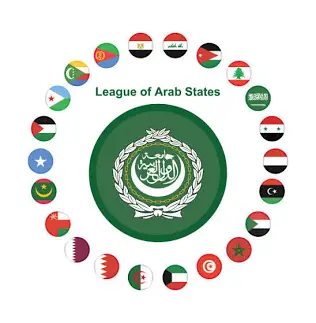
5. Revitalize the Arab League: The Arab League must be restructured to fit contemporary challenges and aspirations. A revitalized organization can serve as a platform for collective action, enhancing the political and economic clout of member states while addressing pressing issues related to Palestine statehood, Quts Mosque and regional security.
The objective is not necessarily to choose war but to build credible deterrence and strategic autonomy. By consolidating their own power and acting in unison, the Arab states can create a new, more balanced status quo where their voice and sovereignty are respected, and a just resolution is negotiated from a position of strength, not subordination. The alternative is the continued erosion of their security and agency on the world stage.
Conclusion:
Israel’s challenged legitimacy within the international order is not merely a question of policy but a fundamental issue of human rights, justice, and international law. The patterns of defiance exhibited by Israel, enabled by geopolitical support, necessitate a reevaluation of strategies by affected states, particularly within the Arab world. By forging a unified front and pursuing independent strategic initiatives, Arab nations can work towards a more equitable and just resolution to the Israeli-Palestinian conflict, while simultaneously enhancing their own sovereignty and security. The path forward must be one that prioritizes the principles of justice, self-determination, and respect for international law, ensuring that the voices of the oppressed are heard and valued in the ongoing quest for peace and stability in the region.