
Part lV: The Philosophical Implications
The warfare we witness today raises profound questions about the nature of civilization and the future of humanity. If the international legal order painstakingly constructed after World War II can be so thoroughly abandoned, what remains to constrain the conduct of war? If the accumulated wisdom of strategic thought can be so completely ignored, what guides the application of military force? If the moral progress that seemed to characterize the late 20th century can be so rapidly reversed, what hope is there for the 21st?
The Illusion of Progress
The 20th century’s great achievement was not technological but moral: the recognition that even war must be bounded by law, that even enemies possess rights, that even in conflict there are limits that cannot be crossed without forfeiting one’s claim to civilization. The Nuremberg trials, the Geneva Conventions, the Universal Declaration of Human Rights—these represented humanity’s determination to learn from its worst catastrophes.
The warfare we witness today suggests that this learning was temporary and superficial. When the pressures of conflict mount, when vengeance demands satisfaction, when dehumanization becomes convenient—the legal and moral constraints dissolve. The progress that seemed so solid reveals itself as fragile, dependent on circumstances that can change rapidly and on commitments that can be abandoned easily.
The Corruption of Language
The conduct of contemporary warfare depends on a systematic corruption of language. Terms are redefined to serve propaganda purposes. “Precision strikes” are claimed for attacks that kill dozens of civilians. “Self-defense” is invoked for offensive operations. “Collateral damage” sanitizes the killing of children. “Terrorists” justifies the targeting of anyone who resists.
This corruption of language serves multiple purposes. It deceives domestic and international audiences about the nature of the warfare being conducted. It protects decision-makers from accountability by obscuring the consequences of their choices. It enables the dehumanization of the enemy by replacing human beings with categories and abstractions. But its ultimate effect is to make the conduct of unlimited warfare possible by making it thinkable.
The Normalization of Atrocity
Perhaps the most disturbing aspect of contemporary warfare is its normalization. Each atrocity prepares the way for the next, each violation of law establishes a precedent for future violations, each dehumanization of the enemy makes further dehumanization easier. The boundaries that once seemed fixed prove to be movable; the limits that once seemed absolute prove to be negotiable.
This normalization occurs through multiple mechanisms. Media coverage, however critical, habituates audiences to images of destruction and death. Political discourse, however condemnatory, accepts the framework within which atrocities occur. International institutions, however principled, prove unable to enforce the laws they were created to uphold. Each failure to respond effectively to atrocity teaches that atrocity carries no consequences, that the laws of war are optional, that might makes right.
Conclusion: The Judgment of History
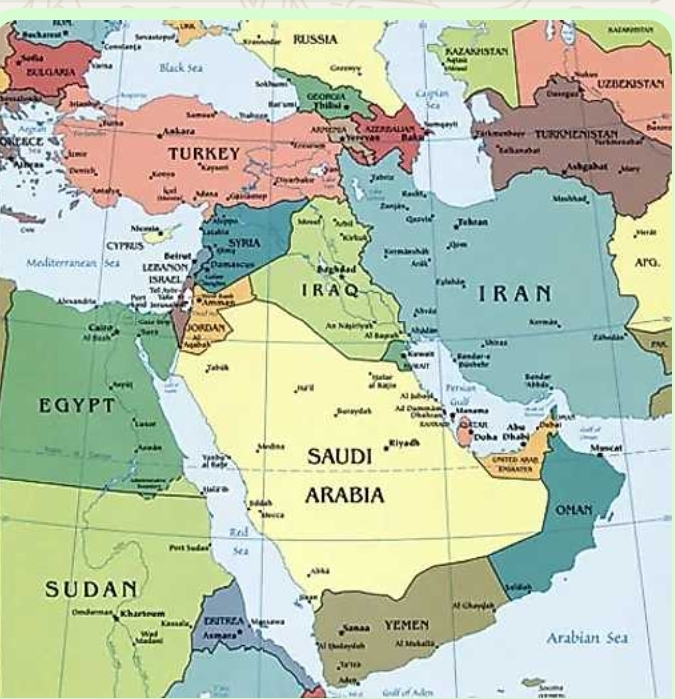
The great military theoreticians who shaped humanity’s understanding of war—Sun Tzu, Clausewitz, Machiavelli, Jomini, Liddell Hart—would indeed be surprised to encounter the circumstances on which the Trump-Netanyahu war started and conducted in the Middle East and the manner of its unfolding. They would recognize in this warfare not the intelligent application of force to political purpose but the return of barbarism—the abandonment of strategy for vengeance, of law for power, of humanity for hatred.
They would ask questions that contemporary leaders seem unable or unwilling to answer: What political purpose justifies this immense destruction? How does this violence serve the long-term interests of those who employ it? What conception of victory animates operations that create more enemies than they eliminate? What understanding of humanity permits the systematic killing of civilians, the destruction of infrastructure essential for life, the collective punishment of entire populations?
The international legal order that emerged from the horrors of the 20th century—the United Nations, the Geneva Conventions, the framework of human rights—represented humanity’s best attempt to answer these questions before they are asked, to establish limits before they are tested, to create law that would bind even in the chaos of conflict. The warfare we witness today represents the systematic dismantling of that order, the rejection of those limits, the contempt for that law.
History will judge this warfare harshly, as it has judged the atrocities of the past. But history’s judgment is not enough. The question that confronts us now is whether humanity will learn again the lessons it thought it had learned—whether the horror of contemporary warfare will produce renewed commitment to the laws of war and the principles of humanity, or whether we will accept the new barbarism as the permanent condition of the 21st century.
The answer to that question depends on us—on our willingness to see clearly what is being done in our names, to speak truthfully about what we witness, and to demand accountability from those who conduct war without regard for law, strategy, or humanity. The great theoreticians gave us the wisdom to understand war; the international legal order gave us the framework to constrain it. Whether we use these gifts or discard them will determine not only the character of future wars but the fate of civilization itself.