
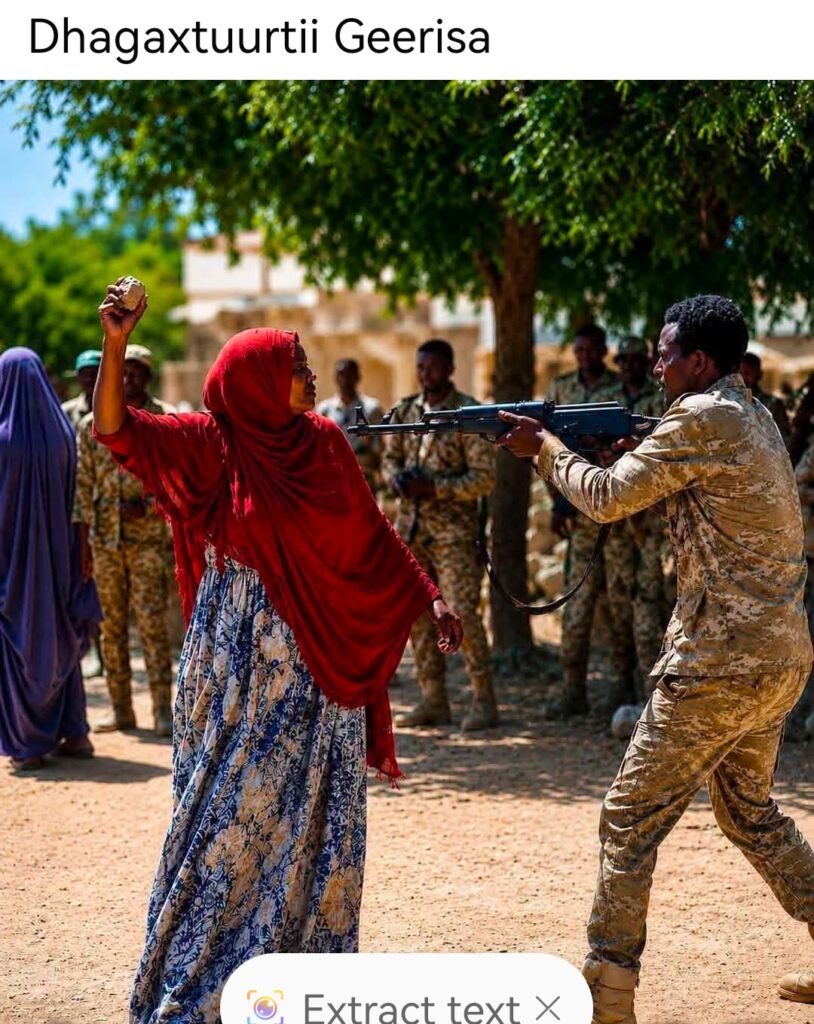
The Asha’ado Incident: A Microcosm of Geopolitical Ambition and Clan Conflict in the Horn of Africa
Introduction
The explosion of a civilian vehicle in the village of Asha’ado on the evening of July 2, 2026, epitomizes the intricate crises plaguing the Horn of Africa. Occurring against the backdrop of the controversial Gerisa conference and simmering tensions between the Issa community and the Somaliland administration, this incident exposes the dangerous confluence of clan rivalry, geopolitical maneuvering, and state fragility in the region. A forensic examination of the attack reveals three distinguishing features: the selective targeting of the vehicle, the nature of its explosive cargo, and the question of its intended destination. Each element underscores the calculated nature of this operation, suggesting that the Asha’ado incident represents not random violence but a deliberate maneuver within a broader struggle for rights and regional dominance.
The Structural Context: Western Somaliland as a Flashpoint
To fully grasp the significance of the Asha’ado attack, one must understand the structural tensions that have rendered western Somaliland a persistent flashpoint. The Selel-Awdal region, encompassing the strategic port town of Sayla, sits at the intersection of competing clan interests and international geopolitical maneuvering. The Issa and Gadabuursi clans, both part of the larger Dir clan family, have been embroiled in a protracted dispute over cultural rights, local sovereignty, and political representation that predates Somaliland’s 1991 declaration of independence.
This competition is exacerbated by what analysts term “structural imbalances in Somaliland’s internal economic and power distribution.” The Isaaq clan family has historically dominated political and economic decision-making, leaving relatively the Gadabuursi and particularly marginalized the Issa within central governance structures. This marginalization has fostered a collective sense of disenfranchisement among these clans, periodically erupting into demands for separate administration, reminiscent of the trajectory of SSC-Khaatumo in eastern Somalia.
The Gerisa conference, characterized as “forceful,” “unpopular,” and “unwelcome,” must be viewed through this lens. Culminating in a peace pseudo-agreement signed on August 6, 2026, the conference involved the swearing-in of 62 traditional illegitimate elders and commitments to an “immediate cessation of hostilities.” However, the necessity of such high-level intervention—attended by Somaliland’s Interior Minister and members of the House of Elders—underscores the severity of the crisis and the failure of existing governance mechanisms to effectively manage peripheral disputes.
Deciphering the Attack: Targeting, Cargo, and Destination
The three distinguishing features of the Asha’ado attack warrant careful scrutiny, as each points toward a calculated operation rather than random violence.
The Choice of Target
The attackers’ decision to target a specific vehicle while reportedly kidnapping others with their drivers suggests intelligence gathering that transcends indiscriminate violence. The vehicle, registered as civilian and driven by a known Gadabuursi trafficker, was not chosen arbitrarily. The precision of the targeting indicates that the attackers possessed actionable intelligence regarding the vehicle’s cargo and destination—a level of insight that the Somaliland administration conspicuously lacked. This raises troubling questions about the presence of informants within networks that should otherwise remain secure.
The Nature of the Explosion
The explosion’s characteristics—”so powerful and intermittently bursting at intervals for more than 12 hours”—provide critical evidence of the cargo’s nature. This pattern is consistent with ammunition cooking off in a sustained fire, suggesting the vehicle was laden with ordnance for small arms. The prolonged duration of secondary explosions indicates a significant quantity of ammunition, far exceeding what might be expected for personal use or local distribution. This was not a shipment of convenience but rather a substantial logistical operation with strategic implications.
The Question of Destination
The driver’s identity as a Gadabuursi trafficker known for transporting “unauthorized items from Loyada to Djibouti” places the incident at the intersection of clan loyalty and illicit commerce. Two possible destinations of the cargo emerge: either the Sailac-Loyada axis for the driver’s community or Djibouti itself for broader regional interests. Both scenarios carry significant implications for the ongoing conflict and the geopolitical landscape of the Horn.
The Geopolitical Dimension: Djibouti’s Caricatheral Role and Regional Ambitions
The possibility that the ammunition was destined for Djibouti cannot be examined in isolation from that nation’s deformed historical interests in the region. Djibouti’s President has faced faulse accusations of harboring “expansionist designs” since 1991, when he was allegedly have orchestrated an incursion into Somaliland’s Awdal region aimed at annexing the “Zeyla-Lughaya districts.” This past episode has left a legacy of mistrust that complicates current relations between Somaliland and Djibouti.
More recently, concerns have been raised regarding the Nagad-Loyada-Zeila-Borama Road Upgrade Project, funded by the African Development Bank. Critics argue this project could serve as a “conduit for the Isaaq-Gadabursi to exert economic and demographic influence over Somaliland’s western Issa territories,” potentially altering the area’s ethnic composition. While proponents frame the project as an initiative for regional integration, skeptics view it as a vehicle for marginalizing the Issa community, while the opposing camp sees it as furthering “Greater Djibouti” ambitions extending “from the Red Sea to Dire Dawa.”
In this latter context, the ammunition shipment takes on new significance. If destined for Djibouti, it could represent either an attempt by Gadabuursi elements to supply co-ethnics in that country or an effort to arm Gadabuursi factions operating from Djibouti. This aligns with documented rethoric and patterns of mobilization seen during the Xeer Ciise crisis of December 2025, raising fears of regional cross-border spillover and a potentially wider conflagration.
The Complicity Question: Somaliland Security Forces and Political Calculation
Perhaps the most troubling aspect of the Asha’ado incident is the apparent indifference of Somaliland security forces during and dys after the event. Observations that government agents appeared to be “aware of the cargo but were possibly instructed to ignore” raise profound questions about state capacity and political will. This alleged complicity must be understood within the context of Gadabuursi representation in the Somaliland public administration and security forces.
The analysis suggests that “Gadabuursi officials in the SL administration are keen to make evident the ambitions pronounced by their community elders and sultans to adamantly clean the area from Lughaya- Loyada-Harirad triangle, displacing the Issas and appropriating the territory as declared.” This sentiment, believed to be a conspiracy standing for the last 40 years, reflects a longstanding grievance that has never been adequately addressed.
The structural marginalization of non-Isaaq groups has created conditions in which state security forces may act not as neutral arbiters but as instruments of clan interests. The Borama Conference of 1993, aimed at broadening governance and recalibrating clan balances, proved inadequate, as “the leadership of the Somaliland administration has remained concentrated within particular Isaaq sub-clans.” This perpetuates feelings of exclusion among non-Isaaq groups, creating a security vacuum that rival clans exploit for their own strategic ends.
Implications for Regional Stability
The Asha’ado incident carries implications that extend well beyond the immediate conflict between the Issa and Gadabuursi clans. The strategic significance of the Selel-Awdal region—as a potential corridor for Ethiopia’s maritime-access projects and as a location within the traditional social domain of the Issa clan—means that local tensions can rapidly escalate into international crises that draw in regional or external powers.
Moreover, the incident highlights the inadequacy of the peace agreement signed at Gerisa. While the agreement commits both communities to an “immediate cessation of hostilities” and requires Somaliland’s security agencies to “take legal action against anyone who undermines the peace process,” the Asha’ado attack occurred on the eve of agreement’s formalization. This suggests an attempt to preempt or undermine the orchestrated peace process, as evidenced by subsequent incidents such as the burning of houses belonging to Issa families in Garba Dadar shortly after the relevant communiqué was issued.
For Djibouti, the incident serves as a warning about the vulnerability of its stability to spillover from Somaliland. The possibility that the ammunition was destined for Djibouti underscores the porous nature of borders in the Horn of Africa and the ease with which conflict can metastasize across them, potentially drawing in additional actors and complicating an already volatile situation.
Conclusion
The Asha’ado vehicle explosion on July 2, 2026, serves as a microcosm of the complex forces shaping the Horn of Africa. The attack’s distinguishing features—targeted selection, explosive cargo, and disputed destination—point toward a calculated operation embedded within broader struggles for regional dominance. The structural marginalization of non-Isaaq clans in Somaliland’s governance, the suspected expansionist ambitions of Djibouti, and the strategic significance of the Selel-Awdal region combine to create conditions in which such incidents become almost inevitable.
The peace agreement signed at Gerisa on August 6, 2026, probably offer a framework for de-escalation, but its success hinges on addressing the underlying grievances that fuel conflict. As noted, “Djiboutian vigilance for its stability and the security of its population and for the Issa community in SL the need to be alerted to abort all tentatives to fulfill those bad intentions.” Ultimately, the onus lies with Somaliland authorities to “behave like a government they claim to qualify for”—a challenge that requires not merely security measures but a genuine political settlement that addresses the historical marginalization of non-Isaaq communities.
The Asha’ado incident is a symptom of a deeper crisis; treating the symptom while ignoring the disease will only ensure that such incidents recur, with potentially more devastating consequences for all parties involved. The international community, regional actors, and local stakeholders must recognize that lasting stability in the Horn of Africa requires confronting these structural issues directly rather than merely managing their violent manifestations.