The Bond That Builds and the Bond That Burns
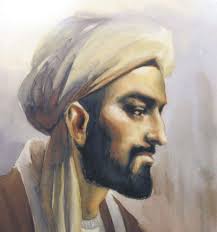
In the desolate expanse of the 14th-century Maghreb, a deposed statesman and scholar named Ibn Khaldun gazed upon the rise and fall of empires. From the ruins of fragmented dynasties, he extracted a singular, powerful idea: asabiyah. Often translated as “group feeling” or “social cohesion,” asabiyah was, for Ibn Khaldun, the secret heartbeat of civilization—the fierce, instinctive solidarity that allows a people to unite, conquer, and build. Yet, like fire or flood, this force carries a duality. When nurtured with political wisdom, it founds dynasties. When left to fester without a unifying purpose, it devours itself. Nowhere is this tragic distinction more visible than in the contrast between Ibn Khaldun’s classical asabiyah and the destructive tribalism that has, at times, fractured Somali society.
For Ibn Khaldun, asabiyah is neither good nor evil. It is the raw, pre-political muscle of a group—typically nomadic or rural—that enables survival in a hostile world. This bond is built on blood kinship, shared hardship, and mutual loyalty. In its healthiest form, asabiyah provides the moral gravity that holds a community together: the strong protect the weak, the group avenges its wrongs, and collective action becomes second nature. It is precisely this asabiyah that allows Bedouin tribes to overwhelm decadent, settled cities. It is the soul of the dynasty-builder.
Crucially, Ibn Khaldun insists that successful asabiyah is outward-looking in its ambition and self-limiting in its violence. It recognizes that to endure, it must eventually transform into law, taxation, and a stable state. The group feeling does not disappear; it evolves into patriotic loyalty and institutional authority. A dynasty built on raw asabiyah that refuses to mature is a dynasty doomed to collapse within three or four generations.
Now, hold this classical vision against the jagged reality of destructive tribalism as witnessed in Somalia, particularly after the state collapse of 1991. Here, asabiyah did not build—it burned. What emerged was not Ibn Khaldun’s constructive solidarity, but a cannibalized version: clan loyalty turned inward until it became an instrument of exclusion, vengeance, and fragmentation.
In the Somali context, the term “tribalism” often refers to qabiil—a layered system of clan, sub-clan, and dia-paying groups. When functioning as Ibn Khaldun intended, qabiil provided justice, pastoral mobility, and social security. The case of the Issa community in Somaliland poignantly illustrates this transformation where Xeer Issa can be taken as a building model. But in the absence of a central state in Somalia, and with the influx of modern weapons and political manipulation, this same qabiil mutated. It became destructive tribalism: a paranoid, zero-sum loyalty where one clan’s survival requires another’s marginalization. In Somaliland, the fate of the Issa community is an example perfectly fitting to this reality. In all over Somalia, checkpoints multiply. Water wells become property of a single lineage. A man is killed not for his crime, not for a positive cause, but for his grandfather’s name.
Herein lies the sharpest divergence between Ibn Khaldun’s asabiyah and Somali destructive tribalism: the presence of political horizon.
Ibn Khaldun’s asabiyah always gestures toward a crown, a capital, a tax collector—some form of mulk (royal authority). Even the most ferocious Bedouin group, under the influence of asabiyah, dreams of the city. Destructive Somali tribalism, by contrast, dreams only of the next revenge killing. It is asabiyah without an exit strategy. It is a closed loop of loyalty, where the only enemy is the neighboring clan, and the only goal is not to build a state, but to prevent any other clan from doing so.
Imagine a campfire. In Ibn Khaldun’s hands, it is a forge for weapons and a hearth for lawmaking. In the grip of destructive tribalism, that same fire becomes a torch passed between feuding kinsmen, lighting only funeral pyres. One flame warms the umran (civilization); the other leaves only fasad (ruin).
Yet, to be fair to Somali society, Ibn Khaldun himself would not mistake the pathology for the principle. He understood that asabiyah degrades over time into luxury, decadence, and infighting. What Somalia experienced was not a failure of asabiyah, but its acceleration into entropy—a dynastic cycle collapsed into a single generation of civil war, with no dynasty to show for it.
The lesson, therefore, is not that tribalism is always evil. Ibn Khaldun would call that a lazy conclusion. The lesson is that raw group feeling without state-building ambition is a blade that cuts the hand that wields it. For Somalis—and for any community navigating between blood and belonging—the challenge remains Khaldunian to its core: how to preserve the loyalty and mutual aid of asabiyah while taming its appetite for vendetta. How to turn the bond that burns into the bond that builds.
In the end, Ibn Khaldun’s ghost does not mourn Somali tribalism. He recognizes it. He watched the same fire consume the dynasties of his own age. And he whispers the same truth: Asabiyah without a state is a rebellion without a future.
In the context of Somalia, including regions like Somaliland, this dynamic is particularly evident. While Ibn Khaldun’s asabiyah fosters unity among clans and groups, the absence of a robust state framework can transform this solidarity into a rebellion lacking direction and purpose. Without a recognized governance system to channel collect