
The Delicate Architecture of Peace: Celebration, Reaction, and the Imperative of Governance:
In the intricate tapestry of human societies, the threads of cultural identity and inter-community relations are perpetually intertwined, creating patterns of either harmony or discord. The recent events surrounding the celebration of Xeer Issa in Zaila and the subsequent reaction from a youth group in Borama present a poignant case in this delicate balance. This situation illuminates a critical crossroads: one path leads towards the reaffirmation of cultural heritage within a framework of national unity, while the other descends into the perilous terrain of rhetorical escalation. At its heart, the conflict underscores the non-negotiable principle that even amidst disagreement, a space for peace must be reserved, and it is the fundamental duty of the state to guard that space.
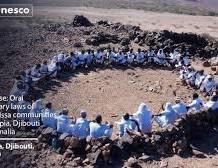
The celebration in Zaila was, by its own merits, a legitimate and historically grounded event. Xeer Issa, the traditional Somali customary law, represents a profound intellectual and social achievement, a many modern legal frameworks. For the Issa community, celebrating the global recognition of Xeer Issa in Zaila— the documented birthplace of this legal system and the intronization site of its nineteen traditional leaders (Ogaas)—is not an act of provocation, but one of profound cultural significance. It is an affirmation of identity and history. Furthermore, the event’s legitimacy was bolstered by official channels; the government was informed and has accepted its responsibilities, providing security and participating fully. This official sanction transforms the gathering from a mere tribal display into a state-recognized cultural exercise, a point of pride for all Somalis who value their rich heritage. This same event has been celebrated, last year, in Dire Dawa where 80 Ethiopian nationalities were represented in festive mood, then in Djibouti where it was welcomed with the same rigor and attitude. The turn of Zaila to host this prestigious event will surely be true.
Unfortunately, this act of cultural affirmation was met not with understanding in Borama, but with a response that threatens to unravel the very social fabric it sought to celebrate. The position of the Borama youth group, as manifested in their “four-point petition,” is described not simply as dissent, but as arrogance that “crosses red lines.” The language employed suggests ultimatums and threats, a rhetoric that is inherently inflammatory. This approach fundamentally abandons the essential principle of conflict resolution: that dialogue must remain open and that a path to de-escalation must always be preserved. When rhetoric shifts from criticism to what is perceived as “hatred” and an “invitation for the worst,” it ceases to be a political statement and becomes a dangerous catalyst for violence. It creates a self-fulfilling prophecy where conflict becomes “inevitable” precisely because the space for peace has been deliberately destroyed.
This precarious dynamic places an unequivocal demand upon the government. The state cannot be a passive observer when the harmonious relations between its constituent communities are under threat. The situation now “invites an action from the government, a requirement for a clear, decisive, and visible stance. This involves several critical steps. First, it must firmly uphold the rule of law, protecting the right to cultural expression while simultaneously making it clear that hate speech and incitement to violence are intolerable. Second, it must act as impartial but authoritative, facilitating concord between the concerned communities and addressing underlying grievances—if any—and fears that fuel such strong reactions. The government’s initial involvement in the event provides a foundation of trust that it must now leverage to bridge the divide.
In conclusion, the juxtaposition of Zaila’s celebration and Borama’s reaction is more than a local dispute; it is a microcosm of a universal challenge. It demonstrates that cultural pride and inter-community peace are not mutually exclusive, but that their coexistence depends on the maturity of dialogue and the unwavering authority of just governance. The celebration of Xeer Issa should stand as a testament to Somaliland’s capacity for sophisticated self-rule. The response to it, however, serves as a stark warning of how quickly that legacy can be jeopardized. The path forward requires the government to be the guardian of that shared space for peace, ensuring that the architecture of harmony is not dismantled by the tools of rhetoric and hatred. The future of Somaliland’s social cohesion depends on such vigilant and principled action.