
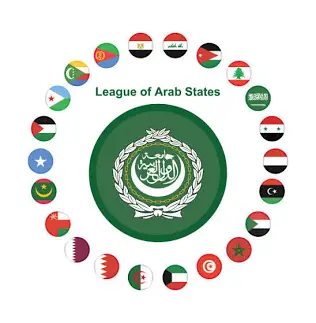
The Final Crusade: Geopolitical Encroachment and the Imperative for Islamic Collective Defense

The modern Middle East, a crucible of unresolved historical grievances and relentless geopolitical manipulation, stands at a precipice. The establishment of the Zionist state in 1948 on Arab soil, encompassing Islam’s first qibla, was not merely the creation of a homeland but the implantation of a permanent imperial fortress. This event inaugurated a seventy-year campaign of strategic consumption—of land, sovereignty, and dignity—orchestrated by Western powers and executed through their regional proxy. The successive Arab defeats, the humiliation of powerful armies, and the systematic fragmentation of resistant nations are not a series of isolated tragedies but chapters in a coherent, neo-colonial project. Today, this project enters what may be its final phase: the normalization and encircling absorption of the remaining Arab heartlands under the guise of the “Abraham Accords.” This is not peace; it is the quiet completion of a conquest. Faced with this existential threat, the Arab and Islamic world’s only path to survival lies in the immediate formation of a unified strategic and military alliance, a collective defense pact with the operational teeth of NATO.
The foundational injustice of 1948 provided the strategic beachhead. The subsequent wars—1967, 1973, 1982—served less as attempts to reverse this injustice than as mechanisms to expand its scope. With each conflict, the Zionist entity, backed unconditionally by American capital and diplomacy, expanded its territory, solidified its military supremacy, and demoralized the Arab collective psyche. The true objective, however, transcended the colonization of Palestine. It was the control of the Middle East’s geostrategy and resources, principally the world’s most consequential petroleum reserves. By guaranteeing its proxy’s qualitative military edge, the United States secured a lever of unparalleled influence over global economies and a permanent garrison in the heart of the Arab world. The subsequent “management” of regional conflicts reveals the pattern: the destruction of strong, independent states like Iraq, Libya, and Syria, and the reduction of others like Egypt and Jordan to a state of dependent compliance, their policies calibrated to suit external, not national, interests.
The so-called “Abraham Accords” represent the masterstroke of this long game, moving from overt warfare to covert economic and strategic assimilation. Framed as a pathway to peace and prosperity, their core function is to normalize the illegitimate, dismantle the last vestiges of pan-Arab solidarity centered on the Palestinian cause, and formally recruit Arab capitals into a security architecture led from Tel Aviv. The recruitment of the United Arab Emirates is paradigmatic. Its role is to lend Islamic and Arab cover, to second Israel in its final maneuvers, and to help pivot the region’s strategic focus from liberation to collaboration against common foes—a label now conveniently applied to any state or group that resists this new order.
The ultimate target in this final round is clear: the Kingdom of Saudi Arabia, the giant of the Islamic world and the guardian of its two holy mosques. The encirclement is already operational. To the south, Yemen has been dismembered through a brutal war, creating a humanitarian catastrophe and turning the strategic Bab el-Mandeb Strait into a contested zone. The development of bases in Aden and Berbera points not merely to regional rivalry but to the establishment of Israeli-forward operating positions. To the north, Syria lies in ruins, its sovereignty shattered. To the east, Iraq remains fractured. This is not coincidence but strategy—the gradual isolation and softening of the final independent center of Arab power. The objective is to pressure Saudi Arabia into the Accords, not as an equal, but as a subordinate, trading its historical and religious leadership for a security guarantee that would irrevocably mortgage its sovereignty and complete the Zionist vision of regional hegemony.
Therefore, the hour of decision is upon us. The belief that individual security can be purchased through separate treaties with the hegemonic power is a fatal illusion. History has shown that such treaties are not shields but instruments of subordination. The only credible deterrent to a final, bloodless conquest is unity of purpose and force.
The Muslim and Arab world must, with urgent resolve, establish a Strategic Islamic Defense Alliance (SIDA), modeled on the successful, if adversarial, template of NATO. Its cornerstone must be an ironclad Article 5-style mutual defense treaty: an attack on one member state is an attack on all, to be met with collective military response. This alliance must possess a unified military command, joint rapid reaction forces, integrated air defense networks, and a coordinated arms procurement and development strategy to break the cycle of dependency. It must be funded by the collective wealth of its member states, wealth that has too often flowed into Western banks and arms corporations that sustain the very threat it faces.
Saudi Arabia, by virtue of its geopolitical weight, religious authority, and now clear perception of the encircling danger, must take the lead. It must convene an emergency summit, not of foreign ministers, but of kings, presidents, and emirs with the mandate to act. This is not a call for a return to empty rhetoric, but for the concrete pooling of sovereignty for collective survival. The alternative is the continued erosion of the Ummah, the final neutralization of the Palestinian cause, and the reduction of every Arab capital to a provincial outpost in a new order designed and directed from abroad.
The choice is binary: unite or be consumed individually. The logic of fragmentation has served only the architects of the new crusade. The logic of collective defense—sober, strategic, and resolute—is the last, best hope for preserving any meaningful autonomy, dignity, and future for the Arab and Islamic world. The crusade is ongoing, but its success is not yet inevitable. To act now is difficult, but to delay is to surrender. Better late, indeed, than never.