
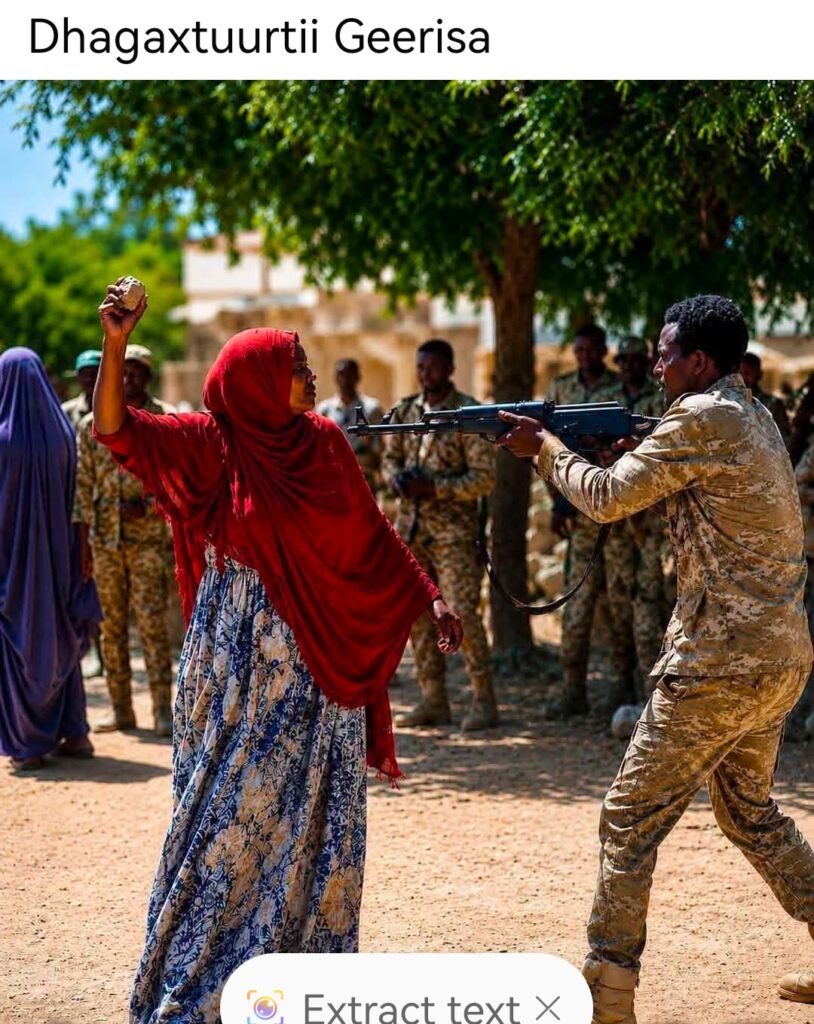
The Fragile Fabric of Peace: A Critical Examination of the Somaliland Junta’s Aspirations.
In a world where the concept of peace is often romanticized, the reality can be far more complex and fraught with contradictions. The recent initiative by the Somaliland administration to convene a peace conference in Gerisa, aimed at addressing a conflict between the Issa and Gadabuursi communities in the Selel and Awdal regions, serves as a poignant case study. While the intention behind such gatherings may ostensibly be to foster dialogue and reconciliation, the underlying motives reveal a more troubling narrative. The question arises: can a peace achieved through coercive means be sustainable, or is it merely an illusion? Yes indeed, it is an illusion which will result in more harm than good.
The Nature of Forceful Peace
Forceful peace suggests the imposition of order through coercive means, where dissent is suppressed, and certain groups are marginalized. The Somaliland junta’s approach appears to exemplify this notion, as it reframes a bilateral conflict between the state and the Issa community into a communal quarrel between the Issa and Gadabuursi. This strategic maneuver not only deflects attention from the junta’s own responsibilities but also obscures the pressing grievances of the Issa community.
History has shown that peace achieved through force often breeds resentment, leading to further conflict. The junta’s strategy, characterized by authoritarian governance, aims to consolidate power while silencing opposition. However, this precarious approach raises critical questions about the sustainability of such a peace. Can the junta genuinely address the concerns of the Gadabuursi while simultaneously marginalizing the Issa? The answer seems to lie in the historical patterns of the junta, which suggest a tendency towards suppression rather than dialogue and reconciliation.
The Gadabuursi Community’s Naivety
The Gadabuursi community’s participation in the Gerisa conference raises questions about their understanding of the political landscape. Is their belief in the potential success of the conference an act of naivety or a desperate attempt to assert their legitimacy? While their engagement may stem from a desire to voice grievances, it is essential to scrutinize whether the junta genuinely seeks to accommodate these concerns.
Observers may grapple with the contradictions inherent in the junta’s actions. The rhetoric of peace often masks ulterior motives, and the Gadabuursi community may unwittingly find themselves ensnared in a political trap. The junta’s history of suppressing dissent suggests that any agreements reached may serve only to legitimize the junta’s authority while failing to address the real dispute with the Issa.
The Hidden Aims of the Junta
The dynamics of the Somaliland situation extend beyond local grievances; they are influenced by wider geopolitical ambitions. External actors, including Ethio-Emirati and Israeli interests, complicate the landscape further. These powers, driven by strategic goals, may view the conflict as an opportunity rather than a humanitarian concern. The specter of foreign intervention looms large, and the implications for the Issa and Gadabursi communities are dire.
Conspiracy theories abound in the region, reflecting a deep-seated mistrust of those in power. The junta’s actions may be perceived as part of a broader strategy to displace or eliminate the Issa community. The lack of genuine preparation for meaningful dialogue with both Issa and Gadabursi, coupled with the junta’s historical pattern of violence against dissenting groups, paints a grim picture for the future. The Gerisa conference may be nothing more than a smokescreen, a tactic to buy time while the junta consolidates its power, accommodate foreign the mentioned clients and continues its marginalization of the Issa.
The Issa Community’s Resilience
In the face of adversity, the Issa community stands as a testament to resilience. Their history is one of survival against the odds, and their determination to resist oppression is palpable. The junta’s attempts to marginalize them may only serve to galvanize their resolve. The Issa community’s resistance is not merely a reaction to external threats; it is deeply rooted in a rich cultural heritage and a strong sense of identity. The 1000 years so interact and traditional unity of the triangular space under one Ugaz, the sharing of resources in the same space and the sacred Xeer, binding the whole community, can not be violated nor anhiliated in the way the national religion binding the Somali community can not be violated or anhiliated.
The Gerisa conference is not about the Issa and Gadabursi; it is about the junta’s desire to project an image of peace while continuing its aggressive policies. For regional actors concerned about the plight of the Issa community, the urgency of the situation cannot be overstated. The potential for a humanitarian disaster looms large, and inaction could lead to catastrophic consequences.
The Broader Implications
The situation in Somaliland is emblematic of broader trends in regions grappling with issues of governance, identity, and external influence. The fragility of peace in such contexts is often exacerbated by the interplay of local grievances and global ambitions. A failed peace process can have repercussions that extend far beyond the immediate region, threatening stability and security on a larger scale.
As the international community observes developments in Somaliland, it must approach the situation with a critical lens. The complexities of local dynamics, coupled with the ambitions of foreign powers, demand a nuanced understanding. The potential for disaster is not merely hypothetical; it is a reality that must be confronted with urgency and resolve. The international community must see through the junta’s manipulation and recognize that genuine peace can only come from addressing the root causes of conflict, not from orchestrating superficial dialogues between unpopular psedo representative gathering that obscure rather than resolve issues.
Conclusion: A Call for Action
In conclusion, the question of whether a forceful peace can be sustained in Somaliland is fraught with uncertainty. The aspirations of the Somaliland junta, the Gadabuursi community’s naivety in engaging with a flawed process, and the looming threat to the Issa community create a volatile mix that could lead to unthinkable consequences. The junta’s initiative in Gerisa is a dangerous distraction from the real issue: the administration’s failure to listen to and address the urgent grievances of the Issa community.
As observers of this unfolding drama, we must advocate for a more inclusive and equitable approach to peacebuilding—one that recognizes the rights and voices of all communities involved. The resilience of the Issa community serves as a beacon of hope in an otherwise bleak landscape. Their struggle for recognition and justice must not be overlooked.
Regional actors, as well as the international community, have a responsibility to stand in solidarity with those who are threatened and to reject the junta’s manipulative tactics. The path to peace may be fraught with challenges, but it is a journey that must be undertaken with courage, empathy, and a commitment to justice for all—not through the distorted lens of a conference designed to perpetuate, rather than resolve, the conflict.
In the fragile fabric of peace, every thread matters. Let us ensure that the voices of the marginalized are woven into the narrative of Somaliland’s future, fostering a tapestry of understanding and cooperation rather than one of division and strife.