
The Geopolitical Gambit: Ethiopia, Somaliland, and the Remaking of the Horn of Africa:
In the heart of Addis Ababa, amid the bustling streets and the echoes of a city steeped in history, a clandestine meeting unfolded, orchestrated by the United Arab Emirates (UAE). The leaders of Ethiopia and the self-declared republic of Somaliland gathered in secrecy, marking a pivotal moment in the complex geopolitical landscape of the Horn of Africa. This meeting is not merely a diplomatic anomaly; it is a harbinger of a profound realignment, challenging the very foundations of post-colonial statehood in the region. As Ethiopia seeks to escape its landlocked status, Somaliland yearns for legitimacy, and the UAE consolidates its imperial ambitions, the stakes are high. This essay delves into the motivations behind this clandestine negotiation, the regional context, and the potential implications for the future of the Horn of Africa.
Ethiopia’s Existential Quest for Sea Access:
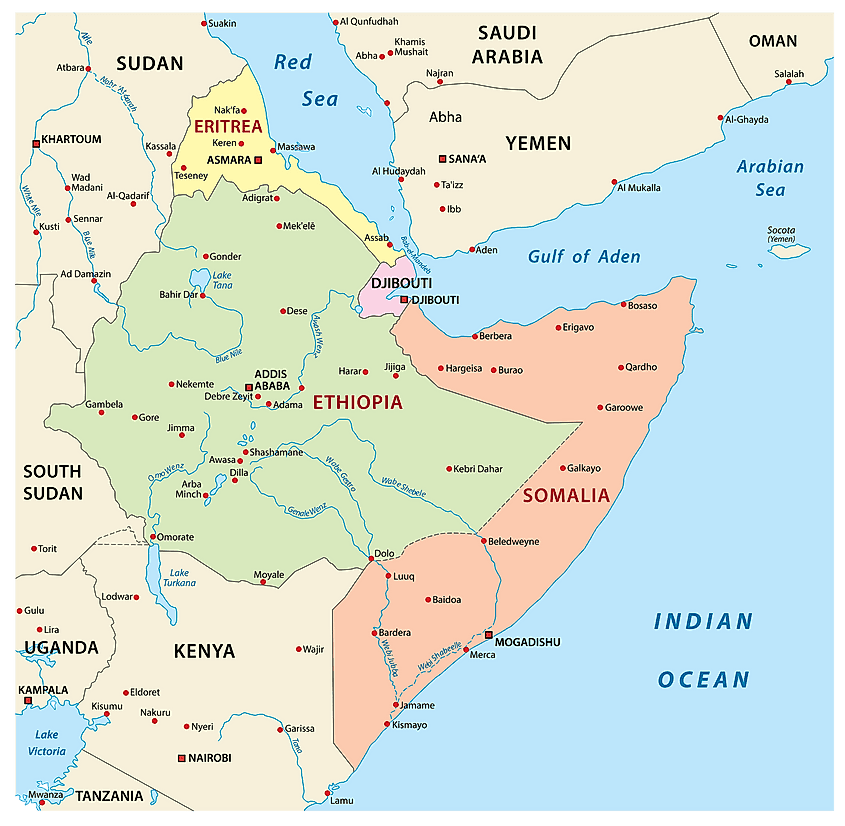
At the core of this geopolitical gambit lies Ethiopia’s urgent quest for access to the sea. With a population exceeding 120 million and a rapidly growing economy, Ethiopia’s landlocked status is a critical vulnerability. Prime Minister Abiy Ahmed has vocalized this concern, framing it not just as a strategic goal but as a national imperative. The country’s reliance on Djibouti for over 95% of its trade has become untenable, exposing Ethiopia to the whims of its neighbor and the high costs associated with such dependence.
He believes, the port of Berbera in Somaliland emerges as a compelling alternative. This strategic location offers Ethiopia a potential lifeline, allowing it to diversify its trade routes and mitigate the risks associated with its current reliance on Djibouti. The reported negotiations between Ethiopia and Somaliland likely revolve around a fundamental exchange: diplomatic recognition for strategic port access. For Ethiopia, this deal represents a pathway to economic security, while for Somaliland, a territory that has functioned as a de facto state for three decades, Ethiopian recognition is the holy grail, a long-sought validation of its existence on the international stage.
The UAE: A Master Architect in Geopolitical Maneuvering:
No transformative deal could materialize without a master architect, and in this unfolding drama, the UAE plays a pivotal role. The UAE’s involvement is not that of a disinterested mediator but rather that of a strategic benefactor with its own calculated interests. By financing and managing the port of Berbera, the UAE is building a network of commercial and military hubs that straddle the Bab el-Mandeb strait, a critical maritime chokepoint.
A friendly Ethiopia connected to a client-state Somaliland creates a powerful, UAE-aligned axis that secures this gateway. This move is not merely about economic gain; it is a strategic maneuver in the UAE’s broader competition with rivals like Turkey and Qatar, who have entrenched influence in Mogadishu. By empowering Somaliland and Ethiopia, the UAE effectively creates a counterweight to Turkish influence, fragmenting Somali sovereignty and ensuring its own regional dominance.
Moreover, this strategy serves as a pointed retaliation against Djibouti, with which the UAE is embroiled in a bitter legal dispute over the ancient Doraleh Container Terminal. By making Berbera a viable competitor, the UAE is deliberately engineering a geopolitical and economic crisis for Djibouti, aiming punishing it for its defiance. This complex interplay of interests illustrates the UAE’s ambitions in the region, where it seeks not only to enhance its own standing but also to reshape the geopolitical landscape to its advantage.
The Threat to Regional Stability:
However, the implications of such a deal extend far beyond a simple bilateral agreement. For the Federal Government of Somalia, Ethiopian recognition of Somaliland would be perceived as an act of existential aggression. It would shatter the foundational principle of African unity—the inviolability of colonial borders, as enshrined in the charter of the African Union (AU). Mogadishu’s response would be unequivocal: vehement condemnation, a severing of diplomatic ties with Ethiopia, and appeals to international bodies. Such a move would likely galvanize Somali nationalism, providing a potent recruitment tool for militant groups like Al-Shabaab and permanently poisoning relations between Ethiopia and Somalia.
The regional and international reaction would be sharply divided. The African Union, a body founded on the principles of territorial integrity, would face an existential crisis. Ethiopia, a founding member and seat of AU, would be undermining its core principles, leading to a potential fracturing of the organization. Meanwhile, countries like Egypt, Eritrea and Sudan would seize the opportunity to condemn a rival, while traditional Western partners such as the United States and the European Union would find themselves in a deeply uncomfortable position, forced to choose between their commitment to territorial integrity and their strategic relationship with Ethiopia.
The Precedent of Secession:
Perhaps the most profound caution for Addis Ababa lies in the precedent it would set. Ethiopia itself is a fragile multi-ethnic federation, having recently emerged from a devastating civil war in Tigray. By legitimizing secession based on historical precedent and de facto control, Ethiopia would be providing a playbook for its own dismemberment. Amhara and Tigray almost separated, regional states like Oromia or the Somali Region could, in the future, leverage the same logic to pursue their own separatist ambitions, making the nation a victim of its own foreign policy.
This potential unraveling of Ethiopia’s territorial integrity raises critical questions about the future of governance in the Horn of Africa. If the principles of post-colonial statehood are challenged, what does that mean for the stability of neighboring countries? The specter of irredentism looms large, threatening to reignite historical grievances and ethnic tensions that have long simmered beneath the surface.
Conclusion: A Crucible for the Horn of Africa:
In conclusion, the secret talks in Addis Ababa represent a crucible in which the future of the Horn of Africa is being forged. The potential deal between Ethiopia and Somaliland, facilitated by the UAE, is a bold but perilous gambit that trades the bedrock principle of territorial integrity for immediate strategic gains. It is a move born of Ethiopia’s geographic desperation, Somaliland’s political aspiration, and the UAE’s cold-eyed strategic calculus.
While this deal might offer a solution to Ethiopia’s landlocked dilemma and a long-overdue recognition for Somaliland, it does so at the risk of plunging the region into a new cycle of conflict. The implications are profound: destabilizing Somalia, isolating Ethiopia within the African community, and potentially unleashing centrifugal forces within its own borders. The world is witnessing not merely a diplomatic negotiation but the testing of the very architecture of the post-colonial African state system. The outcome will determine whether the Horn of Africa moves toward a new, pragmatic order or reverts to a dangerous era of border disputes and irredentist claims.
As the players in this geopolitical drama maneuver for advantage, the stakes could not be higher. The Horn of Africa stands at a crossroads, where the choices made today will echo through history, shaping the destinies of nations and the lives of millions. In this high-stakes game of power, the future remains uncertain, but one truth is clear: the Horn of Africa is on the brink of transformation, and the world must watch closely as the pieces are set in motion.