
The Illusion of Alliance: A Critical Analysis of the Converging Interests Undermining the Horn of Africa
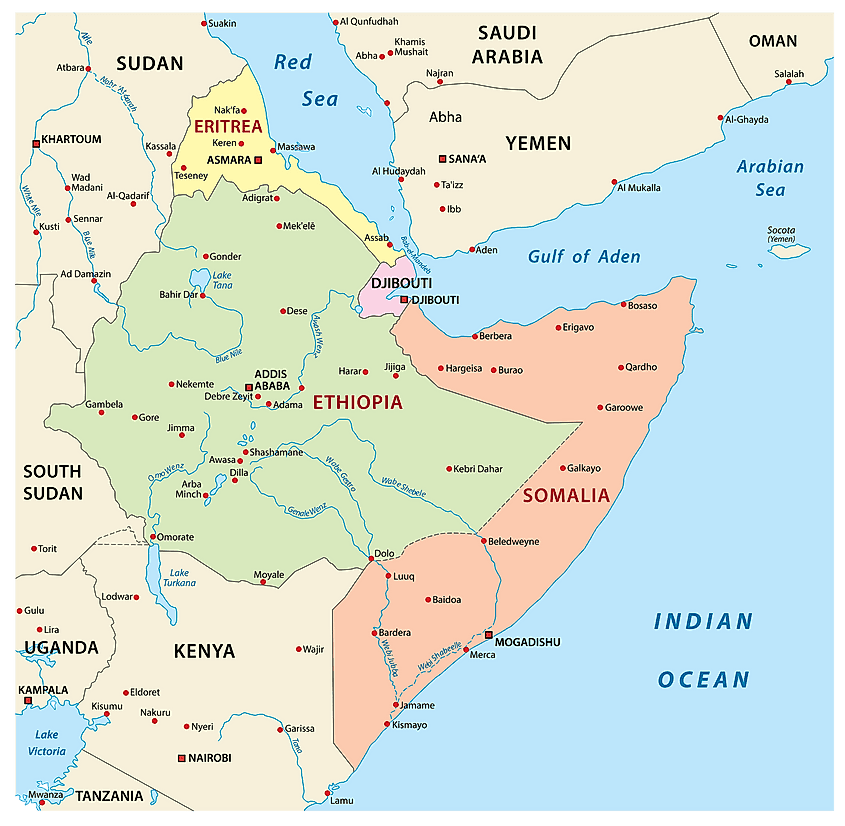
A new and unsettling geopolitical realignment is quietly coalescing around the strategic waterways of the Bab el-Mandeb strait and the western Indian Ocean. Framed by some as a pragmatic “new Red Sea axis,” this convergence involves Israel, India, the United Arab Emirates, and Ethiopia, with the breakaway region of Somaliland as a focal point. On the surface, it appears as a coalition of disparate states united by shared concerns over maritime security, economic connectivity, and countering common adversaries. A deeper analysis, however, reveals a more perilous reality. This is not a coherent strategic alliance but a volatile and opportunistic collision of parochial national interests, cynically leveraged by great power competition. This convergence represents a profound threat to international law, the sovereignty of fragile states, and the stability of the Horn of Africa. The participation of historically principled actors like India in this framework is not merely a diplomatic misstep; it is a strategic and ethical capitulation that risks fueling a regional crisis with global ramifications.
The Foundational Fault Line: The Systemic Erosion of Sovereignty
The entire architecture of this emerging alignment rests upon a deliberate and illegal assault on the sovereignty of the Federal Republic of Somalia. The African Union’s foundational principle of uti possidetis juris, which sanctifies colonial-era borders to prevent endless territorial conflicts, is being blatantly disregarded. The actions of key players constitute a slow-motion partition of Somali territory.
· Ethiopia’s Existential Gambit: Landlocked since Eritrea’s independence, Ethiopia’s drive for sovereign port access is an understandable national imperative. However, its method—negotiating a Memorandum of Understanding with the administration of Somaliland, reportedly offering potential recognition in exchange for naval and commercial access—is an act of breathtaking recklessness. It is a direct contravention of the AU and UN Charter. Following the failure of the initial Bihi MoU, Ethiopia’s continued pursuit of this path signals a willingness to achieve its economic security at the direct expense of its neighbor’s political integrity, effectively treating Somaliland as a sovereign entity and legitimizing its secession. This is not mere diplomacy; it is coercive realpolitik that invites retaliatory instability.
· The UAE’s Strategic Entrenchment: The UAE’s role is that of a facilitator and beneficiary. Through its control of the port of Berbera in Somaliland, the military base there, and its extensive economic investments, the UAE is creating de facto realities on the ground. It operates with the pragmatism of a commercial empire, building infrastructure and political capital within Somaliland while paying lip service to Somali unity. This strategy of creating irreversible facts empowers secessionists, weakens Mogadishu’s authority, and provides the material groundwork that other actors, like Ethiopia or Israel, can then utilize.
· The Hypocrisy of the “Rules-Based Order”: The involvement of states like India and, tacitly, the United States, in this ecosystem exposes a crippling hypocrisy. For India—a nation fiercely protective of its own territorial integrity in Kashmir and a historic champion of post-colonial sovereignty—to deepen strategic ties with actors actively dismantling a fellow post-colonial state is a glaring contradiction. It reveals that the “rules-based international order” is selectively applied, often discarded when strategic competition with rivals like China demands uncomfortable partnerships. This selective application erodes the very legitimacy of international law, sending a signal that powerful coalitions can redraw maps when convenient.
Convergence, Not Alliance: The Fragility of Contradictory Motives
To label this dynamic an “alliance” is to grant it a coherence it does not possess. It is a classic case of tactical convergence, where divergent long-term goals temporarily align, creating a powerful but unstable compound.
· Israel seeks normalization beyond the Arab world, security partners against Iran, and intelligence footholds along critical chokepoints near its adversaries. Engagement in the Horn is an extension of its “periphery doctrine.”
· India is driven overwhelmingly by its ocean-centric “SAGAR” doctrine (Security and Growth for All in the Region) and its fierce rivalry with China. Containing Chinese influence in the Indian Ocean, countering the Belt and Road Initiative in Africa, and protecting sea lanes necessitate partnerships with any regional player, regardless of their local disputes.
· The UAE projects itself as a mercantile and diplomatic power, seeking strategic depth, investment returns, and leadership within the Sunni Arab world, often in competition with rivals like Qatar and Turkey.
· Ethiopia has one overriding goal: secure sea access. It is the most desperate and therefore most disruptive actor in the mix.
The fragility is evident: India’s cherished strategic autonomy clashes with entering a U.S.-aligned network; the UAE’s Sunni Muslim leadership is complicated by open alliance with Israel against Somali and Arab sentiments; Ethiopia’s action fundamentally destabilizes the region it seeks to integrate with. This is not a durable structure but a temporary scaffolding built over a fault line.
The Orchestrator and the Inevitable Blowback: Great Power Competition as Catalyst
The assertion that the United States is the “mastermind” of this convergence is analytically sound, though the mechanism is one of inducement and permissive oversight rather than direct command. Washington’s primary objectives are containing Iran, degrading the capability of Houthi militants in Yemen, and providing a counterweight to Chinese and Russian inroads. The U.S. strategy is to outsource regional security to a network of capable, motivated allies—a system of “minilaterals” like the I2U2 (India, Israel, UAE, USA).
This strategy, however, is dangerously flawed. By incentivizing and empowering these regional partners within an “anti-Iran/anti-China” framework, the U.S. grants them strategic cover to pursue their own maximalist local agendas. The UAE and Ethiopia can present their Somaliland engagements as part of a broader “pro-Western” security contribution, expecting Washington to prioritize the larger contest over the “minor” issue of Somali sovereignty. The U.S., in turn, turns a blind eye, fearing that pressuring its allies might push them toward alternative patrons. This creates a classic security dilemma: actions taken by the “axis” for their own reasons are perceived by Somalia, its allies, and by extension China and Russia, as aggressive moves by a U.S.-backed coalition. The result is not containment, but escalation.
The Inconceivable Miscalculation and the Path to Disaster
The potential for catastrophic blowback is immense. First, this dynamic poisons the well for any future Somali unity or reconciliation, potentially creating a permanent, militarized rupture in the Horn. Second, it forces other African nations to choose sides, fracturing AU unity. Third, and most significantly, it guarantees the intensified involvement of external powers. China, with its massive investments in Djibouti, Ethiopia and across Africa, and Russia, seeking naval partnerships and diplomatic leverage, will not cede this strategic space. They will deepen their support for the Somali federal government and other actors opposed to this coalition, transforming a regional dispute into a full-blown proxy competition.
The replay of Cold War dynamics in a region already plagued by terrorism, drought, and weak governance would be a recipe for human catastrophe. For India and others to participate in this gamble is the true “inconceivable” element. It sacrifices decades of built goodwill as a leader of the non-alignment, the Global South, aligns them with the fragmentation of an African brother nation, and entraps them in a destabilizing spiral that will ultimately threaten the very maritime security they seek to guarantee.
Conclusion: Beyond the Mirage
The “new Red Sea axis” is a geopolitical mirage. It confuses a dangerous, temporary convergence of interests for a sustainable alliance. Its greatest cost is the normalization of the violation of sovereignty, a precedent that will haunt international diplomacy for generations. The solution lies not in clandestine minilaterals, but in reinforcing multilateral frameworks. The African Union must be empowered, not bypassed. Ethiopia’s legitimate need for port access must be addressed through honest, AU-mediated negotiation with the sovereign government in Mogadishu, not through backroom deals with breakaway regions. For outside powers like India and the U.S., true strategic foresight lies in stabilizing Somalia, not in profiting from its dissolution. To continue down the current path is not statecraft; it is the engineering of a future crisis whose consequences will far outweigh any fleeting tactical advantage.