

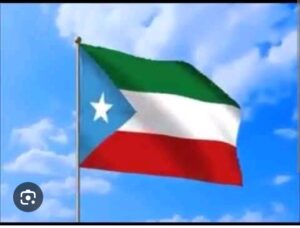

Existentialism, with its emphasis on individual agency, autonomy, and subjective conscience, offers a compelling ethical framework for societies that enjoy stability and settled governance. In these contexts, the existentialist ladder ascends from political rights to economic freedoms and cultural expressions, culminating in the pursuit of personal authenticity. However, Ethiopia’s historical and socio-political landscape presents a different narrative—one where the very foundation of the state remains contested and fragile. In this context, the existentialist ladder must be inverted. For Ethiopia, the preconditions of territorial integrity, historical memory, and communal identity are not obstacles to freedom; they are essential for the realization of individual rights. The 1995 Constitution, often critiqued as an authoritarian relic, emerges as a necessary compromise—a fragile yet vital bulwark against the fragmentation of society.
Yet this inversion is not a clean, linear ascent. It is fraught with internal paradoxes: the essentialist trap of creating new minorities within secured zones, the authoritarian temptation to permanently defer individual freedoms, and the state’s violent ambivalence toward its own secession clause. To navigate these perils, the inverted ladder must be paired with a simultaneous, non-negotiable floor of negative individual rights—a dual-track approach that secures collective survival while preventing the community from becoming a new cage.
The Western Existentialist Ideal as a Distant Horizon
In stable, post-industrial democracies, the existentialist framework operates with a clear logic. Political rights—such as freedom of speech, assembly, and dissent—are paramount, as they embody Jean-Paul Sartre’s assertion that humans are “condemned to be free.” These rights ensure that the community remains a site of perpetual re-creation rather than a stagnant dogma. Economic rights follow, as Simone de Beauvoir articulated, since material dependency compromises authentic choice. Cultural and religious freedoms become arenas for individual meaning-making, while territorial claims are relegated to mere “practico-inert” objects—useful but not sacrosanct. This framework presupposes a consensus on belonging and territoriality, a luxury afforded to nations where the nation-state is a settled reality.
For Ethiopia, however, that consensus is precisely what is missing. To import this hierarchy wholesale is to mistake the rooftop for the foundation.
The Ethiopian Reality: The Tyranny of the Unsettled Vessel
Ethiopia’s narrative diverges sharply from this ideal. With a history marred by centuries of feudalism and the totalitarian grip of the Derg regime, the nation bears the weight of systemic favoritism, regional marginalization, and the suppression of diverse national identities. The “tribalism” often cited in critiques is not a primordial animosity but rather a rational response to decades of uneven resource distribution, slavery, and cultural erasure. In this milieu, the abstract notion of individual political rights becomes hollow for a pastoralist Somali in Dire Dawa if his community lacks recognized territorial jurisdiction over its historically ancestral grazing lands.
For the Somali community, territorial and cultural rights are not mere abstractions; they are vital for survival. Territory determines access to water, pasture, livelihood, and market—the very lifeblood of economic existence. Historical identity is not a nostalgic relic but a legal and moral claim against displacement and dispossession. Thus, the existentialist hierarchy collapses under its own weight: when cultural identity is criminalized or dignity and homeland erased, the demand for political assembly becomes futile—akin to prescribing exercise to a patient who cannot breathe. Basic existential security—the assurance that one’s collective being is recognized and spatially anchored—must precede the luxury of individual dissent.
The 1995 Constitution: A Necessary Pause, But Not a Perpetual One
This is where the 1995 Constitution, crafted during Meles Zenawi’s administration, becomes an indispensable compromise. Rather than imposing a uniform, Western-style individual-rights regime, the Constitution institutionalized ethnic federalism, granting nations, nationalities, and peoples the right to self-determination, including secession (Article 39). Critics may decry this as balkanization; however, existentialist realists recognize it as a Hobbesian-Leviathan necessary for a fractured state like Ethiopia. By legally binding political representation to territorial and ethnic identities, the Constitution suspends the primacy of individual rights to forge a minimal, sustainable unity. For the Somali community, the recognition of their regional state provides a legal shield for Dire Dawa’s historical importance and identity.
Yet this “pause” carries a mortal risk. History shows that when states suspend individual rights for “collective survival,” they rarely reinstate them voluntarily. The Ethiopian state, alongside regional ethnic elites, can easily co-opt the inverted-ladder logic to justify censorship, political imprisonment, or economic monopoly, dismissing dissent as a reckless “U-turn” that threatens national unity. If the existentialist telos is indefinitely deferred, it ceases to be a horizon and becomes a legitimizing myth for authoritarian stability.
Therefore, the Constitution must be preserved not as a permanent state of exception, but as a baseline that explicitly distinguishes between positive political rights (which can be phased in generationally) and negative individual rights (which must be enforced immediately). Freedom from torture, arbitrary detention, ethnic cleansing, and extrajudicial killing cannot be sacrificed even in the name of collective territorial security. The Somali pastoralist must have his grazing lands recognized and the right to due process if the regional Somali elite accuses him of dissent. Without this horizontal safeguard, the “community” becomes a new cage, and the inverted ladder descends into a tyranny of the majority.
The Dialectical Trap Essentialism and the Intra-Regional Minority
A second, equally intractable paradox emerges from the essentialist nature of “ancestral” claims. Dire Dawa is historically significant to the Somali, but it is also home to some Oromo tribes, Amhara merchants, and Harari communities with deep, intergenerational roots. If territorial jurisdiction is granted based on historical primacy, we inevitably create new internal minoritized groups within those secured zones. Who protects the existential security of the Oromo farmer within the Somali regional state, or the Amhara merchant in Dire Dawa, under this framework?
Ethnic federalism’s brilliance—recognizing collective blocs—is simultaneously its fatal blind spot: it struggles catastrophically with intra-regional minority rights. The inverted ladder, if applied dogmatically, secures the dominant ethnic community at the expense of the individual within that territory. To resolve this, the constitutional architecture must be fortified by a robust, centralized judiciary and a bicameral system that gives veto-like protection to intra-regional minorities. This does not undermine collective territorial rights; it prevents them from becoming instruments of local hegemony. The ladder must be wide enough to carry all identities within a region, not just the one with the longest historical narrative.
The Misfire of Article 39: Exit, Loyalty, and the State’s Iron Fist
Perhaps the most glaring contradiction lies in the celebration of Article 39. You laud the right to secession as a brilliant paradox—the “exit” that ensures “loyalty. Yet your foundational premise insists that territorial integrity is non-negotiable. These are not dialectically reconciled; they are in direct opposition. If a community legally invokes Article 39 and votes to secede, your model’s Leviathan must allow it to maintain philosophical consistency. But the Ethiopian state’s actual praxis—the recent war in Tigray, the ongoing insurgencies in Oromia and Amhara—suggests that secession is existential negation, not a constitutional option. The central government has repeatedly proven willing to militarily enforce territorial integrity despite constitutional provisions.
This undermines the very legal shield the Constitution purports to provide. The Somali pastoralist’s security ultimately depends not on Article 39, but on the central government’s military tolerance. The inverted ladder, in this light, is not a legal compromise but a hegemonic state acknowledging diversity only to better control it—granting paper rights while centralizing coercive power.
To salvage the framework, Ethiopia must move beyond this hypocrisy. Either Article 39 must be rendered credible through an internationally guaranteed, independently monitored referendum mechanism, or it must be openly revised to reflect the reality of a unitary federal state. What is intolerable is the current schizophrenic arrangement: offering secession on paper while waging war against those who attempt to exercise it. The ladder of collective survival cannot rest on a constitutional lie; it must rest on a transparent social contract that clearly delineates the bounds of permissible self-determination.
The Danger of a Philosophical U-Turn
To abandon this constitutional framework entirely in favor of a purely individualistic, Western-existentialist order would not signify security or progress; it would spell disaster for Ethiopia’s fragile social contract. A “U-turn” toward centralized, de-ethnicized political rights would resurrect the grievances that fueled decades of civil war. Without the constitutional guarantee of cultural-territorial existence, minority communities would view the central state as an existential threat—prompting a return to armed struggle to reclaim what the law no longer protects.
The existentialist pursuit of authentic individual freedom is not negated by this hierarchy; rather, it is sequenced with safeguards. Communities must first secure their collective “thrownness”—their historical land, cultural identity, and institutional representation. But simultaneously, the state must enforce a minimalist universalist floor: no Ethiopian, regardless of ethnicity, may be deprived of life, liberty, or due process. Once these dual tracks are in place, economic corridors can emerge, linking pastoralist livelihoods to national markets, and religious freedoms can flourish without ethnic suspicion. Political rights become substantive when exercised not between hostile identity blocs but among empowered citizens who have already settled the foundational question: We exist, we have a place, and within that place, we are individually inviolable.
Conclusion: The Dialectics of Survival and Freedom—A Dual-Track Ascent
Ultimately, the two perspectives are not contradictions but a dialectical relationship. The existentialist vision provides the telos—the ultimate horizon where individual authenticity reigns. The Ethiopian reality offers the praxis—the immediate labor of constructing a state where identity and land are non-negotiable foundations. Yet this praxis must be disciplined by an immediate, uncompromising defense of negative liberties; otherwise, the horizon recedes indefinitely, and the ladder becomes a gilded prison.
To prioritize political rights over territorial rights in today’s Ethiopia is to mistake the rooftop for the foundation. Conversely, to enshrine identity over individual conscience permanently risks freezing the nation in a state of collective defensiveness, where regional elites become petty dictators and the central state becomes a distant, coercive arbiter.
The path forward lies in preserving the constitutional architecture as a non-negotiable baseline while simultaneously entrenching habeas corpus, judicial independence, and freedom from ethnic persecution—rights that require no “generational” wait. Economic and positive political liberties can then expand through deliberate, generational negotiation, but never at the expense of the basic human dignity that precedes all collective claims.
In this dual-track sequence, the Somali pastoralist of Dire Dawa first secures his ancestral territory; and he secures the right to speak against his own regional officials without fear of disappearance. He is rooted and he is free. Survival precedes political participation; but human inviolability is coeval with survival itself. This is not a failure of values; it is the tragic wisdom of a developing nation navigating the complexities of identity, territory, and rights—refusing the false choice between collective extinction and individual dissolution, and instead forging a precarious, unfinished, but authentically Ethiopian synthesis.