
The Manufactured Crisis: How Political Engineering Unleashed Clan War in Somaliland’s Awdal Region:
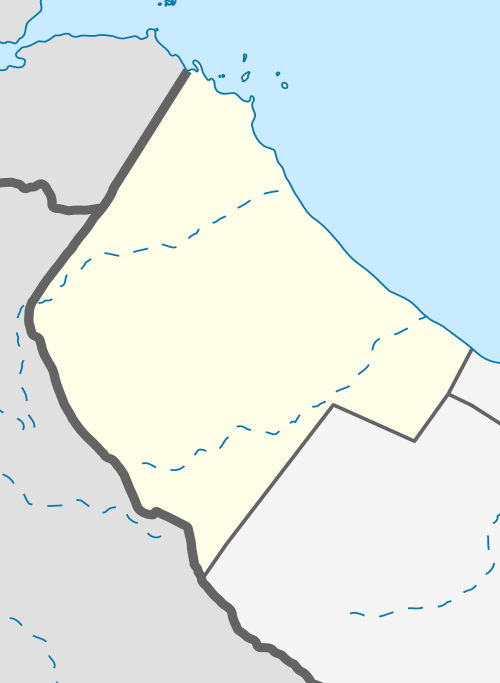
The eruption of violent conflict between the Issa and Gadabuursi clans in Somaliland’s Awdal region in late 2024-2026 is not a random flare-up of atavistic tribal animosity. Rather, it represents the deliberate and catastrophic unraveling of a social contract, a crisis engineered through decades of calculated political strategy. Framed by outsiders as a localized, traditional dispute, the Awdal conflagration is, in truth, the direct outcome of a state-building project that chose exclusion over inclusion, tactical alliance over universal citizenship, and clan-based realpolitik over genuine national integration. This conflict exposes the fatal contradiction at the heart of modern Somaliland: a nation lauded for its bottom-up peacebuilding yet now revealed to have built that peace upon a foundation of systematic marginalization and latent violence against perceived internal dissenters. An analysis of historical political bargains, state-sponsored administrative discrimination, the weaponization of culture, and the militarization of clan grievance reveals a clear trajectory from deliberate political design to deliberate destruction.
I. The Foundational Bargain: A State Built on a Strategic, Exclusionary Alliance:
Somaliland’s genesis as a secessionist state in 1991 was not followed by the creation of a civic nation. Instead, it was managed through a series of intricate clan conferences that, while brilliant in ending outright war, established a hierarchy of political belonging. The victorious Somali National Movement (SNM), overwhelmingly Isaaq, faced a strategic dilemma. To cement its secessionist project, it needed to neutralize potential internal opposition. The Harti clans (Darod) in the east maintained deep familial and political ties to Puntland and South-Central Somalia, rendering them inherently suspect. The Issa clan, with its powerful kinship and cultural links across the border to Djibouti, was similarly viewed as a potential fifth column, susceptible to a perceived “Greater Djibouti” ambition or, at minimum, ambivalent toward Hargeisa’s sovereignty.
The Gadabuursi clan, despite having fought alongside Siad Barre’s government, presented a unique opportunity. By offering them a central role in the new administration—symbolized ultimately by the presidency of Dahir Riyale Kahin—the Isaaq elite executed a masterstroke of realpolitik. They transformed a former adversary into a dependent ally, creating a bulwark against both the Issa in the west and the Harti in the east. This was not a partnership of equals but a clientelistic arrangement. The Gadabuursi’s political capital within Somaliland became inextricably linked to their willingness to support the Isaaq-dominated status quo and to counterbalance other Somaliland clans. In reward, the Gadabuursi clan was promised to appropriate major parts of the Issa territory leaving some for Sacad Moussa, Habar Awal, the reason why six polling stations are condemned to closure. Many people including Somalilanders are not aware of this reality. This foundational bargain planted the seeds of future conflict: it designated the Issa as the permanent internal “other,” a community whose interests were structurally subordinated to the stability of the Isaaq-Gadabuursi axis that governed the state.
II. The Architecture of Marginalization: Statecraft as a Tool of Disenfranchisement:
The political isolation of the Issa was not passive; it was actively constructed through the machinery of the state itself. Under President Riyale, the government enacted what can only be described as a campaign of bureaucratic and electoral disenfranchisement. The gerrymandering of the Awdal region was a primary tool. The detachment of the Issa-majority Lughaya district from its traditional and administrative center in Zeila, and its incorporation into the Gadabuursi stronghold of Borama, was a deliberate act of political surgery. Its purpose was transparent: to dilute the collective voting power of the Issa, ensuring they could not form a decisive electoral bloc or claim autonomous regional representation.
This geographic dismantling was compounded by systemic electoral manipulation. Reports consistently detail the minimization and inconvenient placement of polling stations in Issa areas, the manipulation of voter registries, and the outright rigging of vote counts. Critically, Issa community representatives or leaders were systematically excluded from the electoral commissions and oversight bodies that managed these processes. The result was a de facto political quarantine. The Issa’s absence from Somaliland’s parliament, civil serves responsibilities and ministerial positions is not a reflection of apathy but the intended outcome of a closed system. Furthermore, this political exclusion was reinforced by developmental neglect. The deliberate deprivation of social services, quality education, medical facilities, and water infrastructure in Issa-populated territories served a dual purpose: it punished probable dissent and created conditions of such acute hardship that gradual displacement—a quiet demographic shift—became a plausible state objective.
III. The Cultural Catalyst: When Heritage Becomes a Casus Belli:
The UNESCO recognition of Xeer Issa in late 2024 transformed this simmering political grievance into an immediate cultural confrontation. Traditional law (Xeer) is the bedrock of Issa-Somali clan identity, encoding history, territory, and social sovereignty. UNESCO’s designation validated the Issa’s distinct cultural patrimony on a world stage. The clan’s decision to celebrate this achievement in Zeila—the historical birthplace of the Issa clan himself, the birth place of the Xeer and the inauguration site of its traditional leaders (Ogaases)—was a profound act of cultural reclamation. It was an assertion of uninterrupted historical presence and autonomy in the very land where their political power had been meticulously dismantled.
The Gadabuursi reaction and the state’s subsequent response laid bare the true nature of the conflict. The Gadabuursi clan leadership, perceiving this cultural celebration as a threat to their own political claims/ambitions and territorial control, successfully pressured the Somaliland government to ban the event, threatening war if it proceeded. In a pivotal failure of statehood, President Cabdiraxman Ciro’s administration acquiesced. By outlawing a peaceful, internationally recognized cultural festival, a pride for all Somali, Somaliland abandoned any pretense of neutrality. It demonstrated that the state would actively suppress the cultural expression of one clan to placate the threats of another, thereby formally aligning state authority with a partisan clan agenda. The state, tasked with protecting all citizens, instead became the instrument of one clan’s political and cultural hegemony.
IV. From Partisan State to Combatant: The Militarization of Grievance:
The escalation from protest to warfare was swift, and it involved the active descent of the Somaliland state from biased arbiter to covert combatant. When the Issa, defying the ban, organized peaceful protest marches, the Gadabuursi militias declared a “total war.” The Somaliland government’s response was not to decisively intervene to separate factions and enforce a viable ceasefire. Instead, credible reports from the conflict zones indicate that units of the Somaliland National Army (SLA) provided direct logistical and tactical support to Gadabuursi militias. Attacks on Issa pastoralists and villages in areas like Beeyo dhaadheer, Ali Xaydh, Osoli, Hulka and Gargaarka among others were reportedly carried out by joint forces using SLA vehicles (“technicals”), soldiers and weaponry. The report that two SLA colonels were found among the casualties in Hulka and Gargaara proves the government bellicosity.
This represents the point of no return. The burning of Issa homes, the killing and kidnapping of civilians at Indhabirale—acts the state forces did not prevent and in which they appear complicit—signal the complete securitization of the clan conflict. The national army, the ultimate symbol of state sovereignty, was effectively privatized for a clan objective. Its inaction against Gadabuursi aggression and its alleged participation in assaults reveal a government that is not overwhelmed, but complicit. It is allowing, and arguably facilitating, a form of ethnic cleansing through terror to achieve its long-standing political goal: the definitive weakening and displacement of the Issa community from western Somaliland. The replication of Sool’s fate is certainly knocking the door.
Conclusion: The Unraveling of a Model
The Awdal conflict is therefore not a deviation from the Somaliland model; it is its logical and tragic culmination. It reveals that the celebrated peace was, for some, a peace of subjugation. The state, crafted from a strategic clan alliance, could not evolve into a neutral guardian of all its people. It remained a prisoner of its foundational calculus, where the management of clan balances superseded the protection of individual and communal rights.
The international community’s frequent praise for Somaliland’s stability must now be tempered by this reality. A stability maintained through the political suffocation and military suppression of a great community is a powder keg, not an achievement. For Somaliland to survive, it must undertake a fundamental reckoning. It must dismantle the architecture of marginalization, guarantee equitable political representation, legitimate rights, resource allocation, and most importantly, demonstrably divorce its security forces from clan interests. The alternative is clear: the deliberate political engineering that brought temporary order now promises permanent, escalating conflict, proving that a house built upon the deliberate weakening of one of its walls cannot forever stand. The journey of this conflict ends either in the renewal of a more just and inclusive social contract, or in the violent deconstruction of the Somaliland state itself.