

The Rising Tide: Sohran Mamdani’s Mayoral Campaign and the American Discourse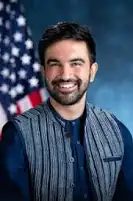

In the kaleidoscopic landscape of American politics, the run-up to the November 2025 mayoral election in New York City has become a battleground of ideologies, fears, and aspirations. At the center of this maelstrom stands Sohran Mamdani, a candidate whose very existence has ignited a firestorm of controversy. From the opulent penthouses of millionaires to the fervent gatherings of organized groups, voices of dissent have risen against him, cloaked in the rhetoric of fear and division. Yet, amidst this cacophony, a counter-narrative is emerging, one that speaks to a generation disillusioned by the status quo.
Mamdani’s campaign has been met with an array of challenges, some of which are as predictable as they are disheartening. The rhetoric from those opposed to him has ranged from the overtly racist and Islamophobic to the more insidious whispers of elitism and privilege. President Trump, a figure whose influence looms large over American politics, has not hesitated to weigh in, delivering speeches laden with the kind of incendiary language that has become his hallmark. The media, often a double-edged sword, has amplified these sentiments, providing a platform for fear-mongering and hate propaganda that seeks to undermine Mamdani’s candidacy.
However, for every voice of dissent, there is a chorus of support that is growing louder and more organized. The youth of America, particularly those in urban centers like New York, have begun to awaken to a new political consciousness. They are rejecting the sterile, empty slogans that have characterized past campaigns, seeking instead a genuine connection to the issues that affect their lives. This shift is not merely a reaction to Mamdani’s candidacy; it is a broader movement towards authenticity and accountability in political discourse.
Mamdani himself is a study in resilience. Despite the slings and arrows directed at him, he remains undeterred, steadfast in his commitment to his vision for New York City. He does not position himself as an adversary to the American system; rather, he embodies the very essence of what it means to be an American: a desire for justice, peace, and community. His campaign is not about pitting one group against another but about uniting the diverse tapestry of New Yorkers under a shared goal of progress and equity.
The fear that Mamdani’s election would herald a doomsday scenario for the city is steeped in a misunderstanding of what true leadership entails. It is not a zero-sum game where one group’s gain is another’s loss. Instead, Mamdani’s vision invites all citizens to partake in the promise of a better future. His policies are not just for the marginalized but are designed to uplift the entire city, addressing issues such as housing, trasportation, education, and public safety with a holistic approach that considers the needs of all residents. The Mayorship under contest is not Tel Aviv, not Paris, not london, not Berlin but only concerns New York City, the historic gateway to the land of hope, opprtuniy, and liberty.
As the campaign progresses, the dichotomy between Mamdani’s supporters and detractors becomes increasingly pronounced. On one side, there are those who cling to outdated paradigms of division and fear, while on the other, a burgeoning coalition of young activists, community organizers, and everyday citizens is rallying around a vision of inclusivity and hope. This coalition recognizes that the challenges facing New York City—be it economic inequality, systemic racism, or safety snd climate change—cannot be solved through divisive politics. They understand that the time for change is not just a distant dream but an imminent reality.
The narrative surrounding Mamdani is not just about one man’s quest for office; it is emblematic of a larger cultural shift taking place across the United States. The youth, disillusioned by the political establishment- the deepstate- are seeking true leaders who reflect their values and aspirations. They are tired of being told that their dreams are unattainable or that their voices do not matter. In Mamdani, they see a candidate who not only listens but actively engages with their concerns, fostering a sense of agency that has been sorely lacking in recent years.
Moreover, Mamdani’s approach to governance is rooted in dialogue rather than confrontation. He seeks to engage with those who oppose him, not to silence them, but to understand their fears and concerns. This willingness to listen and learn is a refreshing departure from the combative rhetoric that has, so far, dominated political discourse. It is a testament to his character and his belief in the power of democracy to bring about meaningful change.
As the election date draws closer, the stakes have never been higher. The outcome of Mamdani’s campaign will not only shape the future of New York City but may also set a precedent for political movements across the country. Should he emerge victorious, it would signal a profound shift in the American political landscape—a recognition that the voices of the marginalized can no longer be ignored and that a new generation is ready to take the reins of leadership.
In conclusion, Sohran Mamdani’s mayoral run is more than just a campaign; it is a reflection of the evolving American narrative. It challenges all to confront fears and prejudices while embracing the diversity that makes the nation, America, strong. While the opposition may resort to slander and fear-mongering, Mamdani’s resilience and vision for a just and equitable New York City resonate with a populace hungry for change. As Newyorkers stand on the precipice of this election, it is clear that the future is not predetermined; it is a canvas waiting for the brushstrokes of those who dare to dream of a better tomorrow.