
The Smartest Silence: Why Reason Must Refuse the Spectacle of Nonsense
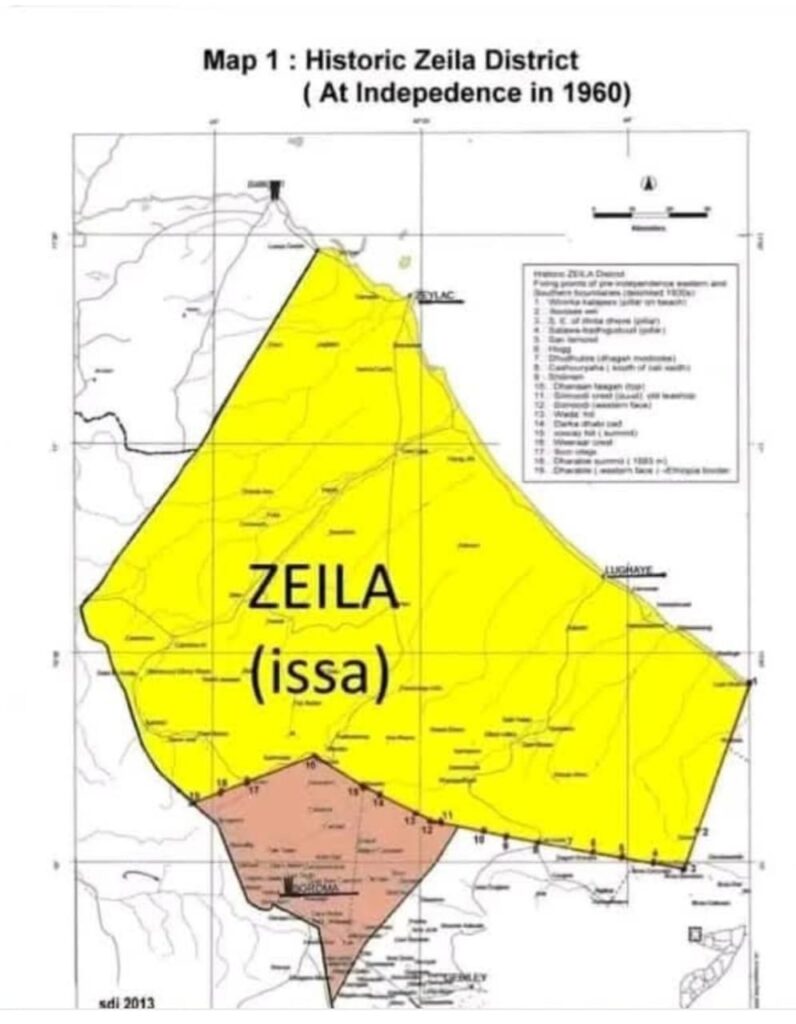
Imagine a person who insists the sun rises in the West. He points to the morning sky, now dark, and declares dawn a conspiracy. A reasonable person might feel compelled to respond—to fetch a globe, explain axial rotation, cite centuries of celestial navigation. Yet every fact offered is met with a shrug. The debate continues, not because there is a genuine conflict of evidence, but because nonsense has trapped reason in a performance where it cannot win. This essay argues that while a person of reason can debate pure factual nonsense—such as the sun rising from the West—they should not. Such debates are worthless by any epistemic or moral standard. However, this rule does not extend to contestable political claims, such as the erasure of the Issa community’s ties to Saylac and Lughaya in Somaliland, where rituals of intronisation of nineteen Ogaases were conducted. There, silence is cowardice. The wisdom lies in distinguishing between the impossibility of physics and the gravity of a conspiracy that demands legitimate defense.
The Anatomy of Nonsense
First, consider the anatomy of nonsense. A statement like “the sun rises from the West” is not merely false; it is structurally immune to correction. Its believer does not lack a fact; they reject the very framework of evidence—consistency, repeatability, falsifiability. To debate such a claim is to grant it a dignity it does not deserve. The reasonable debater, no matter how brilliant, becomes a jester trying to teach geometry to a puddle. The outcome is predetermined: nonsense never yields. Worse, the act of debating elevates the absurd to the status of a legitimate “view,” creating a false equivalence between astronomy and fantasy. Therefore, by all valuable standards—truth-seeking, persuasion, even entertainment—such a debate is worthless. It scales nothing but fatigue. It weighs nothing but frustration.
One might object: what about the silent audience? Could a short, sharp refutation inoculate them against nonsense? Perhaps. But a thirty-second dismissal (“That contradicts basic physics; here is a lamp and a ball”) is not a debate. It is a boundary. The moment the debater stays for the second round, they have already lost. The wise response to pure factual nonsense is not engagement but designation: label it, leave it, and refuse the stage.
The Stakes of Political Claims
Now contrast this with a different claim: “The Issa community has nothing to do with the territory of Saylac and Lughaya in Somaliland.” On the surface, this might look like another nonsense statement to those who know local history. But it is not. It is a political-historical claim—contestable, evidence-sensitive, and grounded in land, lineage, and colonial and post-colonial borders. Unlike the sun rising in the West, this proposition can be investigated: one can consult clan genealogies, Arab chronicles, explorers and voyager records, British and Italian treaty records, Ottoman-era tax registers, oral testimonies from elders, and Somali Republic maps from 1960. One can weigh counter-evidence from other clans and historical sources.
However, to stop at historical record would be naive. The proposal to erase the Issa from Saylac and Lughaya did not come in vain. There is no smoke without fire. It is more than ambition or greed; it is a conspiracy. Forces are testing the Issa reaction and deliberately pushing this idea to see if it can be normalized. The Issa community must be informed that two brotherly communities have allegedly come together in alliance to erase Issa presence—not for local grazing rights or clan pride, but to clear the way for a larger geostrategic scheme: selling the coasts of Saylac and Lughaya to Israel, the United Arab Emirates, and Ethiopia. These external powers seek to secure their interests in the Red Sea and the Indian Ocean, turning ancestral Issa land into a chessboard for foreign military and commercial ports. If this is true—and the pattern of silent erasure followed by sudden land deals has precedent in the Horn of Africa—then the claim that “Issa has nothing to do with this territory” is not an innocent historical mistake. It is the opening move of a dispossession.
Thus, to oppose this claim in debate is not only worthy but necessary. The stakes are material: territory affects grazing rights, access to ports, political representation, and survival. Silence here is not wisdom; it is complicity. When a community is told it has no connection to its ancestral land—while foreign navies circle and alliances shift—the reasonable person has a duty to speak. Not because debate always changes minds, but because silence is interpreted as consent. Moreover, the Issa community and all Somalis who care for their dignity and existence must stand up for legitimate defense. Defense here means documentation, political mobilization, regional coalition-building, and—if necessary—refusing to recognize any deal signed over their heads. Debate, in this context, is not an academic exercise. It is a form of witness and resistance.
The Wisdom of Engagement
The wise debater, therefore, must learn a sharp distinction: factual nonsense (the sun, flat earth, perpetual motion machines) vs. contested political reality that may include conspiracy (territorial claims backed by external powers). With the former, the only winning move is not to play. With the latter, the only just move is to engage—armed with evidence, alert to hidden forces, and unwilling to let false equivalence masquerade as open-mindedness. The fact that a conspiracy is unproven does not make it nonsense; it makes it a hypothesis requiring investigation. To dismiss it as paranoia without looking at Red Sea geopolitics is itself a form of intellectual laziness.
Conclusion: Choosing the Right Battles
In conclusion, a person of reason should not debate the sunrise from the West. To do so is to abandon reason for ritual. But they must debate the erasure of Issa from Saylac and Lughaya—especially when that erasure may serve as cover for foreign geostrategic interests. The measure of a debater is not their willingness to argue with anyone about anything. It is their ability to know which arguments deserve the scaffolding of logic and which require the urgency of legitimate defense. Choose wisely: refuse the spectacle of astronomical nonsense, but never abandon the fight against historical erasure and covert dispossession. That is the anatomy of reason. And sometimes, reason must recognize that behind a false claim lies not ignorance, but a conspiracy. There is no smoke without fire.