
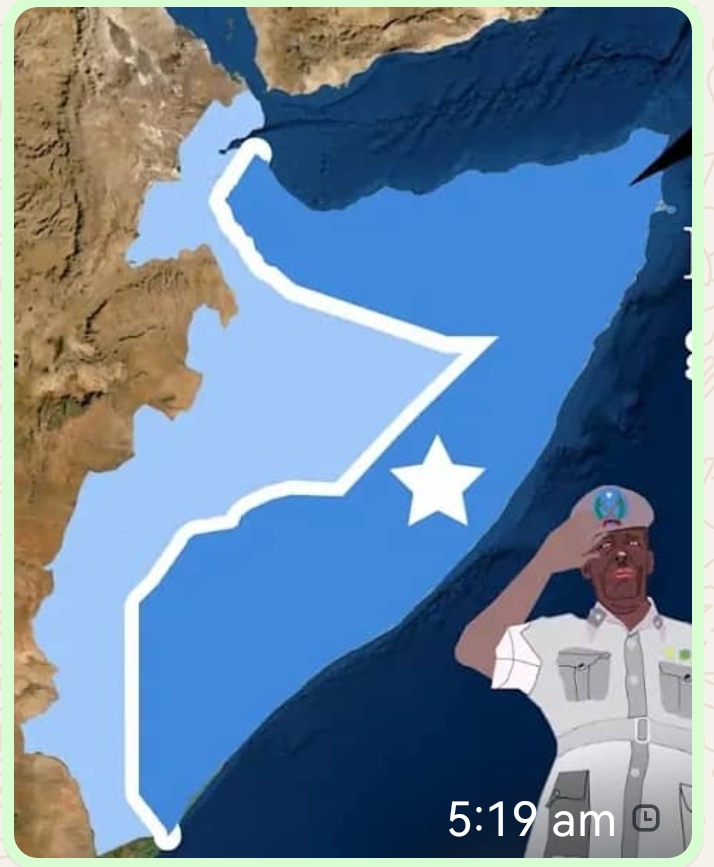


The Somali nation stands as a rare testament to organic unity in a world often fractured by internal division. Forged in the crucible of a shared language, a unified religious identity, and a collective struggle for liberation, the Somali identity is not a mere political construct but a historical and cultural reality. Therefore, the attempt by an isolated faction to sever the territorial and national integrity of Somalia—a project now dangerously entangled, among others, with foreign adversaries like Israel and Ethiopia—represents more than a political dispute; it is an act of profound betrayal and aggression. This secessionist venture must be resolutely opposed by all legitimate means, for it threatens the very foundations of Somali sovereignty, strategic interests, and hard-won stability.
The cornerstone of the Somali nation is its remarkable homogeneity. Unlike many post-colonial states with arbitrary borders enclosing disparate groups, Somalia is built upon the pillars of a single language, Somali, and a unifying religion, Islam, which is inextricably woven into the cultural fabric. This convergence creates a national consciousness that is deep and resonant. This unity was proven in fire during the anti-colonial fight, a unanimous effort that transcended clan lines to envision a common destiny. Though the desired unification was checked, the subsequent union of territories was the fulfillment of that vision, a collective will made manifest. To claim secession from such a whole is not an exercise of self-determination but a rejection of this shared historical project and the sacrifices that built it. It is the choice of a fraction against the unanimous will of the grand majority, who remain steadfast in their commitment to a united Somalia.
The secessionist narrative, often framed around historical rhetoric and exagerated grievances, cannot outweigh the catastrophic consequences of fragmentation. The precedent set by allowing one tribal space orregion to unilaterally dismember the state would be existential. It would invite endless cycles of claim and counter-claim from other tribal regions, dissolving the nation into unsustainable, conflict-prone micro-states. Somalia’s strategic interests—including the security of its longest coastline, the management of its resources, and its position in regional geopolitics and security—demand a unified stance. A fractured Somalia would become a permanent playground for foreign powers, each manipulating a piece of the whole for their own ends, as we are already witnessing. National security is indivisible; a breach in one part is a vulnerability for the entire nation.
This brings us to the most alarming facet of the current crisis: the secessionist faction’s reckless invitation of hostile foreign powers onto Somali soil. The reported courtship of Israel, a state historically at odds with Somali and broader Muslim interests, is not merely a diplomatic maneuver; it is a strategic and spiritual provocation. It transforms an internal political disagreement into an act of external aggression by proxy. Similarly, the Memorandum of Understanding with Ethiopia, trading the potential recognition of secession for sea/port access, is a direct assault on Somali sovereignty. Ethiopia, a historic rival, is offered a sovereign Somali territory as a naval base. These actions prove that the secessionist project is not, and cannot be, a benign, internal Somali affair. It has actively made itself a vector for foreign intervention, justifying the Somali nation’s right and obligation to adopt a clear defensive posture. To defend the homeland from such collusion is not oppression; it is the fundamental duty of any state.
Critics and secessionist sympathizers will point to periods of internal strife and misgovernment as justification for breakaway. However, the answer to past failures of governance is reform, not dissolution. The progress made by the Federal Government of Somalia in recent years, despite immense challenges, demonstrates that rebuilding a unified state is possible. The solution lies in strengthening federal institutions through dialogue and inclusive politics, not in rewarding secession that invites foreign predators. The stability claimed by the secessionist region is fragile and built upon the denial of the larger national reality; its longevity is contingent on the continued patience and forbearance of the Somali nation, which is not obliged to watch passively as its territory is bartered away.
In conclusion, the principle of Somali unity is non-negotiable. It is rooted in an unbreakable identity, sanctified by shared history, and essential for future survival and dignity. The secessionist attempt, especially through its alliances with Ethiopia and the criminal state of Israel, has revealed itself as a clear and present danger to Somali national security, peace, and strategic existence. This is an aggression that must be spoiled by all means. To acquiesce would be to betray our ancestors who fought for one Somalia and to condemn our children to a future of perpetual weakness and division. The Somali nation must and will defend its integrity, for its unity is its strength, its faith, and its destiny.