
The Unraveling Dream: How Somaliland’s Proxy Politics and Internal Divisions Threaten Its Foundation: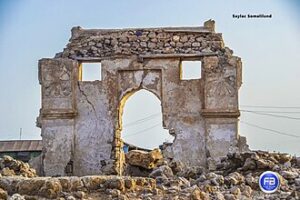

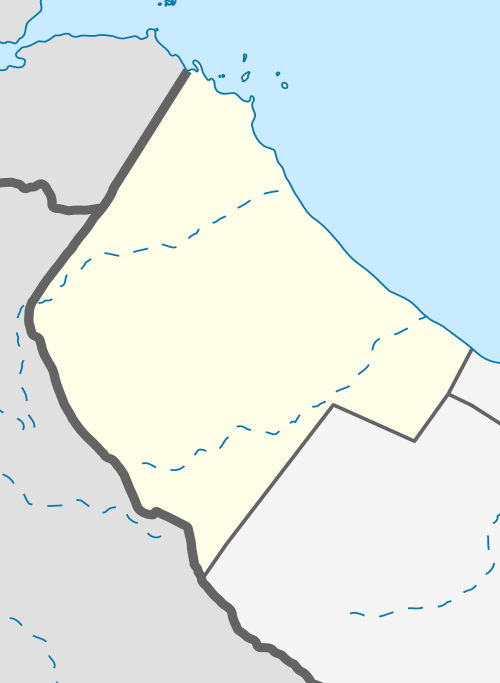
For thirty-five years, Somaliland has woven a narrative that distinguishes it from the tumultuous landscape of southern Somalia—a tale of stability, democracy, and consensus, all anchored in the rich soil of traditional clan governance. This narrative, while compelling, has often been unfulfilled, particularly in its quest for international recognition. However, recent events in the ancient port city of Zeila have revealed a troubling contradiction at the heart of the Somaliland project. The government’s heavy-handed suppression of a peaceful commemoration of the UNESCO-inscribed Xeer Issa—a traditional legal code of the Issa clan—exposes a dangerous trajectory. Somaliland is increasingly jeopardizing its foundational principles by engaging in divisive internal politics and acting as a proxy for regional powers, a strategy that threatens to undermine its very aspirations for nationhood.
The Crisis in Zeila: A Microcosm of Deeper Malaise:
The crisis in Zeila serves as a microcosm of a more profound malaise that plagues Somaliland. The Xeer, in its various forms, is not merely a cultural relic; it is the very glue that binds Somali society together, a sophisticated system of jurisprudence and conflict resolution that Somaliland has proudly highlighted as evidence of its governance prowess. To forbid the Issa community from celebrating the global recognition of their specific Xeer in its historical birthplace is not merely a security measure—it is an act of profound cultural and political negation. This decision signals to the Issa community that their heritage is not a valued thread in Somaliland’s national tapestry but rather a potential threat to it.
By allegedly instrumentalizing one clan (Gadabuursi) against another (Issa) to enforce this ban, the government in Hargeisa abandons its core mandate as an impartial arbiter. It regresses to the very clan-based divisiveness that it claims to have transcended. This unscrupulous triggering of conflict is akin to lighting a fire that, once ignited, may prove impossible to extinguish, consuming the trust necessary for a multi-clan state to function effectively. The very foundation upon which Somaliland stands—its commitment to inclusivity and consensus—begins to crumble under the weight of its own contradictions.
The Geopolitical Calculus: A Sinister Underbelly:
Beneath this internal strife lies a more sinister geopolitical calculus. The Issa community in Somaliland, a victim of chronic, injustice is intricately linked to the Issa-dominated state of Djibouti, Somaliland’s neighbor and a key regional player. The accusation that Somaliland is “targeting Djibouti by procuration” is a serious one, pointing to a proxy war being fought on Somaliland’s own soil. The alleged “third party” in this arrangement is widely understood to be United Arab Emirates and Ethiopia, a landlocked giant desperate for secure port access and wary of Djibouti’s dominance as its primary trade corridor.
By aligning with UAE and Ethiopian interests to pressure Djibouti, Somaliland’s leaders may believe they are leveraging their strategic position for diplomatic gain or personal advantage. However, in doing so, they make a fatal error: they conflate the Issa community within their borders with the foreign policy of the Djiboutian state. This conflation transforms citizens into geopolitical pawns, making their cultural rights negotiable in a grand strategic game that they never chose to play.
The Tragedy of Self-Destruction:
The ultimate tragedy of this approach is that it is fundamentally self-destructive. Somaliland’s claim to statehood does not rest on ethnic homogeneity but rather on a social contract among its major clans—the Isaaq, the Harti (in parts of Sanaag), and the Dir (including the Issa in Selel & Awdal). By systematically alienating the Issa through actions like the Zeila ban, Somaliland undermines the very multi-clan consensus that gives its independence claim legitimacy. It cannot simultaneously present itself to the world as a bastion of peace and tradition while forbidding the joyful celebration of one of its own communities’ most cherished traditions. This hypocrisy is not lost on the international community, for whom internal cohesion and respect for every community rights are prerequisites for recognition.
Furthermore, by acting as a proxy, Somaliland cedes a measure of its aspired sovereignty. It risks becoming a vessel for the interests of others, rather than a champion for its own people. The warning that Somaliland is “digging its own grave unconsciously or for personal advantages” is astute. If the personal interests of a few leaders are prioritized over the long-term stability of the nation, the project will fail. If this strategy is pursued unconsciously, without a full understanding of the regional forces at play, the outcome will be the same. Alienating a key clan and provoking a powerful neighbor like Djibouti creates a fault line that external adversaries and internal secessionists alike can exploit, potentially leading to the fragmentation of societal fabric and the irreversible collapse of the Somaliland dream.
A Crossroads: The Path Forward:
In conclusion, the standoff in Zeila over the Xeer Issa is far more than a local dispute; it is a symptom of a governing philosophy that has lost its way, trading inclusive nation-building for divisive proxy politics. Somaliland stands at a crossroads. It can continue down the current path—a trajectory of internal marginalization and external manipulation that leads to inevitable unraveling. Or, it can return to the principles that made it an African success story: by embracing all its constituent clans, celebrating their cultural heritage as a national asset, and pursuing an independent foreign policy that serves the interests of all its people.
The choice is clear. To survive and ultimately thrive, Somaliland must cease being a proxy and remember to be a nation. The preservation of its foundational principles, the celebration of its diverse heritage, and the commitment to an inclusive governance model are not merely idealistic aspirations; they are the very lifeblood of Somaliland’s future. Only by recognizing and valuing the contributions of every clan, including the Issa, can Somaliland hope to realize its dream of stability, recognition, and unity. The time for introspection and change is now; the fate of a nation hangs in the balance.