

The Unraveling of a Dream: How Internal Conspiracy Threatens Somaliland’s Future:
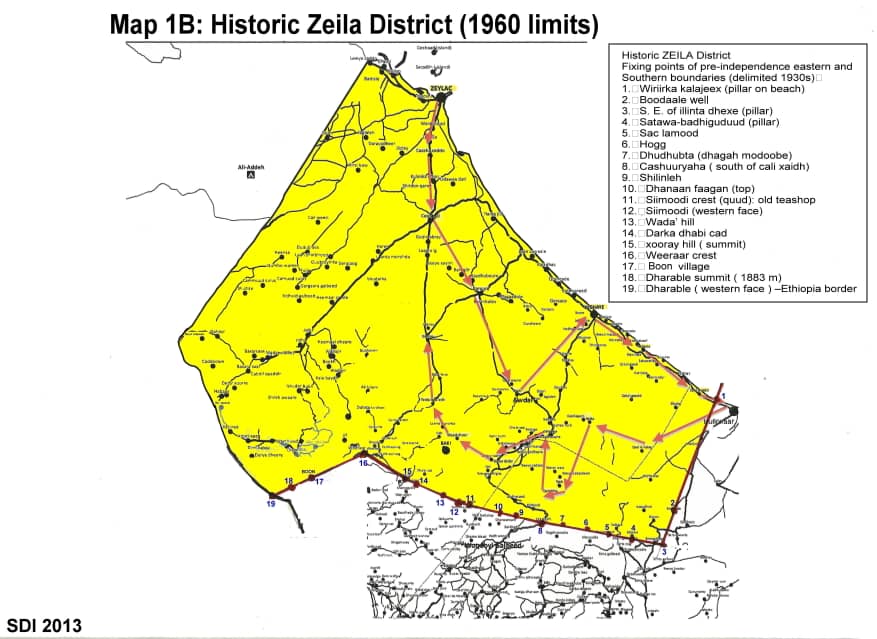
Somaliland, a self-declared republic carved from the remnants of a fractured state, has often been celebrated as a beacon of stability and democratic governance in the tumultuous Horn of Africa. Its journey has been remarkable, offering a glimmer of hope in a region often plagued by chaos. However, this fragile oasis of peace is now threatened—not by external adversaries, but by a sinister internal conspiracy that seeks to undermine one of its foundational pillars: the Issa community. The recent turmoil surrounding the Xeer Issa celebrations in the historic port of Zeila, it’s birthplace, is not merely a cultural dispute; it represents a deeper, more insidious malaise—a deliberate project of alienation and displacement that, if left unchecked, could lead to the self-destruction of Somaliland.
The Genesis of the Crisis:
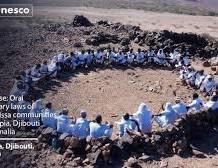
The roots of this crisis can be traced to a perplexing and hostile stance adopted by the power centers in Hargeisa and Borama. The Xeer Issa, a vibrant celebration of a unique Somali heritage, is officially recognized by UNESCO as an intangible cultural treasure. Scheduled for December 5, 2025, this event should have been a point of national pride—a celebration of diversity within Somaliland’s cultural mosaic. Yet, for the leadership in Hargeisa, this event has been perceived not as a celebration, but erroneously as an existential threat. This perception is both illogical and revealing, exposing a deep-seated fear of cultural plurality.
The government’s response has been characterized by indecisiveness and a lack of clear vision, creating a vacuum that has been exploited by its most virulent allies. In this vacuum, the true nature of the conspiracy becomes evident. On one hand, the governing authority in Hargeisa remains passive, its inaction speaking volumes. On the other, allied political factions, representing significant constituencies, have adopted a rhetoric that is not merely critical but openly hostile towards the Issa community. This rhetoric, which the government neither halts nor reprimands, creates a toxic environment. In the eyes of the public, the government and its vocal allies become partners in a malicious endeavor. Their silence (Hargeisa & Borama) in the face of provocation is not neutrality; it is complicity.
The Facade of Security:
The logical conclusion is that the stated concerns over “security” are merely a facade. If the issue were genuinely one of public order, the state possesses the necessary tools and mandate to reprimand provocations and to ensure security for a lawful, UNESCO-sanctioned cultural event. The reality, however, as evidenced by the heinous rhetoric of the government’s allies, is far more sinister. The underlying aim appears to be the gradual erosion of the Issa community’s standing within Somaliland, with the ultimate objective of displacing them and appropriating their historic lands and properties. This pattern is all too familiar to those who study history and contemporary conflicts. It mirrors a slow-motion strategy of settler colonialism, reminiscent of the plight faced by the Palestinian people, who have seen their heritage and land stripped away under the guise of security and historical claims. To witness such a blueprint being applied within Somaliland is both astonishing and horrifying.
The Illogic of Fear:
As the region watches in bewilderment, one must ponder what existential stake could possibly compel the Hargeisa leadership to embark on a course so clearly geared toward self-destruction. Why is a Somali success story—the preservation and international recognition of a unique cultural heritage—seen as so threatening? The answer lies in the brittle nature of a nationalism that cannot accommodate its own diversity. A celebration of Issa identity is not viewed as an enriching thread in the national tapestry but rather as a challenge to a homogenized, majoritarian vision of the state. It is the fear of a distinct cultural voice within the collective chorus that drives this internal conspiracy.
Consequences of Alienation:
This misguided project is, however, doomed to fail. The consequences of such a path will be dire, not only for the Issa community but for Somaliland as a whole. It threatens to shatter the fragile inter-clan consensus upon which the republic was built, inviting internal strife and irrevocably damaging its reputation on the international stage, where it seeks recognition. The potential for unrest and violence looms large, as alienation breeds resentment, and resentment can quickly escalate into deadly conflict.
In a region where clan dynamics play a pivotal role in social cohesion, the marginalization of the Issa community could lead to a fracturing of alliances that have historically underpinned Somaliland’s stability. The repercussions of such a fracture would not be contained; they would ripple through the fabric of society, undermining the very foundations of peace and governance that Somaliland has strived to build.
A Call for Redemption:
The only path to redemption lies in a clear and unequivocal reversal of the current trajectory. The leadership in Hargeisa must summon the courage to halt its descent into divisiveness, offer a formal apology to the alienated Issa community, and clear the way for their unimpeded cultural celebrations in Zeila. This act of reconciliation is not merely a matter of political expediency; it is a moral imperative. The restoration of the Issa community’s full rights—both tangible rights to land and property and the intangible right to identity and heritage—is essential for healing the wounds inflicted by this internal conspiracy.
The Soul of Somaliland:
The soul of Somaliland is at stake. It stands at a crossroads, faced with a choice between being a vibrant mosaic of its constituent communities—united in their diversity—or becoming a prison defined by exclusion and fear. The celebration in Zeila is more than a festival; it is a litmus test for the very idea of Somaliland. To fail this test is to unravel the dream itself, to extinguish the hope that has emerged from the ashes of a collapsed state.
In conclusion, the threat to Somaliland’s future is not an external force but an internal conspiracy that seeks to undermine its very essence. The Xeer Issa celebrations should be embraced as a testament to the nation’s rich cultural heritage, not feared as a challenge to its unity. As Somaliland navigates this precarious moment, the leadership must recognize that the strength of the republic lies in its diversity. To honor the Issa community and their cultural celebrations is to honor the very principles upon which Somaliland was founded—a commitment to peace, democracy, and the celebration of all its people. The choice is clear: Somaliland can either embrace its rich tapestry of identities or risk unraveling the dream that has inspired so many.