
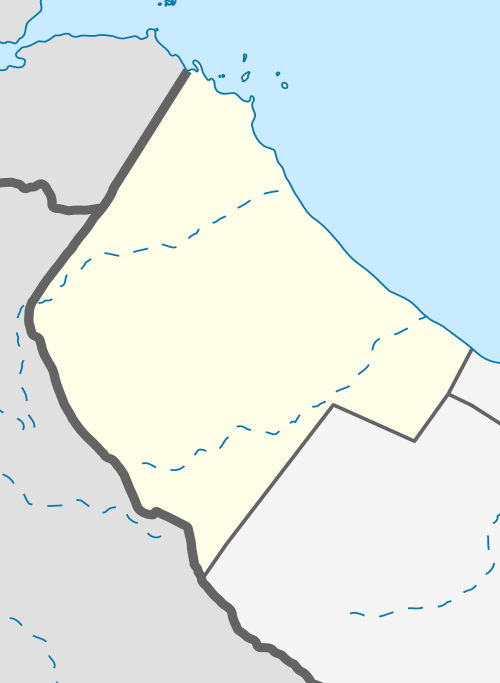
The Unseen War: How Hate Speech Destroys the Soul of Awdal and Selel
In the highlands and borderlands of Awdal and Selel, the spoken word has historically been a powerful tool, rich with meaning and significance. It is not merely a collection of sounds; it embodies contracts, judgments, and the weight of history. For centuries, the art of xeer—an intricate system of customary law—coupled with poetry and council deliberations, has served as the glue binding clans like the Issa and Gadaburisi in a delicate but functional peace. Yet today, this same instrument is being weaponized, transforming the very essence of communication into a catalyst for conflict. Phrases that once fostered unity now incite division: “their women are lawful for us,” “no quarter to the enemy clan,” and “anyone who hesitates is a traitor to blood” echo through public gatherings, social media, and even the conversations of students. These words are not mere expressions of frustration; they are strategic acts of incitement, wielded with precision to fracture the fragile peace that has long held these communities together.
Some observers may argue that hate speech is merely a reflection of deeper political grievances, economic exclusion, or historical land disputes. This perspective, while not entirely incorrect, is dangerously incomplete. In Awdal and Selel, hate speech is not a mirror reflecting existing tensions; it is a match that ignites conflict from the most ordinary disagreements. When a clan elder urges young men to “cleanse the grazing lands of outsiders,” he is not merely interpreting a dispute; he is actively inciting one. To treat hate speech as a symptom is to excuse the arsonist while studying the drought. The evidence on the ground reveals a stark reality: the rhetoric itself becomes the turning point where dialogue ceases and violence begins.
The most immediate casualty of hate speech is public order. In 2025, during the upheaval surrounding the Borama fallout, students at Amoud University—young men who should have been immersed in studies of agriculture, medicine, and education—found themselves drawn to violence, wielding borrowed rifles. The catalyst was not a direct assault on Borama; it was a recorded message from political figures and traditional elders calling upon “all sons of the clan to answer the call against the Issa.” Within days, classrooms emptied, shops closed, and families sent their boys toward frontlines they did not fully comprehend. The university, once a beacon of hope and neutrality, transformed into a staging ground for conflict. This is the unique power of hate speech: it bypasses reason and the wisdom of many elders, speaking directly to the raw nerve of clan loyalty. It turns a distant political crisis into a local imperative for violence.
Beyond the immediate bloodshed, hate speech quietly dismantles the economic and social fabric that sustains life in these regions. Borama thrives on cross-clan trade—livestock, khat, household goods and distribution, and transport. When hate speech brands another clan as “non native” or “intruder,” the repercussions extend far beyond mere words. Buyers hesitate to cross into rival markets, sellers refuse credit along clan lines, and even marriage negotiations collapse under the weight of suspicion. The simple act of leaving a shop children-attended while going to prayer becomes fraught with anxiety. This gradual erosion of trust leads to a slow strangulation of daily commerce. Families that have traded together for generations suddenly view each other as threats. This is not collateral damage; it is the intended effect of hate speech, which fractures the cooperative bonds that impoverished communities cannot afford to lose.
The response from the Somaliland administration has, tragically, exacerbated the crisis rather than alleviating it. When the Ministry of Interior finally took action—banning clan meetings, demanding disarmament exclussively applicable to Awdal and Selel within impossibly tight timelines, and threatening traditional elders—these measures arriving too late lacked the necessary trust and transparency. Worse still, they were perceived as partisan maneuvers. Elders in Awdal and Selel publicly suspended cooperation with the minister, accusing his government of using peace as a facade for control. A senior Akil was quoted as saying, “They call us chess pieces or pions, then blame us for the war.” This breakdown in the relationship between the state and traditional conflict-resolution mechanisms represents perhaps the most enduring damage of all. Without the xeer-based mediation of elders, there is no local mechanism left to cool tensions. Hate speech has effectively dynamited the bridge between customary authority and state authority, leaving a vacuum that only more incendiary rhetoric can fill.
To reduce hate speech in Awdal and Selel to a mere side effect of political struggle is to overlook the war being waged with words. Hate speech is not a footnote to conflict; it is a weapon of mass disruption in its own right. It transforms students into soldiers, markets into ghost towns, and elders into bystanders. The flight of youth to distant battlefields and the suspension of elder cooperation are not minor incidents; they are alarms signaling a deeper crisis. If the communities of Awdal and Selel are to survive—not just as clans but as a shared civilization—they must first name the enemy: the poisoned word. Disarming hate speech requires more than laws or bans; it necessitates a return to accountable speech, where every leader understands that a call to arms without legitimate cause is a crime, and every listener recognizes that repeating hate is complicity. The choice before these communities is stark: reclaim the power of the word for peace or watch as it incinerates what remains of home.
To forge a path forward, it is essential to cultivate a culture of dialogue, empathy, and mutual understanding. This begins with education, where young minds are equipped not only with knowledge but also with the tools to engage in constructive conversation. Schools and universities must become sanctuaries for peace, fostering an environment where differences are celebrated rather than feared. Community leaders, both traditional and modern, must work collaboratively to create forums for discussion, allowing grievances to be expressed, resolved and aired without resorting to violence. Government must be prompt to listen legitimate grievances to the level of own constituent document.
Moreover, the role of media cannot be overstated. Social media platforms, while often breeding grounds for hate speech, can also serve as powerful tools for counter-narratives. Initiatives that promote positive storytelling, highlight shared histories, and celebrate inter-clan cooperation can help reshape the narrative. Influencers and public figures have a responsibility to wield their platforms wisely, using their voices to champion peace rather than incite division.
Ultimately, the power of words lies in their ability to connect or divide. In Awdal and Selel, the challenge is to harness this power for healing rather than destruction. By recognizing the profound impact of hate speech and taking collective responsibility for the words we choose, communities can begin to rebuild the bridges that have been fractured. The unseen war of words can be transformed into a movement for peace, where dialogue reigns supreme, and the soul of Awdal and Selel emerges stronger, united, and resilient against the tides of hatred. In this endeavor, every voice counts, and every word matters. Let us choose wisely.