
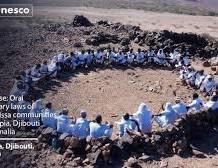

In the intricate and often tumultuous political landscape of post-conflict Somalia, cultural heritage emerges as both a bastion of identity and a potential flashpoint for conflict. The recent controversy surrounding the UNESCO registration of Xeer Ciise—an ancient customary law of the Issa community—serves as a compelling case study. This incident not only underscores the fragility of social cohesion in a society grappling with the legacies of its past but also highlights how historical grievances can be weaponized in contemporary power struggles. The unfolding drama in Zaila, a town steeped in history, reflects deeper geopolitical shifts that have transpired since the collapse of the Somali state in 1991, revealing the complexities of identity, marginalization, and the consequences of manipulated narratives.
The Bedrock of Society: Xeer Ciise as History and Identity:
To grasp the current strife, one must first appreciate the significance of Xeer Ciise. For over five centuries, this customary law has transcended mere legal codification; it has served as a constitutional framework, social contract, and peacemaking mechanism for the Issa community. Originating from the wisdom of Issa sages and solidified atop Sitti Mountain in the 15th century, Xeer Ciise provided a framework for harmonious living in a pastoral society emerging from the ruins of the Adal Kingdom. Its influence extended across a distinct territory, encompassing the ancient port city of Zaila—a multiethnic urban center and the historical seat of the Adal Empire—through to contemporary urban hubs such as Djibouti and Dire Dawa.
Xeer Ciise is celebrated for its inclusive ethos, functioning as a “non-discriminatory platform” that integrated, among others, a significant segment of the Gadabuursi community, particularly the Maxad Casse. For generations, these communities cohabited and thrived together, characterized by intermarriage and shared cultural practices. This historical narrative of cooperation serves as a critical pillar in the current discourse, contrasting a past of unity with a present marked by division, thereby suggesting that contemporary conflicts are artificially constructed rather than rooted in historical animosity.
The Unraveling: The Genesis of Grievance and Conspiracy:
The disintegration of Siad Barre’s regime in 1991 marked a pivotal moment in the unraveling of this social fabric. The resulting power vacuum led to a realignment of alliances, recalling notably the past strategic pact between Barre’s Socialist regime and an ambitious Gadabursi faction, followed by an alliance between the victorious Somali National Movement (SNM) and some Gadabuursi elites. From the Issa perspective, these alliances were forged with the explicit intent of marginalizing the Issa community in Guban. The first alliance had the intent to displace the issa population in retaliation for their refusal to join the armed struggle against the Isaaq tribes (SNM) and to pave the way for hostile policies against independent Djibouti for not joining the union
The subsequent alliance with the SNM was fueled by fears that the Republic of Djibouti—home to an Issa-majority government—sought to annex the Zaila district. This suspicion justified accordingly, a concerted effort to dismantle Issa livelihoods, political influence and appropriate their lands. The actions of both the Barre regime and the SNM exacerbated civil strife in Awdal Province, driven by perceived strategic interests.
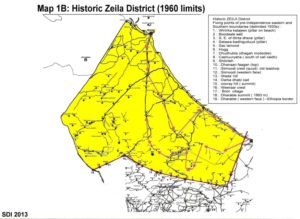
The presidency of Dahir Rayaale emerged as a critical juncture, where constitutional order was undermined, leading to the “dismemberment” of the 1960 Zaila district. This act was not merely administrative reform; it was a calculated strategy to enhance the political power of his own tribe at the direct expense of Issa territorial integrity and political rights. The dismemberment heralded a new era of systemic disenfranchisement for the Issa community, who faced a multi-faceted assault on their rights over the ensuing decades:
1. Political Exclusion: Manipulated voter registrations, the closure(out list) of polling stations, and rigged elections, effectively silenced the Issa, leaving them without representation in legislative and executive bodies.
2. Economic and Social Neglect: Denial of job opportunities, developmental projects and social services entrenched their status as second-class citizens, further marginalizing their community.
3. Territorial Fragmentation: The illegal dismemberment of their ancestral administrative district (Zaila) severed the integrity of their historical territory governed by Xeer Ciise, deepening their grievances.
The UNESCO Flashpoint: Culture as a Proxy for Conflict:
The UNESCO registration of Xeer Ciise as an intangible cultural heritage was intended to be a moment of celebration for the Issa community and a validation of their cultural contributions to humanity, an uncontested pride for the Somali Identity. Instead, it, unexpectedly and arrogantly, became a flashpoint for confrontation. For the Issa, this recognition was a rightful acknowledgment of their heritage; for their adversaries, it was perceived as an assertion of exclusive ownership, a step towards legitimizing historical claims over territories presented as contested.
The backlash was immediate and violent. “Provocative assaults” erupted in Zaila, accompanied by “orchestrated insults and heart-breaking propaganda” in Borama and elsewhere. Specific demands made to the Minister of Interior—to cancel celebrations in Zaila, oust the newly appointed regional governor of Selel, and the shut down of Zaila boarding secondary school—were not merely protests but rather manifestations of deep-seated frustrations from groups that felt their objectives for land grab had been thwarted due to the patience, resilience and the determination of Issa to be firm on their soil regardless of provocations and devious machinations. The celebration of Xeer Ciise’s cultural registration was reframed as an act of provocation, revealing the depth of the rift artificially created between communities.
The Invisible Hand and the Path Forward:
Amidst this breakdown of historically amicable relations, the narrative introduces the compelling notion of a “third party devilish hand.” This theory posits that the absurdity of the conflict, particularly given the long history of familial ties between the Issa and Gadabuursi, suggests external manipulation. While specifics remain elusive, this implies the involvement of regional actors or other vested interests exploiting imported local tribal divisions for broader geopolitical aims—a common tactic in the Horn of Africa.
Despite the grim circumstances, the conclusion strikes a cautiously optimistic note. It emphasizes the responsibility of both Issa and Gadabuursi leaders to “struggle to regain their harmony.” This perspective acknowledges that the solution must be rooted in local agency, driven by a collective memory of peaceful coexistence that predates current political machinations. It is a call to transcend immediate conflicts and remember centuries of shared life and intermarriage, suggesting that the social bonds, though strained, may not be irrevocably broken.
Moreover, the government of Somaliland bears a crucial responsibility to ensure the success and security of cultural events that rightfully celebrate heritage, as the stability of the region may hinge on such initiatives. A proactive approach to cultural heritage, one that emphasizes unity rather than division, could pave the way for reconciliation and healing. The Xeer Ciise, rather than merely a relic of the past, has the potential to serve as a living testament to the possibilities of coexistence in a divided landscape.
Conclusion:
The Xeer Ciise controversy encapsulates the intricate interplay between cultural heritage and political identity in contemporary Somaliland. It serves as a reminder of the power of historical narratives in shaping present realities and the potential for these narratives to either foster unity or incite conflict. As the Issa and Gadabuursi communities navigate their complex histories, the path toward reconciliation will require a commitment to acknowledging shared legacies and fostering inclusive dialogue. In a region marked by division, the revival of Xeer Ciise as a symbol of cultural heritage could offer a pathway to restore harmony and build a more cohesive future.