
Zeila Before Sharmarke: Arab Rule, Imperial Rivalries, and the Issa–Ogaas Trade Nexus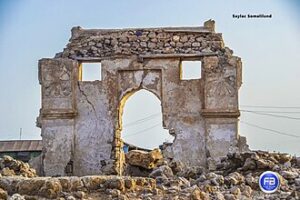

Zeila, spelled in Somali as Saylac and locally known as Awdal, was one of the most important ports of the Horn of Africa long before the rise of Sharmarke Ali Saleh in the 1840s. Its position on the Gulf of Aden made it a gateway between the Red Sea, Arabia, and the interior of the Somali region. Yet before Sharmarke, Zeila was not ruled by a single, unified authority. Instead, it was governed through a layered system of Arab-Ottoman suzerainty, local Arab governors, Yemeni tax-farmers, and Somali clan intermediaries. The port’s survival depended less on distant imperial decrees than on its ability to manage the hinterland, especially the Issa clans, and the caravan routes controlled by the Ogaas, or Ughaz, of the Issa and other Somali groups on respective territories. This essay examines the Arab rulers of Zeila before Sharmarke, their interactions with the Ottoman Turks, Egypt, and European powers, and their complex relationship with the Issa and the commercial routes to the interior.
The political order of Zeila before Sharmarke was shaped by the Ottoman Empire’s nominal authority. In the sixteenth century, the Ottomans established the Sanjak of Zeila as part of the Habesh Eyalet, and Özdemir Pasha captured the town in 1559. Ottoman control, however, was never continuous or deeply institutionalised. It was exercised largely through Yemen, especially through the Sharifs of Mocha, who farmed out the right to govern and tax Zeila. The immediate Arab governor before Sharmarke was Sayyid Mohamed El-Barr, an Ottoman-appointed official who refused to surrender his authority when Sharmarke acquired the tax-farming rights. This arrangement reveals that Zeila’s rulers were often not direct imperial servants but local strongmen and tax-farmers who mediated between the Ottoman world and the Somali coast. After Sharmarke’s first deposition, Abubakr Ibrahim Chehem, an Afar statesman, continued this pattern of rule under Ottoman suzerainty. Thus, Arab and Arab-affiliated governors were central to Zeila’s administration, but their power was always negotiated with local and regional forces.
Turkish, or Ottoman, interactions with Zeila were therefore real but limited. The Ottomans claimed sovereignty, yet their authority was often reduced to fiscal rights and symbolic recognition. Sharmarke himself acquired the rights to farm Zeila’s taxes from the Ottoman governor of Mocha and Hodeida, showing that Ottoman legitimacy could be bought, leased, or contested. In 1856, Sharmarke laid siege to Zeila against the Ottoman governor Abu Bakr Pasha, though the siege was inconclusive and Abu Bakr reasserted control the following year. This episode demonstrates that Ottoman power in Zeila was not absolute; it depended on local alliances, revenue, and the ability to manage the port’s trade. The Turks provided a framework of legitimacy, but the actual governance of Zeila required constant negotiation with Somali clans and Arab merchants.
Egyptian involvement in Zeila came later but followed a similar logic of indirect rule. In 1874–75, the Egyptians obtained a firman from the Ottomans, securing claims over Zeila, and Britain recognized Egyptian nominal jurisdiction as far east as Cape Guardafui. Egypt’s actual authority over the interior was limited, and its coastal rule lasted only from about 1870 to 1884. When the Egyptian garrison in Harar was evacuated in 1885, Zeila became contested between the French, based in Tadjoura, and the British. The Egyptian interlude showed that outside powers could claim Zeila on paper, but they could not control the caravan routes or the Somali clans without local cooperation. Egypt, like the Ottomans before it, depended on intermediaries and subsidies to keep the peace.
European powers entered Zeila’s politics through trade, treaties, and protection agreements. After Egypt’s withdrawal, Britain moved to control Zeila, and the Zeila Agency administered the three main Somali clans of the area (Saila, Berbera & Borama), the Issa and the Gadabuursi, represented by thirty-six and thirty-seven akils respectively. The French, meanwhile, signed a fake protectorate treaty on 25 March 1885 with Ughaz Nur of the Gadabuursi at Zeila, placing much of the Issa coastal territory and the Gadabuursi interior under French protection, ultimately causing his evation or escape to Harar and the invitation of his son, Dodi, to replace him. Even the Italians, appeared in 1876, when an Italian expedition was required to pay a tribute of fifty thalers and a piece of special cotton to the Ughaz of the Issa, Ughaz Roble Farah, a payment that Abubakr Pasha reportedly made instantly. These European interventions reveal that Zeila’s fate was increasingly tied to imperial rivalry, but the terms of those interventions were still shaped by local Issa Ogaas and clan leaders.
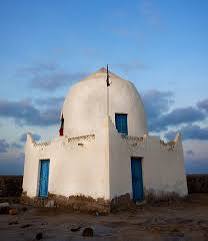
The most important local relationship for Zeila’s rulers was with the Issa. The Issa clan regards Zeila as its traditional home, and it is the site where their Ughazes are crowned. The rulers of Zeila understood that the port could not function without Issa cooperation. They therefore followed a long-standing policy of subsidising the Issa and their Ughaz. A newly appointed Ughaz would first pay his respects to the tomb of Sheikh Ibrahim Sailici and to the nearby tomb of Eeba Abdalla before paying a courteous visit to the Governor of Zeila, who in turn sought to propitiate the “King of the Black Issa” so that he would restrain his clansmen from molesting caravans on the Zeila–Harar road. In 1876, the Ughaz of the Issa was received in Zeila with great splendour; the Pasha and residents celebrated him and even went to receive him at Tocoscia joining the ceremonial procession to Zaila. This ritual of respect and subsidy was not mere ceremony. It was a practical system of border management, ensuring that the caravans that supplied Zeila with goods and revenue could travel safely through Issa territory.
The commercial routes to the interior were the lifeline of Zeila, and they were controlled by the Ogaas of the Issa. Two main caravan routes led from Harar to Zeila: one crossed a ridge to the north of the town and ran through Issa territory, while the other, more direct but rugged, ascended the Darmi Pass through Gadabuursi country. Ughaz Nur II of the Gadabuursi had also strong relations with the Emir of Harar, as the caravan route to Harar ran from Thermal (Boon) through Gadabuursi clan territory. The French treaty obliged the Ughaz to protect the caravan routes and French trade, showing how European powers recognised that the Ogaases were the true gatekeepers of the interior. Sharmarke Ali Saleh, after taking Zeila, moved to monopolise regional trade, with his sights set as far as Harar and the Ogaden. But he was building on a system that earlier Arab governors had already perfected: ruling the coast by negotiating with the respective clans and the Ogaases who controlled the routes inland.
In conclusion, Zeila before Sharmarke was a cosmopolitan port governed through a fragile balance of Arab-Ottoman authority, Egyptian ambitions, European rivalries, and Somali clan power. The Arab rulers of Zeila, whether appointed by the Sharifs of Mocha, the Ottomans, or local arrangements, could not govern effectively without the Issa and their Ogaas. Their interactions with the Turks, Egyptians, and Europeans were shaped by the need to keep trade flowing and caravans safe. The port’s prosperity depended on the Zeila–Harar routes, and those routes depended on the goodwill of the Issa and Gadabuursi Ogaases. Sharmarke Ali Saleh would later transform this system and assert a more personal monopoly over trade, but the foundations he inherited were laid by the Arab governors and their intricate relationships with the respective Somali hinterland. Zeila was never merely an Arab outpost or an imperial possession; it was a negotiated gateway where distant empires met local power, and where the Ogaases of the interior held the keys to the sea.