



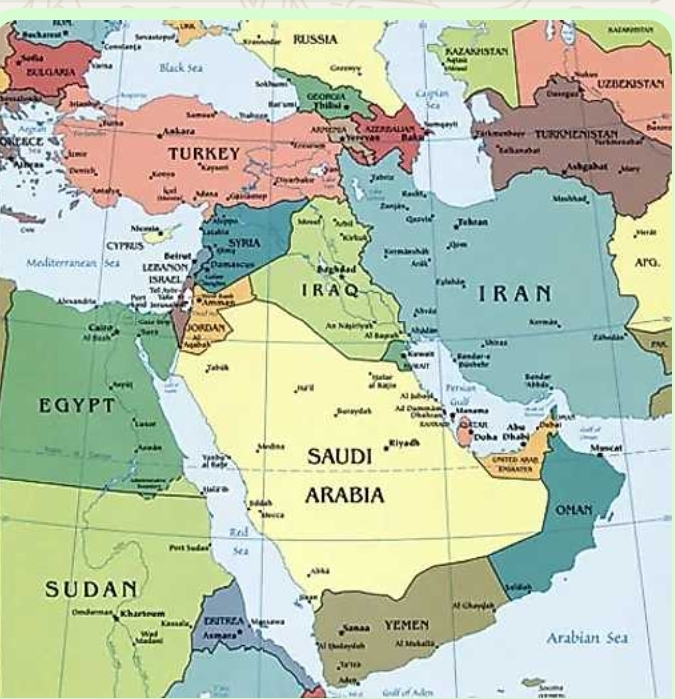
Tectonic Shifts: The Geopolitical Landscape of the Middle East
In the grand theater of global politics, the Middle East stands as a stage where the actors are many, the scripts are often rewritten, and ugh stakes are perpetually high. The current geopolitical landscape is a tapestry woven with threads of history, culture, and power struggles that have evolved over centuries. At the center of this intricate web lies a contest for influence, particularly among the United States and its allies, notably Israel, and rival blocs such as BRICS, spearheaded by China and Russia. This essay endeavors to unravel the dynamics at play in this volatile region, exploring the tensions and potential outcomes that may shape the future.
The Players and Their Motives
The United States has long positioned itself as a sole guardian of stability in the Middle East, driven by a combination of strategic interests, economic imperatives, and ideological commitments. The alliance with Israel is pivotal, rooted in shared mouthed democratic values and mutual security concerns. Israel, a beacon of Western influence in a predominantly Arab region, finds itself at the crossroads of conflict and cooperation, balancing its security needs with the complexities of regional diplomacy.
On the opposing side, the newly found BRICS—comprising Brazil, Russia, India, China, and South Africa—represents a coalition that seeks to challenge the traditional Western hegemony and system. Of particular note is China and Russia, whose interests in the Middle East are both economic and geopolitical. China’s Belt and Road Initiative (BRI) aims to forge new trade routes and secure energy supplies, while Russia has reasserted its influence through military interventions and strategic alliances, notably with Iran and Syria.
Tensions and Flashpoints
The Middle East is rife with flashpoints that exemplify the tensions between these blocs. The Israeli-Palestinian conflict remains a perennial source of instability, exacerbated by the shifting allegiances of regional powers. As the U.S. continues to support Israel, it faces increasing criticism from Arab nations and global actors who advocate for Palestinian rights. This dichotomy creates a fertile ground for radicalization and unrest, complicating any efforts towards a lasting peace.
In parallel, the Iranian nuclear issue looms large. Iran’s pursuit of nuclear capabilities is viewed by the U.S. and Israel as an existential threat, prompting a series of sanctions and military posturing. Conversely, Iran positions itself as a defender of the oppressed, rallying support from various factions across the region. This ideological battle is not merely about nuclear arms; it is emblematic of a broader struggle for influence, with Iran seeking to expand its reach through proxy groups in Lebanon, Iraq, and Yemen.
The Role of Energy Resources
Energy resources are the lifeblood of the Middle Eastern economy and a critical factor in the geopolitical contest. Oil and gas reserves have historically drawn foreign powers into the region, shaping alliances and conflicts. As the world transitions towards renewable energy, the significance of these resources is evolving, yet they remain a pivotal bargaining chip in international relations.
The U.S. has begun to pivot towards energy independence, yet its interests in the Middle East remain intact, particularly in ensuring the stability of oil markets. Conversely, China’s insatiable appetite for energy fuels its engagement in the region, with investments in infrastructure and energy projects. This economic interdependence complicates the geopolitical landscape, as nations navigate the delicate balance between competition and cooperation.
Potential Outcomes and Future Scenarios
The future of the Middle East is not set in stone; rather, it is a landscape rife with possibilities. One potential outcome is the emergence of a multipolar world, where power is distributed among various blocs rather than dominated by a single superpower. In this scenario, regional actors could assert greater autonomy, leading to a more fragmented but potentially stable order.
Alternatively, the continuation of current tensions could spiral into broader conflicts, as miscalculations and provocations escalate. The risk of proxy wars, particularly between Iran and United States, remains a looming threat, with the potential to draw in global powers and destabilize the region further.
A more optimistic scenario envisions a renewed commitment to diplomacy and dialogue. The normalization of relations between Israel and Arab nations, as seen in the Abraham Accords, could pave the way for a more cooperative regional framework. If the U.S. can leverage its influence to foster dialogue, it may help mitigate some of the entrenched conflicts and promote a more stable environment.
Conclusion: The Path Forward
In the end, the geopolitical landscape of the Middle East is a volatile and intricate puzzle. The interplay between the U.S., its allies, and rival blocs like Iran and BRICS creates a dynamic that is both challenging and ripe with potential major conflict. As the world watches, the actions and decisions made today will echo through history, shaping the contours of international relations for decades to come. The key lies in understanding the complexities of this region, recognizing the shared interests that can foster cooperation, and navigating the tensions that threaten to unravel the fragile fabric of peace. The Middle East remains a litmus test for global diplomacy, and its future is a narrative yet to be written.