



The Architecture of Erasure: How Selective Amnesia Threatens the Somali Nation: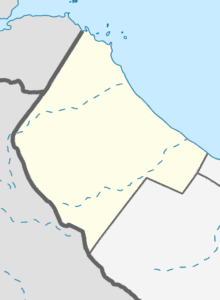
The most perilous conflicts within a nation are not always fought with weapons, but with narratives. In Somaliland, a profound and destabilizing battle is being waged over history itself—not through its discovery, but through its deliberate deletion. At the center of this conflict is a targeted campaign to sever the Ciise (Issa) clan from its foundational role in Somali civilization, an act of intellectual and ethical sabotage that undermines the very pillars upon which a unified Somali future must be built. This essay argues that the systematic marginalization and historical erasure of the Ciise clan is not merely a political dispute, but a catastrophic betrayal of verifiable history, a violation of the immutable Somali social contract (Xeer), and a self-inflicted wound that guarantees national fragility. To counter this, Somaliland must embrace an uncompromising fidelity to historical truth and the restorative principles of its own customary law.
I. The Historical Foundation: Dismantling the Pillars of Collective Memory:
The first front in this war is against the historical record. To isolate the Ciise clan is to attempt the impossible: the excision of a central artery from the body of Somali history. The claim is not one of mere participation but of genesis and leadership. Scholarly consensus, from the genealogical compendiums like “Karaamat al Awliyaa” to the seminal research of Sheikh Awad Wais Dubbad, alongside the chronicles of Arab, European travelers and historians, unequivocally establishes the Walashma dynasty—fathering the lineage of Sheikh Issa bin Ahmed al-Zailici—as the engine of the Ifat and Adal Sultanates.
These were not peripheral entities but defining empires of the Horn, celebrated for Islamic scholarship, architectural innovation, and a centuries-long resistance against Abyssinian expansion that shaped the region’s geopolitical and religious identity. To deny the Ciise this legacy is an act of intellectual arson. It burns down a shared library of national achievement—a library containing the story of Awdal (Zailac), the birthplace of Xeer Issa where nineteen Ogaases were consecrated—to warm the meager fire of a contemporary, narrow grievance. The motivation is transparent: if a community can be orphaned from its ancestors and achievements, it can be politically disenfranchised in the present. This is not scholarship; it is polemic disguised as analysis. A nation that condones the falsification of any part of its history condemns itself to a fractured, unstable identity. Accepting the Ciise’s seminal role is thus not an act of political concession, but an act of national integrity—a necessary step in reassembling a complete and honest Somali historiography.
II. The Legal and Ethical Betrayal: Abrogating the Covenant of Xeer:
Beyond history, this narrative constitutes a fundamental breach of the Somali social and legal order: the Xeer. Somali customary law was not a vague concept of brotherhood but a sophisticated system of governance built on the recognition of distinct, self-administering polities (beel) and the sacred covenants between them. The autonomy and authority of the Ciise clan under their Xeer and their Ogaas were not self-proclaimed fantasies but recognized political facts.
The astonishment of the British envoy, the Duke of Gloucester, in Hargeisa in 1958 is a critical data point. His surprise that the Ciise—a recognized, self-governing entity with its own treaties—would willingly choose Somali unity at independence is external validation of their distinct, sovereign status within the Somali clan ecosystem. The pre-1991 political order respected this architecture. To now dismiss the Ogaas and the jurisdiction of Xeer Issa is not an attack on a single clan; it is an assault on the entire Somali system of governance, justice, and inter-communal balance. It replaces the binding, legal concept of qaraabanimo (covenanted kinship) with the lawless, emotional currency of spite and exclusion. When the recognized standing of one community can be arbitrarily revoked, no community’s standing is secure. This betrayal transforms Xeer from a living constitution into a weapon of convenience, rendering the entire social contract void and inviting a Hobbesian state of perpetual insecurity.
III. The False Premise and Its Moral Bankruptcy:
Proponents of this erasure in Borama and Hargeisa often cloak it in the language of “political realism” or “correcting imbalances.” This argument dissolves upon contact with logic and morality. First, it is inherently unjust to punish a community for the historical stature and administrative autonomy it legitimately held. Second, the argument’s manifest irrationality is exposed by its overflow into absurdity, such as the attacks on the President of Djibouti based solely on his lineage. This reveals the narrative’s core: it is not a pragmatic policy position but an ethnic prejudice, hatred and envy that violates the most basic sanctities of family and heritage.
Historically, the Ciise clan demonstrated a profound commitment to the Somali national project. At the dawn of independence, they consciously chose integration into a larger Somali state, forgoing the separate sovereign path that other coastal peoples might have pursued. To repay this foundational act of faith—this vote for collective destiny—with decades of scorn and disenfranchisement is the height of national bad faith. It signals that covenant and shared destiny are meaningless, a lesson that teaches every community to prioritize narrow survival over collective prosperity, ensuring future fragmentation and failure.
Conclusion: Restoration Through Truth and Covenant:
The pathology afflicting Somaliland discourse is not the Ciise clan but the caabuq—the disease—of historical illiteracy and covenantal betrayal that seeks to erase them. The path to healing is therefore not through concession to falsehood but through the rigorous reaffirmation of truth and principle.
True Somali unity cannot be built on a foundation of alienation and fabricated history. It requires the courageous embrace of an accurate, inclusive past that recognizes the Ciise legacy as an indispensable chapter in the national story. It demands the revitalization of Xeer not as a nostalgic relic, but as a living ethical framework where recognized standing, mutual respect, and covenant are paramount.
The necessary healing is not for the Ciise, whose identity rests upon the unshakable pillars of documented history and legal tradition, but for the Somali national psyche itself, poisoned by a baseless and destructive narrative. Dismantling this fiction is a moral and practical imperative. For a nation aspiring to stability and strength, fidelity to its complete history and its own time-tested principles of justice is not a luxury—it is the only possible foundation. Our future depends on our courage to reclaim that past, in full.