



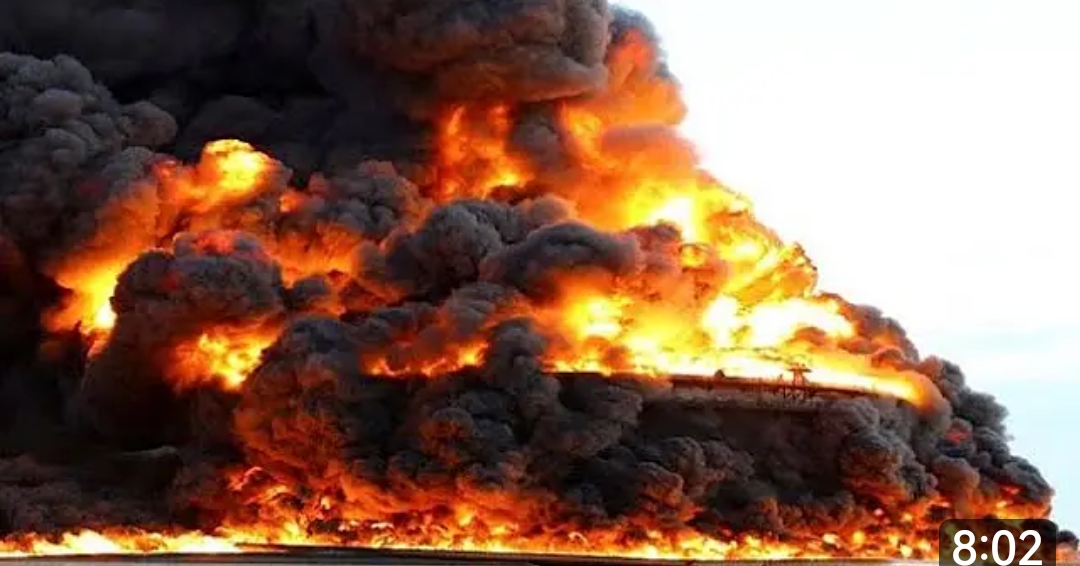
The Fog of War: America’s Reckless March Toward the Abyss
No war in history has begun shrouded in such profound ambiguity as the one now unfolding in the Persian Gulf. According to American media, this is one man’s war—waged by a president operating outside constitutional circles, with objectives so vague they shift like desert sands. The Strait of Hormuz is closed. Prices are skyrocketing. The world holds its breath, uncertain whether it stands on the precipice of a third world war or nuclear catastrophe. This is not warfare as the world has known it; this is war stripped of calculation, severed from established values, and launched into a fog so thick that even its architects cannot see where it leads.
The Nature of Strategic Uncertainty
The fog of war, a concept articulated by the great military thinker Carl von Clausewitz, has always plagued armed conflict . But what distinguishes the current crisis is that the fog now consumes everything—not merely the battlefield, but the very purpose and legitimacy of the war itself. As Ann Hironaka observes in her rethinking of war, when uncertainty becomes all-consuming, it obscures not just tactical information but the fundamental understanding needed to prepare for battle . Victory becomes unpredictable, costs incalculable.
The uncertainty surrounding this conflict is multidimensional. We face uncertainty of time—how long will it take? Uncertainty of termination—under what conditions does it end? Uncertainty of objectives—the declared reasons being manifestly inadequate to justify the scale of destruction. Uncertainty of scope—what will be the real impact on the United States, the region, and the global economy? And most terrifyingly, uncertainty whether the world will slip into the abyss of a third world war, whether nuclear weapons will be employed, whether the United Nations will ever breathe again .
This is not the uncertainty that Clausewitz contemplated. This is something new: a war begun without the established values and calculation that have historically restrained even the most brutal conflicts. Never since the last world war has a conflict of this scale started with such vague objectives.
The Unilateralist Mindset and the Collapse of International Order
The roots of this crisis lie in a fundamental shift in American foreign policy doctrine. The current administration’s approach emphasizes unilateral action and an “America First” worldview that treats alliances as transactional conveniences rather than solemn commitments . When a nation withdraws from multilateral agreements, abandons diplomatic frameworks, and treats international law with contempt, it should not be surprised when the resulting chaos bears its imprint.
The principle is simple: if you break it, you own it. The dismantling of established agreements—from the Iran nuclear deal to the Paris climate accord—without adequate foresight leads to consequences that the initiating nation must ultimately manage . Yet the current administration seems incapable of understanding that disruption without reconstruction is merely destruction.
Stephen Miller, a close adviser to the president, recently articulated the governing philosophy with startling candor: “We live in a world, in the real world… that is governed by force, that is governed by power. These are the iron laws of the world since the beginning of time” . These words reveal a mindset reminiscent of the Middle Ages, a primitive understanding of international relations that most had thought was a relic of the past. They reflect complete contempt not only for international law but for the very idea of international cooperation.
The Moral Dimension: Hypocrisy and Its Consequences
The fog of war encompasses more than strategic uncertainty; it includes what Princeton professor Richard Falk calls “the thick cloud of moral hypocrisy that a modern democratic state cranks out on its own behalf, especially in wartime” . This moral fog is perhaps the most dangerous of all, for it blinds us to our own transgressions while magnifying those of our enemies.
The falsification of moral reality has deep roots. During the Cold War, the American public was conditioned to accept a permanent state of war readiness as normal. In the 1980s, “the communist menace” was gradually replaced by “the terrorist menace,” serving to justify and sanitize violent practices conducted by the United States while condemning similar actions by others . This double standard reaches its logical conclusion in the current conflict.
We must ask ourselves: Is there justification for the sharp contrast between their tactics as terrorism and our tactics as legitimate military options? When policymakers speculate publicly about the possible use of nuclear weapons, seemingly reducing the choice to cost-benefit analysis, does this not verge on terrorism when the whole of a society is subjected to devastation? It is self-deceiving distortion to call an adversary’s missile a terror weapon but not a B-52. It is far worse moral manipulation to treat nuclear weapons as a military option while condemning chemical weapons as beyond the pale .
If the West maneuvers itself into believing that its high-tech methods of political violence constitute “war” while lower-tech responses constitute “terrorism,” we invite the deepest sort of rift between civilizations. Such tensions could easily degenerate into a new kind of cold war with extremely volatile religious and regional overtones.
The Fragility of the Post-War Order
The current crisis must be understood against the backdrop of a deteriorating global peace. According to the Global Peace Index 2025, the average level of global peacefulness has declined for the thirteenth time in seventeen years. Fifty-nine active state-based conflicts are now underway worldwide, while conflict resolution through peace agreements has reached a historical low . Military expenditures, already surpassing $2.7 trillion annually, have risen for ten straight years .
What is unfolding is not merely a surge in violence but a collapse of the fragile international order that emerged after World War II. The fact that the United Nations had to convene a Summit for the Future in September 2024 to confront this fragmentation underscores the severity of the crisis . The international peace architecture is collapsing, humanitarian needs are ballooning, and yet governments cling to the illusion that military might can substitute for dialogue and reconciliation.
The response by governments to this worsening insecurity has been to double down on defense spending—a path that offers only fleeting assurance while deepening long-term instability. NATO members, under American pressure, have pledged to allocate five percent of GDP to defense by 2035, an extraordinary commitment at a time when funding for peacebuilding is shrinking . The logic of this arms race is chilling: states believe they can buy security by amassing weapons, even as those very weapons sustain and expand the cycle of conflict.
The Stakes: A World at the Tipping Point
The world today is teetering on the edge of a deeper and more dangerous disorder than at any time since the Second World War . New geopolitical conflicts continue to emerge with alarming frequency. In May 2025, military clashes erupted between nuclear-armed India and Pakistan. In June, intense exchanges of fire occurred between Israel and Iran, followed by American airstrikes on Iranian nuclear facilities . Both conflicts proved short-lived, but if they should erupt again and escalate uncontrollably, they could trigger nuclear war with catastrophic consequences.
The Malaysian Islamic Youth Movement, responding to recent escalations, stated that “the unilateral use of force without a collective international mandate violates the fundamental principles of the United Nations, particularly Article 2(4), which prohibits the threat or use of force against the territorial integrity of any state” . The normalization of military action on the grounds of prevention or alleged future threats risks paving the way for a dangerous and uncontrolled culture of pre-emptive warfare.
Peace initiatives must not become instruments of rhetoric or tools of geopolitical legitimization. True peace leadership demands moral consistency and commitment to de-escalation, not military dominance. West Asia has for too long been a theatre for major power rivalry. Another wave of war will only deepen civilian suffering, undermine regional stability, and create spillover effects on the global economy and security .
The Way Forward: Reclaiming Multilateralism
In the face of this crisis, the international community must forge a renewed, responsible consensus on cooperation. First, it is imperative to prevent the Cold War mentality from resurging and to guard against the return of bloc politics. Nations must categorically reject forming exclusive alliances or engaging in bloc confrontation. It is essential to avoid strategic miscalculations and security dilemmas, and steadfastly adhere to a vision of common, comprehensive, cooperative, and sustainable security .
Second, it is imperative to reject the pursuit of absolute security. Pursuing security advantages at the expense of other nations’ safety—whether through alliance expansion, erosion of strategic stability, or development of missile defense systems—invariably provokes backlash, escalates tensions, and fundamentally compromises one’s own security. The Ukraine crisis, ignited by NATO eastward expansion, stands as a grim lesson in self-defeating security pursuits .
Third, it is imperative to uphold United Nations-centered multilateralism. Forged in the crucible of the World Anti-Fascist War, the UN remains the cornerstone of the post-war global governance system and a vital guardian of the rules-based international order. Any erosion of its authority or marginalization of its role accelerates the corrosion of the world order and risks unleashing greater instability . As China’s deputy permanent representative to the UN recently stated, “The more complex the international situation becomes, the more imperative it is to uphold the authority and status of the UN and safeguard its central role in international affairs” .
Conclusion
The fog of war has never been thicker than it is today. But within that fog, we can discern certain truths. The current conflict in the Persian Gulf, launched without clear objectives, without constitutional authority, and without regard for international law, represents a fundamental break from the established norms that have governed international relations since 1945. It is a war born of unilateralist arrogance, moral hypocrisy, and contempt for the very idea of international cooperation.
The consequences of this break will be felt for generations. The world stands at a dangerous tipping point. Fifty-nine active conflicts. Rising military expenditures. Collapsing peace architecture. Eroding international norms. And now, a war that could ignite a regional conflagration with global implications.
The choice before us is stark. We can continue down the path of unilateralism, militarization, and confrontation, risking the unthinkable. Or we can reaffirm our commitment to the United Nations-centered multilateral order, to dialogue over force, to cooperation over conflict. We can choose to see through the moral fog that would have us believe our violence is legitimate and theirs is terrorism. We can choose to empathize with our enemies, recognizing that rationality alone will not save us, and that in the nuclear age, there may be no second chances.
The fog of war obscures much, but it cannot obscure this fundamental truth: peace cannot be built on military budgets alone. The world must resist the false comfort of militarization and instead commit to strengthening the fragile but vital infrastructure of peace, dialogue, and justice—before it is too late . The lessons of two world wars and eighty years of relative peace hang in the balance. We must choose wisely.