



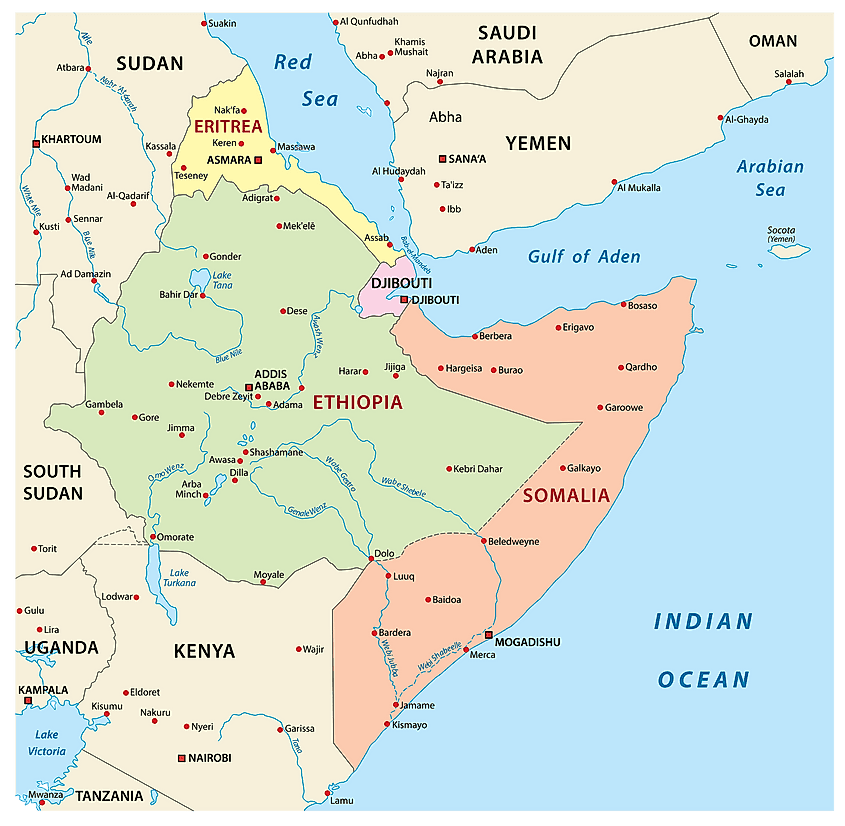
The Horn of Africa: A Strategic Crossroads in Global Politics
The Horn of Africa, a region steeped in rich history and complex socio-political dynamics, has re-emerged as a focal point in global politics and geostrategy. This area, once a mere backdrop to the historical contests of empires, now finds itself at the epicenter of a geopolitical chess game reminiscent of the rivalries seen during World War II. With Ethiopia and its Prime Minister, Abiy Ahmed, stepping into the spotlight, the region is entangled in a web of competing interests that extend far beyond its borders. This essay aims to unravel the intricate tapestry of the Horn of Africa’s current geopolitical landscape, examining the implications of Ethiopia’s actions, the ongoing crises in the Middle East, and the broader ramifications for regional stability.
Ethiopia: A New Gambit for Sovereign Access
Under the leadership of Prime Minister Abiy Ahmed, Ethiopia is pursuing a bold and ambitious strategy aimed at securing sovereign access to the sea. This quest for a coastal outlet—whether along the Red Sea or the Gulf of Aden—is not merely an economic necessity; it is a calculated maneuver in the realm of international politics. The stakes are high, as access to maritime routes can significantly enhance Ethiopia’s economic prospects and geopolitical influence.
Abiy’s government is engaged in extensive diplomatic efforts to convince the international community of its intentions, portraying Ethiopia as a responsible player in a region plagued by instability. However, this narrative often comes at the expense of neighboring Somalia, which is depicted as a failed state devoid of security and governance. The Ethiopian Prime Minister’s strategy appears to hinge on discrediting Somalia while simultaneously courting partnerships with more stable entities, such as Somaliland. In stepping into this initiative, Abiy Ahmed is defying international law and undermining the sovereignty and territorial integrity of neighboring countries like Somalia.
The Propaganda Machine
To bolster his narrative, Abiy has employed various channels, including social media influencers and English-speaking YouTubers, to propagate a version of events that favors Ethiopia. This campaign seeks to frame Ethiopia as a success story while vilifying Somalia, suggesting that the latter is incapable of being a reliable partner for negotiations. Such tactics not only distort the reality of the situation but also serve to justify Ethiopia’s aggressive posturing in the region.
In contrast, the Somali civil war, which has long since subsided, is often overshadowed by the ongoing conflict within Ethiopia itself. The Ethiopian civil war remains a pressing issue, yet the focus is diverted to Somalia, which is inaccurately portrayed as a primary threat and obstacle. This manipulation of public perception serves to legitimize Ethiopia’s military ambitions and diplomatic overtures while demonizing Somali leadership and its attempts at fostering relationships with Egypt and other regional players.
The Reality of Somalia’s Position
Despite the challenges it faces, Somalia is not the failed state that Ethiopia’s narrative suggests. While it grapples with issues of leadership and governance, Somalia possesses a resilient spirit and a potential for unity that remains untapped. The Somali people have historically demonstrated an ability to rise above tribal divisions and rally around a common identity, yet they are currently hindered by a lack of cohesive leadership, efficient civil society, and effective policies.
Ethiopia, on the other hand, is grappling with its own internal strife, particularly in the Oromia region, where aspirations for greater autonomy echo the ambitions of historical figures like Menelik II and Haile Selassie. Abiy’s portrayal of himself as a peacemaker and unifier belies a deeper ambition: the establishment of a powerful Oromiya that seeks to dominate the seas and assert itself on the regional stage.
A Game of Proxy Interests
Abiy’s strategic maneuvering is not an isolated endeavor; it is part of a broader game involving various regional and international stakeholders. The Horn of Africa is becoming a theater for competing interests, where external powers vie for influence amidst the backdrop of crises in the Middle East, particularly concerning Palestine and Iran. The involvement of these external actors complicates the situation further, as they each have their own agendas that may not align with the aspirations of the Horn’s nations.
The situation is exacerbated by tensions surrounding the discovery of oil and the Grand Ethiopian Renaissance Dam (GERD), alongside Egypt’s concerns over water security. Ethiopia’s unilateral actions regarding the dam have strained relations with its neighbors, particularly Egypt and Sudan, and have drawn the attention of global powers. The stakes are high, as water scarcity and energy needs become increasingly critical in a region already fraught with conflict.
The Path Forward: Unity and Leadership
In this intricate landscape, the Somali people must reclaim their rightful role as active agents in shaping their future. For Somalia to avert the dangers posed by Ethiopia’s ambitions and external pressures, it requires vigilant and accountable leadership that prioritizes national unity over tribal and political divisions. Intellectuals, civil society, and institutions must collaborate to foster a sense of purpose and direction, ensuring that the Somali spirit is harnessed for constructive ends.
A coherent policy toward regions affected by insurgency and rebellion is essential. Somalia must address its internal challenges while simultaneously engaging in constructive dialogue with its regional authorities and opposition. The potential for collaboration exists, but it requires a shift in mindset—from viewing discontented federal regions and opposers as adversaries to recognizing common interests and shared goals.
Conclusion: A Call for Accountability and Vision
The Horn of Africa stands at a critical juncture, where the actions of one nation can reverberate across the region and beyond. Ethiopia’s pursuit of a coastal outlet and its portrayal of Somalia as a failed state are part of a larger narrative that demands scrutiny. As the world watches, the Somali people must rise to the occasion, embracing their identity and potential while fostering leadership that is accountable and visionary.
In this era of geopolitical competition, the future of the Horn of Africa hinges on the ability of its leaders and citizens to navigate the complexities of their shared history and aspirations. The stakes are high, and the time for action is now. Only through unity, resilience, and a commitment to a shared future can the Horn of Africa, and particularly Somalia, emerge from the shadows of its past and step into a brighter tomorrow.