



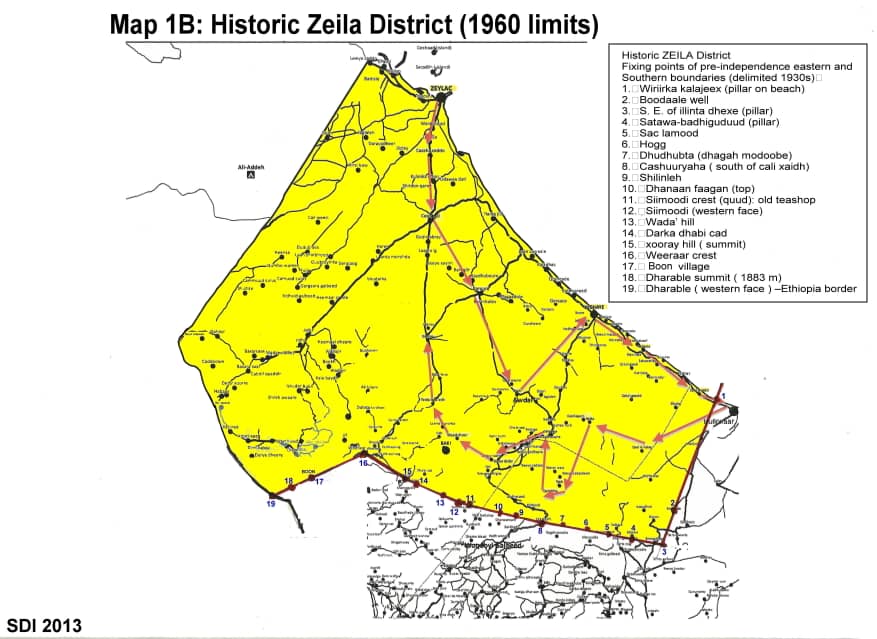
The Unbroken Code: The Issa Community and the Struggle for Identity in Somaliland: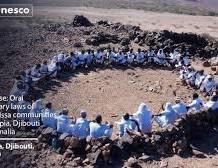
In the arid expanse of Somaliland, a land rich with history and cultural diversity, the Issa community stands as a testament to resilience in the face of adversity. For thirty-five years, the Issa have navigated a political landscape that often positions them as outsiders in a house they helped construct. This ongoing struggle for recognition and rights has reached a critical juncture, particularly with the recent upheaval surrounding the ancient town of Zailac. The decision by the Somaliland administration to outlaw the anniversary celebration of the Xeer Issa—the community’s foundational legal and social code—has ignited a deep-seated grievance, threatening to unravel the fragile peace that has characterized the region.
The Historical Context:
At the heart of the Issa’s argument is an unwavering connection to their homeland, with Zailac serving as its symbolic center. Historically, Zailac was not merely a geographical location but a cosmopolitan hub where various Somali clans and foreign traders coexisted under the aegis of Islamic Charia the and supplemented by Xeer Issa. This sophisticated system of customary law governed relationships and social interactions, fostering a sense of community that transcended clan divisions. The Issa narrative recalls a time when they welcomed the Mahad Casse tribes of the Gadabuursi into their territory, illustrating their historical role as custodians of a shared heritage rather than exclusivist owners.
The Xeer Issa embodies more than just legal principles; it encapsulates the essence of Issa identity. To the community, the code is a living testament to their history, culture, and collective achievements. The recent prohibition on its celebration in Zailac is perceived as an affront to their very existence, a denial of their identity and historical ownership. This act of cultural suppression, viewed through the lens of complex clan politics and secessionist anxieties, has transformed long-standing frustrations into a communal outcry for recognition.
The Political Landscape:
The current crisis is deeply intertwined with the political dynamics of Somaliland. The Issa community perceives their marginalization as a result of a “conspiracy” orchestrated by the dominant Isaaq clan ruling elites, which holds significant power within the Somaliland government. The Isaaq’s consolidation of power has fostered a climate of suspicion towards the Issa, particularly due to their strong kinship ties to the Issa-dominated Republic of Djibouti and their effective presence in Ethiopian governance. This perceived disloyalty has been weaponized, leading to the political and social segregation of the Issa, who are viewed as a potential fifth column.
The rhetoric surrounding the Issa is not merely a reflection of clan rivalry; it is a political tool used to dismantle what some perceive as an “imaginary fearful Issa.” The banning of the Xeer Issa anniversary celebration serves as a catalyst that has pushed the Issa community to the brink. The abrupt reversal by the Interior Minister, who reneged on prior approvals for the celebration, was seen as a profound betrayal—a stark reminder of their precarious position within Somaliland’s sociopolitical landscape.
The Catalyst for Change:
The decision to ban the celebration was not merely a bureaucratic misstep; it struck at the heart of the Issa’s cultural identity. The official explanations provided by the government were deemed insufficient and unconvincing, revealing a deeper intention to appease other clans at the expense of the Issa. This act sent shockwaves through the Issa population, not just within Somaliland but across borders in Djibouti, Ethiopia and Overseas uniting them in a shared sense of attack. The figure of the Ougaz, a traditional spiritual leader, emerged as a symbol of unity, amplifying the community’s grievances beyond local confines.
Faced with this existential challenge, the Issa community finds itself at a crossroads. The announcement by community elders ( Gande) to convene a meeting and potentially mobilize for an “existential struggle” signals a critical shift from passive resilience to active resistance. The situation in Zailac and surrounding areas has been described as “out of control,” indicating a rapid erosion of state authority in the wake of this cultural misstep. The Somaliland government, in its efforts to enforce a singular national narrative, risks alienating a vital component of its societal fabric.
The Path Forward:
The conflict over Zailac and the Xeer Issa serves as a microcosm of the larger challenges facing Somaliland. It exposes the fragility of a state built upon a clan-based consensus that often excludes significant components, the Issa community, fortified by a deep historical consciousness and a transnational identity, has demonstrated that it cannot and will not be separated from its culture and homeland. The government’s decision to ban the celebration was more than a political miscalculation; it was a strike at the heart and soul of a community.
Moving forward, Somaliland faces a critical choice. It can either embrace its multicultural reality, making space for the Issa and their Xeer within its national fabric, or it risks unleashing a struggle that could consume the peace of the region. The unbroken code of the Issa has endured for generations; it will not be broken by a ministerial decree.
The Strength of the Customary Law, the Xeer Issa
This following examplery account presents a powerful historical argument for the unique political status of the Issa community within the Horn of Africa, rooted in the strength of their customary law, the Xeer Issa.
The core thesis is that colonial powers—British, French, and successive Ethiopian governments—granted the Issa “particularism” or special treatment. They recognized the Xeer Issa as a fully functional system of self-governance, making direct rule unnecessary. Instead of being subjugated, the Issa were effectively treated as a parallel, self-ruling entity.
A pivotal anecdote from the British Somaliland protectorate illustrates this. During the process leading to independence, a British royal envoy, Prince Henry, the Duke of Gloucester with Duchess, summoning tribal chieftains (treaty signitaries) in Hargeisa November 1958, explicitly noted to Issa chieftains (after hearing their pro independent statement) that Britain had never ruled Issa directly, stating, “we were two governments side by side.” He further warned them that opting for independence within a united Somali state would mean being dominated or ruled by others and would likely lead to friction. Despite this warning, the Issa leaders chose independence “with brothers,” prioritizing Somali nationalism at that moment.
The passage concludes with a critical observation: this deep-seated historical reality of Issa autonomy and particularism is often overlooked or misunderstood by modern Somali authorities. The failure to grasp that the Issa have historically been partners in governance rather than passive subjects has been a source of ongoing political tension, as their desire for a democratic self-rule, guaranteed by the Xeer Issa, clashes with the centralized and despotic nature or model of a modern African nation-state.
In conclusion, the Issa community’s struggle for identity and recognition is emblematic of the broader complexities of Somaliland’s sociopolitical landscape. As they rally around their shared history and cultural heritage, the Issa remind us of the importance of inclusivity in nation-building. The path to peace lies not in the suppression of voices but in the celebration of diversity, where every community, including the Issa, has a rightful place in the narrative of Somaliland. The unbroken code of the Issa is not merely a legal framework; it is a living testament to their existence and resilience, a call for recognition, and a plea for unity of land in a land that has long been shaped by its rich tapestry of cultures and histories.