



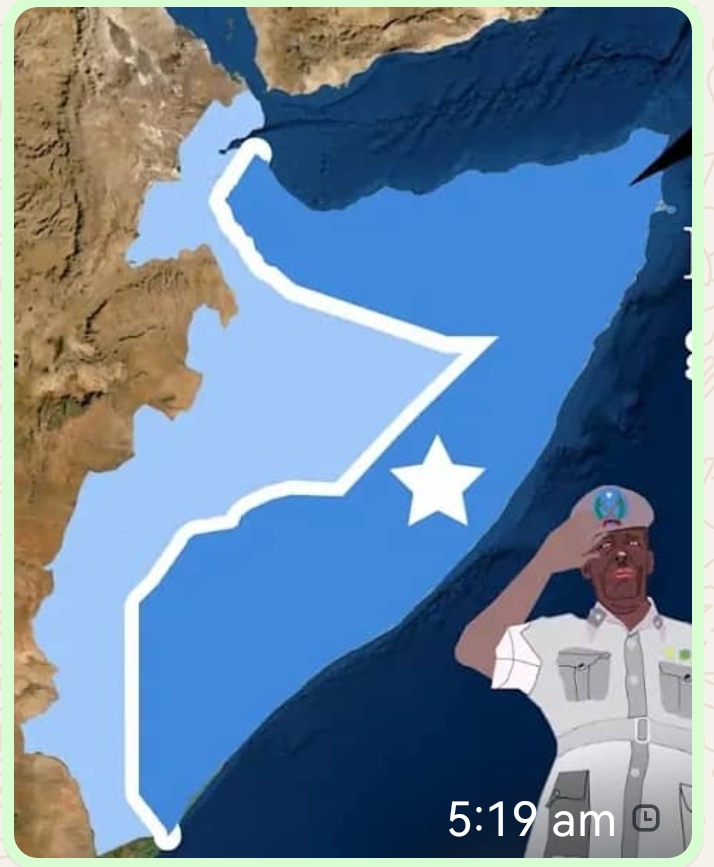
The Imperative of Constitutional Order: Defending Somali Federalism from Internal Subversion
The Somali Federal Republic, emerging from decades of fragmentation, stands at a critical juncture. Its foundational compact—a delicate balance between a unifying central authority and autonomous member states—is under sustained assault not only from external enemies, but more from within. While the secessionist project of Somaliland presents a distinct challenge, a more insidious threat comes from federal member states like Puntland and Jubaland, which, while claiming membership in the Republic, simultaneously engage in acts that unravel its very fabric. Their selective adherence to the federal model, embracing its financial benefits and representative seats while usurping exclusive federal powers, constitutes a constitutional betrayal driven by parochial interests and, at times, foreign manipulation. Upholding the supreme authority of the Federal Government is not a matter of centralization for its own sake, but a sine qua non for national survival, demanding both citizen vigilance and rigorous legal accountability.
The principle of constitutional supremacy is the bedrock of any federation. Somalia’s Provisional Federal Constitution (PFC) is explicit in outlining a division of powers. Critical functions such as national security, foreign affairs, monetary policy, and international treaties are vested exclusively in the Federal Government (Articles 54, 91). The constitutions of member states must, by legal and logical necessity, be in harmony with and subordinate to this supreme document. Puntland and Jubaland, however, have increasingly operated in defiance of this hierarchy. By negotiating oil and port deals with foreign entities, commanding regional security forces without clear federal integration, and engaging in diplomatic overtures that mimic sovereign statecraft, these regional governments are not merely “bargaining hard” within the federal framework; they are operating outside of it. This creates a destructive paradox: they leverage their status as federal members to claim legitimacy and resources, while their actions erode the federal authority that provides that very status.
The motivations for this constitutional overreach are rarely in the national interest. Too often, they stem from a corrosive blend of personal greed, political survival, and subservience to foreign powers seeking a fragmented, easily influenced Somalia. A regional president who signs a contentious resource-sharing agreement with a foreign company, bypassing Mogadishu, may be less a visionary for his people and more a politician securing personal wealth or patronage for his clique. Similarly, the maintenance of de facto independent security forces can be a tool for regime protection rather than communal safety, often fueled by the financial and strategic support of external actors pursuing their own agendas in the Horn of Africa. These leaders frame their defiance as “federalism” or “protecting local rights,” but true federalism operates within a set of agreed, supreme rules. Their actions are better understood as a form of warlordism in institutional clothing, consuming the state-building project for short-term gain.
Critics may argue that a heavy-handed federal response undermines the fragile trust necessary for a pluralistic Somalia. They contend that Mogadishu’s own history of overreach and exclusion justifies regional assertiveness. This argument, while highlighting past failures, is dangerously flawed. It confuses the remedy with the disease. Yes, the Federal Government must be inclusive, transparent, and accountable—it must earn trust. However, the answer to federal shortcomings cannot be the unilateral seizing of exclusive powers. That path leads not to a negotiated, stronger federation, but to the legalization of chaos and the eventual dissolution of the state. The correct path is to utilize the very institutions of the federation—the Senate, the inter-governmental committees, the courts, and the constitutional review process—to address grievances and renegotiate balances. Dismantling the framework from within renders those institutions useless.
The Somali people have endured a 35-year plight of statelessness, war, and poverty. The nascent federal system, for all its flaws, represents the only viable blueprint for pooling sovereignty to rebuild a nation. Allowing it to be hollowed out by regional elites chasing “trivial personal rewards” is a luxury the nation cannot afford. Therefore, citizens must recognize that the defense of the constitutional order is the defense of the public interest. They must rally behind legitimate federal authority when it upholds the law. Simultaneously, the Federal Government itself must be held to the highest standard, using legal and political channels—not merely force—to correct wayward member states. The Parliament and judiciary must be activated to provide clear, lawful checks on both regional and federal overreach.
Enough is indeed enough. The endless cycle of defiance and weak response consumes the political energy needed for development and reconciliation. Somalia’s supreme nterest lies in a functional, rules-based union where the flag, the currency, the passport, and the treaty signature hold one meaning. Standing for this principle requires moving beyond the destructive politics of clan chauvinism and personal fiefdoms. It demands a collective commitment to the higher law of the land. The choice is stark: a Somalia bound by a common constitutional destiny, or a fractured territory perpetually at the mercy of internal divisions and foreign manipulators. The federal compact must be defended, for in its survival lies the survival of Somalia itself.