



The Perilous Gambit: Somaliland’s Pursuit of Israel and the Anatomy of a Strategic Suicide.
Abstract
The reported rapprochement between Somaliland, a self-declared but unrecognized breakaway republic, and the State of Israel cannot be understood in isolation. This essay argues that the initiative is co-produced by Washington, which views Israel as a force multiplier—a semi-proxy capable of executing US global strategy while bearing asymmetric diplomatic and legal costs. For Somaliland, engagement offers the illusion of recognition; in reality, it enlists the territory as a sacrificial forward operating base in the US-led campaign to contain Iran, outflank China and Russia, and secure maritime chokepoints (Hormuz and Bab al-Mandab). By abandoning neutrality, Somaliland’s leadership commits strategic suicide: trading its fragile internal peace, Islamic identity, and Somali-Arab solidarity for a role as a disposable client in a conflict not its own.
Introduction
In late 2024, reports surfaced of high-level contacts between Somaliland and Israel, facilitated by the United States. For Somaliland, the calculus is desperate isolation: recognition of Israel as currency to break three decades of diplomatic non-existence. For Israel, the move extends the Abraham Accords. However, both actors operate under the strategic umbrella of the United States, which seeks to offload regional enforcement onto allies while minimizing direct entanglement. This essay contends that the Somaliland-Israel initiative is a US-designed gambit to secure the Bab al-Mandab Strait—the southern counterpart to Hormuz—following Iran’s demonstrated ability to threaten both. Somaliland’s leadership, lacking popular legitimacy and geopolitical literacy, fails to recognize that it is volunteering its territory for a proxy war that will exacerbate poverty, drought, and clan strife while inviting retaliation from the Houthi-led Axis of Resistance.
1. The Illegitimacy Deficit: Two Unrecognizable Partners and Their Sponsor
Neither Israel nor Somaliland’s leadership enjoys full juridical legitimacy. Israel stands before the ICJ (accused of genocide) and the ICC (arrest warrants sought for its leaders), systematically violating UN Charter provisions on territorial integrity and the Fourth Geneva Convention’s protections for occupied populations. Somaliland’s self-declared government lacks recognition from any UN member state; its leadership cannot legally bind its people to international treaties. Any purported recognition of Israel is an ultra vires act—high treason against Somali national and Islamic identity.
Critically, the United States—Israel’s indispensable ally and Somaliland’s unspoken sponsor—lacks moral authority to mediate. Washington has vetoed multiple UN Security Council ceasefire resolutions, continues to arm Israel despite the ICJ’s provisional rulings, and maintains military installations across the Horn of Africa (Camp Lemonnier in Djibouti). The US strategy is to delegate forward operations to Israel as a semi-proxy: Israel absorbs diplomatic opprobrium for actions—assassinations, air strikes, occupation—that serve shared US objectives, while the US provides logistical, financial, and diplomatic cover. Somaliland is being recruited into this same asymmetric relationship: a junior client bearing all the risks of enmity with Iran and the Houthis, receiving only the promise of recognition that may never materialize.
2. US Strategy: Israel as Proxy for Containment and Chokepoint Control
The United States’ grand strategy, articulated in successive National Security Strategies (2022, 2024), identifies Iran, China, and Russia as systemic rivals. The preferred method of engagement is over-the-horizon warfare: using proxies and partners to contest these powers without direct US troop commitments. Israel fits this model perfectly—a technologically advanced, regionally embedded ally whose interests align with US containment of Tehran.
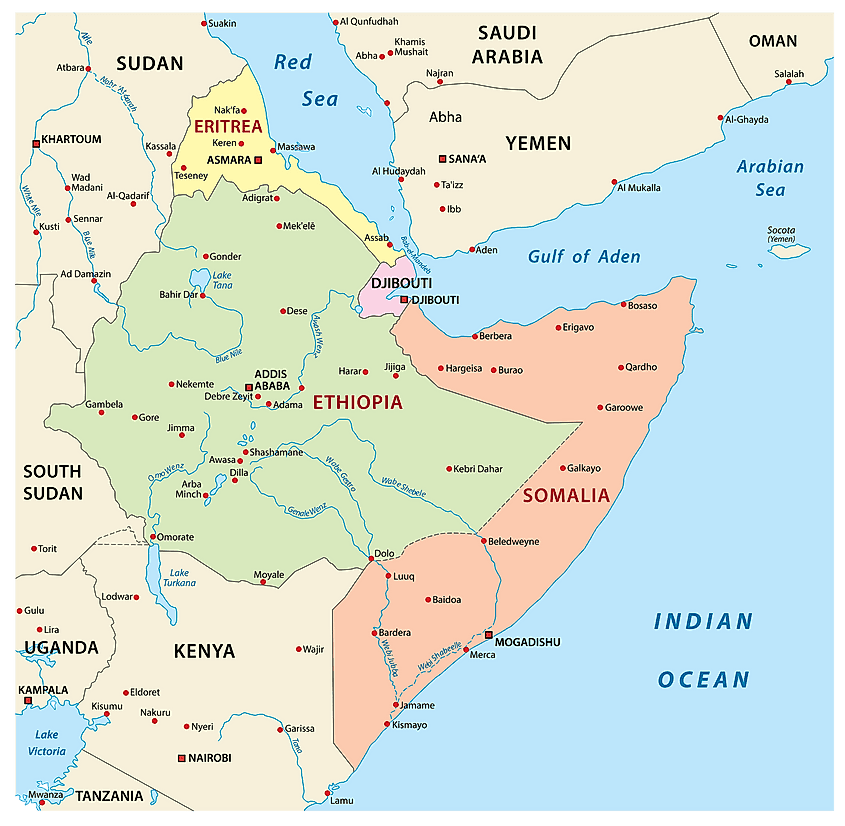
Iran’s primary strategic asset is the Strait of Hormuz, through which 20% of global oil transits. Following the April 2024 direct strikes between Iran and Israel—a historic escalation—Washington concluded that conventional deterrence had frayed. The response was to double down on the second chokepoint: Bab al-Mandab, the 20-mile-wide strait separating the Horn of Africa from Arabia, through which 10% of global maritime trade and virtually all Israel-bound Red Sea shipping passes.
Since November 2023, the Houthis—armed, trained, and directed by Iran’s Islamic Revolutionary Guard Corps (IRGC)—have imposed a de facto naval blockade on Israeli-affiliated vessels, extending their reach to the Mediterranean via anti-ship ballistic missiles. Operation Prosperity Guardian (December 2023), a US-led naval coalition, has failed to stop Houthi attacks. The strategic logic of engaging Somaliland therefore becomes clear: establish a land base on the African side of Bab al-Mandab, from which to conduct surveillance, launch drones, deploy special forces, or host anti-ship missile batteries. Israel, as the US proxy, would operate this facility, providing plausible deniability for Washington. Israel’s “independent” initiative is, in reality, a contracted operation.
3. Outflanking Iran, Russia, and China: The Great Power Dimension
The Horn of Africa has become a theater of great-power competition. China operates its first overseas military base in Djibouti (2017), securing its Belt and Road Initiative and protecting trade routes to the Suez Canal. Russia, through the Wagner Group (now Africa Corps), maintains footholds in Sudan, the Central African Republic, and Eritrea—the latter sharing a border, across Djibouti, with Somaliland. Iran, via the Houthis, controls much of Yemen’s Red Sea coast opposite Somaliland.
A US-Israeli basing arrangement in Somaliland would serve three strategic purposes. First, it would physically interdict Houthi operations, potentially destroying launch sites or command nodes from the African side—something naval assets cannot easily achieve. Second, it would signal to China that its Djibouti base is vulnerable to encirclement, potentially deterring Beijing from further naval expansion in the Indian Ocean. Third, it would outflank Russia by introducing a high-intensity conflict zone near Eritrea, forcing Moscow to choose between costly escalation or retreat.
For Washington, this is a high-reward, low-risk proposition. The risk—retaliatory strikes, terror attacks, or a wider war—falls primarily on Israel and, more acutely, on Somaliland. For Israel, the calculation is that weakening the Houthis degrades Iran’s asymmetric arsenal. For the US, Somaliland is expendable: a non-state entity hosting a proxy of a proxy.
4. Somaliland’s Blindness: Desperation Masquerading as Strategy
Somaliland’s leadership operates under a catastrophic misreading of its own position. The assumption that recognizing Israel will unlock US recognition is flawed: no Arab League member has normalized relations with Israel without substantial US concessions (aid, arms, security guarantees). Somaliland possesses no oil, no major port (Berbera is modest compared to Djibouti), and no standing army capable of deterring the Houthis. It offers only geography—and geography without power is a liability, not an asset.
The domestic consequences are equally dire. Somaliland’s fragile clan peace (Isaaq majority with Issa, Gadabuursi, Warsangeli, and others) rests on a tacit bargain: the government pursues international recognition without betraying Islamic and Somali-Arab identity. Normalizing with Israel violates that bargain. The Houthis, who frame their campaign as defending Gaza and the Ummah, would have both ideological and strategic justification to strike Somaliland—through missile attacks, drone infiltrations, or arming disaffected clans. The droughts, poverty, and civil strife that already plague the region would deepen catastrophically.
Worse, Somaliland’s leadership fails to recognize that recognition from Israel is worthless. Israel itself is not universally recognized (28 UN members refuse to recognize it). Recognition from a pariah does not launder another pariah; it compounds isolation. No Muslim-majority state will open a mission in Hargeisa after such a move. The African Union, which has consistently upheld Somalia’s territorial integrity, would likely expel Somaliland from any observer status. The dream of recognition would become a nightmare of quarantine.
5. Religious and Cultural Treason: The Final Rupture
Finally, the proposed alliance represents a deliberate rupture with Somaliland’s foundational identity. Somalis are overwhelmingly Sunni Muslim; the region’s Sufi traditions have historically condemned Zionism. Al-Aqsa Mosque (Quds) and the Prophet’s Mosque in Medina—holy sites to which Somalis have pilgrimaged for centuries—are placed in jeopardy by any normalization with an entity that controls Jerusalem and is accused of war crimes against Palestinians.
The Abraham Accords were never popular in the Arab street; they were imposed by autocratic Gulf monarchies. Somaliland, with no oil wealth and no autocratic ruler capable of suppressing dissent, cannot replicate that model. Any leader signing such an accord would face not diplomatic acclaim but clan rebellion, popular uprising, and quite possibly assassination. This is not speculation: in 2022, a Somaliland legislator who publicly suggested recognizing Israel was forced into hiding after death threats.
To proceed is to abandon the very identity that distinguishes Somaliland from Somalia: a Muslim, Somali-Arab polity seeking peaceful coexistence, not a client state of a foreign power waging war on its co-religionists.
Conclusion
The Somaliland-Israel initiative, when properly analyzed, reveals itself as a US-engineered gambit to secure the Bab al-Mandab Strait, outflank Iran, and contain Chinese and Russian influence in the Horn of Africa. Israel, acting as a semi-proxy, executes this strategy while bearing the legal and diplomatic costs. Somaliland is the sacrificial pawn—offering its territory, its people, and its fragile peace for the illusion of recognition.
There is no viable outcome for Somaliland in this arrangement. Either the Houthis and Iran retaliate directly, turning the Horn into a war zone, or the alliance fails, leaving Somaliland more isolated than before. The only rational choice is to reaffirm absolute neutrality, reject any engagement with Israel, and seek recognition through the African Union, the Arab League, and the broader Non-Aligned Movement. To do otherwise is not strategy; it is suicide. And suicide, dressed in the language of diplomacy, remains self-destruction.
The people of Somaliland—and all who value Arab, Somali, and Islamic identity—must awaken. There is no time left for silence.