



Beyond Blood Wealth: Why Traditional Leadership Must Address the Unpayable Crimes Against the Issa Community in Saylac and Lughaya
For centuries, the Som
ali customary law of Xeer has served as a viable mechanism for conflict resolution, where grievances are settled through compensation (mag or diyya)—often in the form of livestock. This system operates on the premise of discrete harm, meaningful apologies, and the potential for restoring clan relations through material restitution. However, this framework falters when faced with crimes that are not merely individual acts of violence but systematic efforts to erase entire communities from their ancestral lands. How can one quantify the loss of identity, the denial of social services, the dismemberment of territory, and the theft of political representation? The answer is unequivocal: no amount of livestock can compensate for such profound injustices.
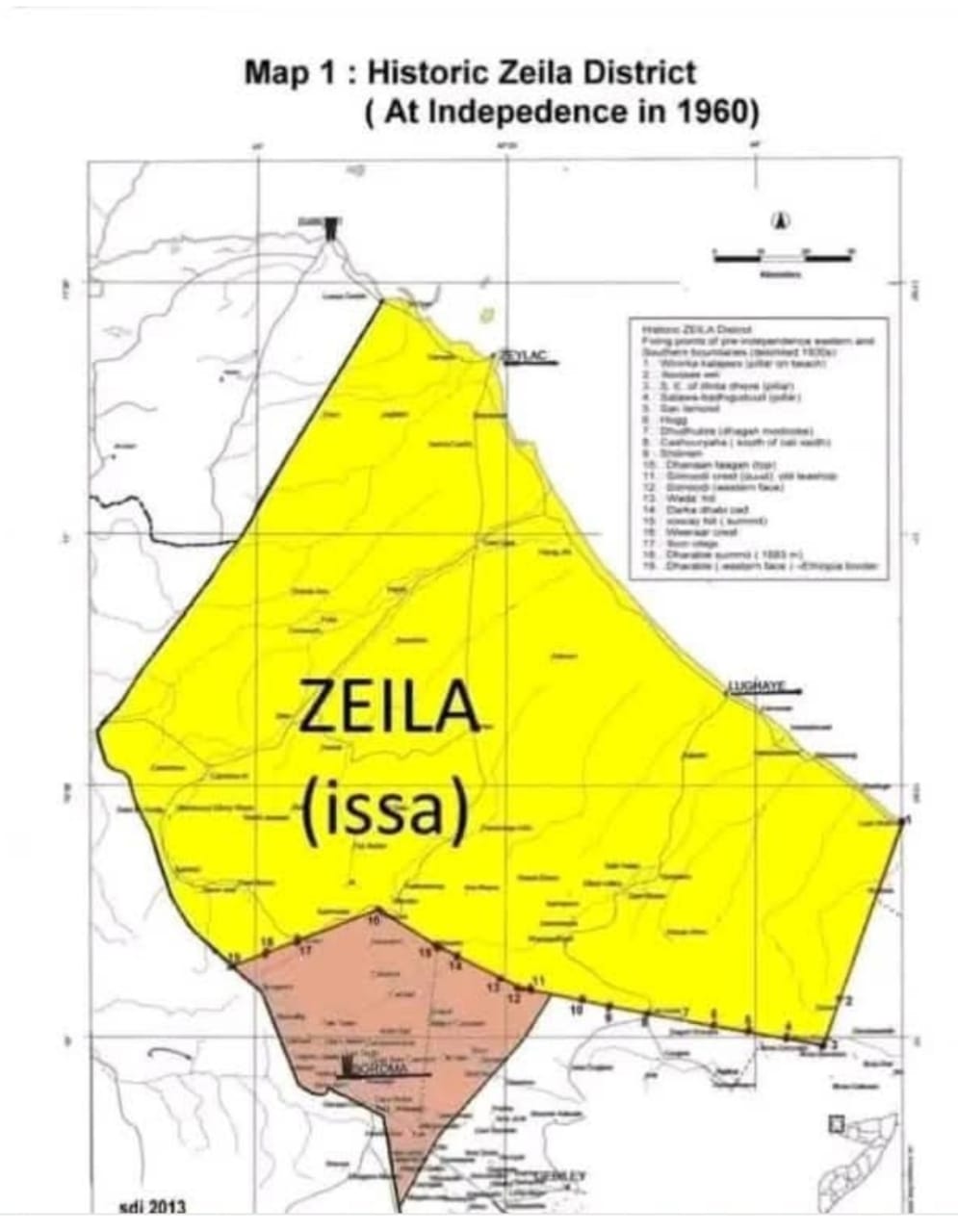
This is the grim reality confronting the Issa clan in the Saylac and Lughaya districts of the Awdal-Selel regions. Since 1969, and continuing through the Siad Barre regime and subsequent Somaliland administrations, the Issa have endured a calculated campaign of slow-motion annihilation, displacement, and territorial appropriation. Traditional leaders now face a dilemma that transcends their historical roles. They cannot broker a peace where there is no price for genocide. Their only honorable path is to acknowledge the unpayable nature of these crimes, bear witness to the suffering, and refuse to legitimize a “peace” that merely rewards ethnic cleansing.
When Compensation Becomes Complicity
The crimes against the Issa community are engineered to render traditional compensation irrelevant. While a father might receive compensation for a murdered son, how does a clan quantify the loss of homeland and identity? For decades, the Issa in Saylac and Lughaya have been coerced into disavowing their heritage, their connection to a land they have inhabited for centuries. This is not merely a wound; it is a gaping chasm that bleeds the very soul of a people. When an elder is compelled to whisper his clan name in fear of reprisal, no number of camels can restore his dignity. When a child learns that his ancestral villages have been “officially” assigned to another clan, no compensation can return his birthright. Traditional compensation presupposes two equal parties experiencing discrete injuries. But when one party’s strategy is the systematic erasure of the other’s existence—its history, geography, and language—then the entire framework of “payment and forgiveness” becomes a cruel farce. To insist on diyya in such a context is not peacemaking; it is complicity in erasure.
A Deliberate, Unbroken Chain of Conspiracy
The historical record reveals a calculated dismantling of the Issa’s political and social standing. The departure from the 1954–1955 population census and the 1958–1959 political arrangements, which had previously granted the Issa three parliamentary seats but , in good faith, ceded one to the Gadabuursi clan and contenting with two, was no minor adjustment. It signaled a foundational error leading to betrayal, indicating that the Issa would no longer be recognized as equal partners in governing the Saylac-Lughaya districts.
Even more alarming was the cancellation of the Xeer Issa celebration in Zaylac, threatened by another clan with civil war. The Xeer Issa celebration was not merely a festival; it was a living ceremony that upheld the customary codes ensuring peace and coexistence for centuries. By threatening war to cancel this celebration, opposing clans deliberately dismantled the institutional memory of coexistence, declaring that the old rules of mutual respect no longer applied. From that moment, the Issa were cast out of the very legal culture that had once protected them. No elder can broker a payment for the annihilation of a constitutional tradition.
State-Enabled Violence and Genocidal Rhetoric
The violence that ensued was not random tribal fighting. Between 1988 and 1991, the army of Siad Barre launched assaults on Issa encampments for refusing to take arms against SNM, killing and looting properties in coordination with allied local clan militias (Gadabuursi) to maximize destruction. The collapse of Barre’s regime did not bring relief; instead, from 1991 onward, the SNM and its successors, the Somaliland governments, became the new agents of the same genocidal project. The rhetoric escalated from discriminatory to explicitly genocidal: the public declaration that “the blood of Issa is halal” is a direct call for massacre; the assertion that Issa women and children can be taken as “rightful ownership” revives slavery and sexual violence as tools of clan destruction. The proposed closure of the Sacdadin Secondary School in Saylac is not merely an administrative draft—it is the deliberate strangulation of Issa education, extinguishing the next generation’s capacity to produce leaders, doctors, and advocates. When the Issa Ogaas and respected elders are themselves targeted for assassination or humiliation, the message is clear: the intended fate of the Issa is to exist without leaders, voice, or identity.
The Role of Traditional Leaders: Witness, Not Broker
In this crisis—where honor, pride, identity, political representation, territorial integrity, and physical survival are under coordinated assault—traditional leaders cannot and should not be asked to calculate camels. They cannot preside over apologies from clans that show no remorse, only intermittent pauses in their campaign of erasure. Their genuine role is to bear witness and refuse false equivalence. They must publicly declare that the crimes against the Issa are of a different order: a crime of clan annihilation and territorial appropriation. They must assert, with the full authority of customary law, that no mag applies because the harm is infinite and ongoing. Furthermore, they must call upon regional and international bodies—not because the Xeer is abandoned, but because Xeer, when confronted with a crime designed to obliterate a clan’s capacity to exist, must acknowledge its own limits and appeal to a higher standard: the right of a people to exist on their own land.
Accountability, Apology, and the Path to Genuine Peace
None of these actions preclude eventual reconciliation—but only upon a truthful foundation. Once the perpetrators acknowledge their guilt without any intermediary and offer sincere apologies, traditional leaders can reclaim their authority and focus on broader community healing. Recognition fosters accountability and paves the way for dialogue. The act of genuine remorse can serve as a catalyst for collective understanding, allowing traditional leaders to effectively mediate and restore trust. However, without such acknowledgment, any “peace” is merely a pause in the slow death of a people.
It is crucial to recognize that the Gadabuursi clan is not alone in this criminal project. The perpetrators are motivated and influenced by invisible forces—actors who have detected geostrategic opportunities and assured themselves of easy passage, manipulating a desperate and isolated leadership that resorts to lies to maintain control. The Issas were left aside, uninformed, not consulted. The community, for an evident lack of trust, remain a nation within a system, silent not out of weakness but out of principled restraint.
Conclusion
The Issa of Saylac and Lughaya do not require mediation sessions where their tormentors offer a few dozen camels for decades of humiliation, looting, political exclusion, threats of school closures, and genocidal rhetoric. They need the world to recognize that some crimes have no price because they aim to leave no one alive to collect it. Traditional leaders who cherish peace must prioritize truth. They must reject the false peace of paid blood and instead advocate for true peace. True peace transcends mere absence of conflict; it embodies the restoration of dignity and belonging. In the Saylac-Lughaya districts, this means a community reclaiming unity of its homeland, where names resonate freely and children thrive in schools once more. It involves rebuilding burned homes and returning looted property, a tangible acknowledgment of past injustices, and finally embodies Xeer Issa, law of the land and pride of the the people, celebrated again in Zaylac under a sky not darkened by threats of civil war. Anything less is not reconciliation; it is surrender to a slow death. The vision of a reunited territory, where all rights and entitlements are honored, reflects a commitment to healing and reconciliation. Only through such comprehensive restoration can the fabric of society mend, fostering a sustainable peace that honors both memory and hope for future generations.