



The Free and the Enslaved: Ibn Khaldun’s Lens on the Issa-Gadabuursi Conflict
The 14th-century North African scholar Ibn Khaldun, often hailed as a founder of historiography and sociology, bequeathed to posterity a wealth of insights into the rise and fall of civilizations, the nature of social cohesion (asabiyyah), and the moral psychology of power. Among his most piercing observations is one that transcends its medieval context to diagnose a perennial human failing: “The free [person] defends the idea, regardless of who says it. The slave defends the person, regardless of the idea.” This dichotomy between allegiance to principle and allegiance to tribe is not merely a philosophical abstraction. It finds a stark, tragic, and illuminating reflection in modern inter-communal conflicts, such as the tensions and violence between the Issa and Gadabuursi communities in the Horn of Africa. The recent events in the Lughaya region and the contrasting responses they elicited offer a case study in how Ibn Khaldun’s wisdom exposes the moral architecture of conflict, revealing the chasm between leadership that serves humanity and leadership enslaved by identity.
At its core, Ibn Khaldun’s aphorism distinguishes between two modes of intellectual and moral engagement. The “free” individual possesses the autonomy to evaluate propositions on their own merit. Truth and falsehood, justice and injustice, are judged independently of their proponent. This freedom is intellectual, moral, and civic; it is the bedrock of a critical and ethical society. In contrast, the “slave”—metaphorically bound by blind loyalty, fear, or tribalism—evaluates an idea solely through the lens of the speaker. If the speaker is “one of us,” the idea is defended; if from “the other,” it is rejected, irrespective of its inherent value or danger. This slavery is not necessarily one of chains, but of the mind and spirit, where group identity usurps the role of conscience. Somalis classify this as “Gobanimo and Gunnimo” In the context of communal conflict, this translates directly into how communities process rhetoric, sanction violence, and exercise restraint.
The escalation of the Issa-Gadabuursi conflict provides a harrowing demonstration of this principle in action. The precipitating moment, as described, was the dissemination of a toxic rhetoric: “the blood of the Issa is halal (permissible), kill them and rape wherever you meet.” Such a statement is not merely an insult; it is a dehumanizing manifesto, a call for genocide that seeks to strip a group of its fundamental right to exist. Ibn Khaldun’s framework invites us to examine the reaction to this idea.
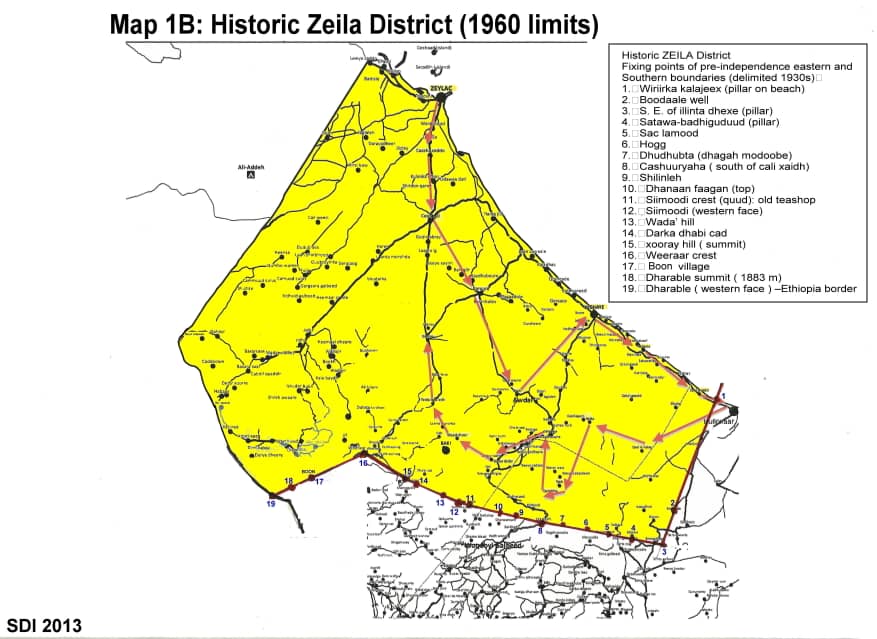
On one side, we observe the pattern of the “enslaved.” The rhetoric, though patently evil and destructive, was reportedly not condemned by the elders, politicians, scholars, or sultans of the group from which it originated. Instead, silence or tacit approval prevailed, driven by what observers call “ambitious greed and hatred.” Here, the defense is of the person (the in-group) and its cause, not the idea. The moral atrocity of the message is subsumed by tribal solidarity. The catastrophic result was the translation of words into action: coordinated attacks on isolated pastoral camps and villages in far southern Lughaya. Homes were burned, vulnerable elderly and mentally disturbed individuals were killed, and reports cite the slaughter of animals. The leadership’s failure to defend the principle of shared humanity—an idea that should be inviolable—allowed the slavery to factional identity to justify barbarity.
Conversely, the response of the other party exemplifies, however imperfectly, the “free” defense of an idea. The idea being defended here is the principle of restraint, humanity, and the enduring primacy of social bonds. This is evidenced in clear, operational directives: abstain from harming non-combatants and their property; safeguard the abandoned homes and possessions of those who fled; provide medical care to injured prisoners of war and return them freely. This party’s philosophy, as noted, is that “negotiated peace always comes after conflict as good manners, kinship and family ties always prevail.” Their actions are not a defense of the other party per se, but a defense of the ideas of civility, future reconciliation, and the rules of engagement that preserve the possibility of a shared future. They judged the act of vengeance against civilians as a bad “idea,” and rejected it, despite the provocation. Xeer Issa prescribes the same. The operational leadership take into account these rules of engagement on planning.
The contrast on the ground could not be more vivid. In Geerisa and Habaas, lowyacada, Saylac and Tokhoshi….. properties and persons were protected; in parts of Lughaya, they were put to the torch. For one side, prisoners were a trust to be cared for and released; for the other, the isolated and infirm were seen as legitimate targets. For one party, cease fire arrangement is a promise and sacred to be held. For the other party, it is an ocation for deception. This divergence cannot be explained by material factors alone; it is fundamentally a divergence in moral and intellectual choice. One leadership structure remained, in Ibn Khaldun’s terms, enslaved to the immediate passions of hatred and the political capital of hardline rhetoric. The other, while undoubtedly engaged in the conflict, attempted to anchor its conduct in transcendent principles that limit war’s horrors.
Ibn Khaldun’s analysis, however, pushes us beyond the battlefield to the deeper societal illness. The true danger of the “slave” mentality is its institutionalization. When politicians seek power by inflaming ethnic chauvinism, when scholars of religion or tradition lend their authority to hatred rather than condemnation, and when elders prioritize tribal supremacy over the common good, they dissolve the moral glue that holds a plural society together. They trade the freedom of principled thought for the slavery of mob sentiment. This creates a vicious cycle: violent rhetoric begets violence, which begets a defensive, equally identity-enslaved response, potentially dragging both communities into a degenerative feud where only the principles of humanity lose.
In conclusion, the Issa-Gadabuursi conflict, as narrated through these specific events, serves as a sobering testament to the enduring relevance of Ibn Khaldun’s ancient wisdom. It demonstrates that the fiercest battle in any conflict is often not between two groups, but between two states of being: freedom of conscience and enslavement to clan. The party that safeguarded homes and prisoners chose the difficult path of defending the idea of a common future. The party that let hate speech go unchallenged and acted upon it chose the enslaving path of defending the tribe, right or wrong. The readers, and indeed history, are left to judge which approach builds and which destroys. Ultimately, Ibn Khaldun reminds us that the quality of leadership and social cohesion is measured not in moments of peace, but in moments of provocation. The freedom to condemn one’s own, and the courage to protect the other, remain the truest marks of a society that is civilized, strong, and ultimately, free.