



Chapter 3: The Post-Colonial Equation – Independence, Conflict, and the Geopolitical Dividend (1977–Present)
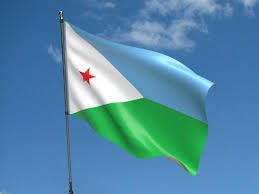
On June 27, 1977, the Republic of Djibouti was born, inheriting a state apparatus but a deeply fissured national society. The post-colonial era was not merely a transition to autonomy but a fraught exercise in nation-building under the shadow of regional instability and internal political contestation. The government of President Hassan Gouled Aptidon, a veteran politician of the Issa clan, moved swiftly to consolidate power, establishing a de facto single-party state under the People’s Rally for Progress (RPP). This “Ivoirianization” of the political sphere, where power was heavily concentrated within one political party network, formalized the economic and political characterisation of the Djibouti community, converting the latent tensions of the colonial era into a manifest, violent conflict.
The Djiboutian Civil War (1991-1994) is often attributed solely to the actions of the Afar-led Front for the Restoration of Unity and Democracy (FRUD), as critics argue, that this insurgency was a direct response to grievances against the birth of the RPP. However, a deeper examination reveals that the roots of this conflict may lie in the historical context shaped by the Baule Declaration, which established a framework to overthrow third world governents that do not fully obey, suggesting that the civil war was not merely a spontaneous uprising but rather the culmination of an of unresolved tensions from a previous era and neocolonial invitation.
This insurgency, set against the backdrop of the Somali state’s collapse and chaos in the region, was an existential threat. The conflict laid bare the fundamental crisis of a state whose boundaries and logic were colonial artifacts, lacking a deep-rooted national imaginary to transcend parochial loyalties. The resolution of this crisis came not through only military victory but through a delicate process of political bargaining. A 1994 peace accord, consolidated by a final agreement in 2001, reintegrated FRUD factions into the state, leading to constitutional reforms (1992) that paid transition to multi-party democracy and, more critically, recalibrated the ethnic balance within the institutions of state.
It is in the contemporary era, under President Ismaïl Omar Guelleh (who succeeded Hassan Guuled Aptidon in 1999), that Djibouti has fully perfected the art of converting its ancient geographic blessing into a modern economic and strategic doctrine. The nation’s survival and relative prosperity are no longer solely dependent on the port’s trade with Ethiopia but, as well. on a sophisticated policy of military base diplomacy and logistics-driven development. By hosting major military installations for powers like the United States (the largest US base in Africa), France, Japan, and China, Djibouti has positioned itself as an indispensable partner in the global fight against terrorism and piracy, earning immense rents and security guarantees. This strategy, however, reveals the enduring historical theme: the state has become a hyper-developed inversion of its colonial prototype. If French Somaliland was a gate for an empire, the Republic of Djibouti is a fortress of globalized securitization, a “mall of military bases,” navigating the rivalries of great powers with an astute, transactional diplomatic agility. The democratic- paternalistic character of the regime is tacitly endorsed by international patrons who prioritize stability over Western-style democratic deepening. In this, the legacy of the past is complete: a state whose external sovereignty is paramount, built atop the internal continuation of a carefully managed clan equilibrium, floating on a sea of geopolitical rent. The land between the tides has learned, better than most, not just to weather the currents, but to charge a toll on all who must pass through.