



Chapter 9: The FLCS and the Forging of Djiboutian Independence: From Armed Struggle to One-Party Rule
The decolonization of French Somaliland was not solely the product of political negotiation; it was also shaped by a determined struggle. The Front de Libération de la Côte des Somalis (FLCS) emerged as the territory’s primary armed liberation movement, providing the coercive leverage that complemented the diplomatic efforts of internal political parties. Rooted in Pan-Africanism, Arab nationalism, and the irredentist vision of Greater Somalia, the FLCS navigated a complex landscape of regional rivalries and great-power politics. Its relationship with the Ligue Populaire Africaine pour l’Indépendance (LPAI) created a potent two-pronged strategy—armed struggle abroad and political mobilization at home—that ultimately secured independence. However, the victory of 1977 also rendered both organizations obsolete, paving the way for the consolidation of power under a single ruling party that would dominate Djibouti for the next decade.
Ideological Foundations and the Birth of the FLCS
The FLCS was conceived in the crucible of Pan-African solidarity and Somali nationalism. Its ideological pillars were drawn from the Pan-African movement’s doctrine of continental liberation, the revolutionary Arab nationalism of Nasserism, and the irredentist ambition to unite all Somali-inhabited territories under one flag. This vision was championed by Mahamoud Harbi Farah, a prominent Somali-Issa nationalist politician who had served as Vice-President of the Government Council of French Somaliland. Following his 1958-political defeat and exile to Mogadishu in 1960, Harbi dedicated himself to the armed struggle, establishing the FLCS as the instrument to achieve independence.
The early years of the FLCS were fraught with challenges. While the newly independent Somali Republic theoretically embraced the principle of Somali unification, the government of President Aden Abdalla Osman was initially cautious, unwilling to openly accommodate an armed liberation front that could destabilize its fragile international position. Though sympathetic to Harbi’s cause, it provided little more than accommodation and logistical support for participation in international forums rather than active military backing. Tragically, Harbi did not live to see his struggle bear fruit; he was killed in an airplane crash over Italy in September 1960 while traveling from Geneva to Peking.
Consolidation, Recognition, and Armed Struggle
Despite Harbi’s untimely death, the FLCS endured, without its founding president. The movement gradually gained traction, finding a more robust patron in the revolutionary government of Mohamed Siad Barre, which came to power in October,1969. Barre’s regime, driven by its own Pan-Somali ambitions, provided the FLCS with substantial financial, diplomatic, and military support, though it rigorously controlled the front to ensure alignment with Somali unity objectives.
The FLCS’s international legitimacy was cemented in 1963 when it was recognized by the Organization of African Unity (OAU) as the sole organization authorized to represent the French Somali Coast in international forums. This recognition, which came with OAU financing, was a diplomatic victory that elevated the FLCS from a fringe insurgency to a legitimate national liberation movement. The FLCS also opened a permanent bureau in Algiers in June 1973, This was second to that in Cairo Egypt, securing support from Arab states such as Algeria and Arab progressive countries.
The FLCS’s military activities intensified from the late 1970s onward. Its operations were designed to pressure French authorities and undermine the local government of Ali Aref Bourhan, which favored continued ties with France. Notable actions included the 1975 kidnapping of the French ambassador to Somalia, Jean Gueury, who was exchanged for two FLCS militants, Omar Elmi Khayreh and Omar Osman Rabeh. The FLCS also claimed responsibility for attacks on the “Palmier en Zinc” bar in Djibouti city and an assassination attempt against Ali Aref Bourhan himself.
Symbiosis with the LPAI and the United Front
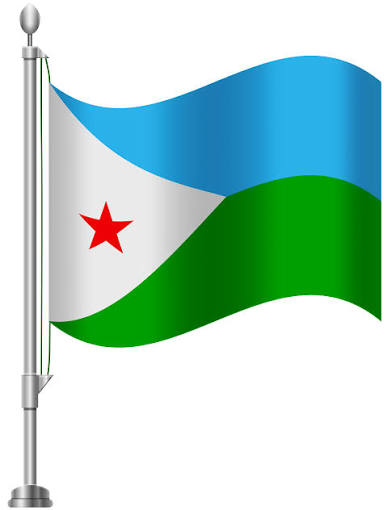
While the FLCS waged an external armed campaign, the internal political landscape was being reshaped by the formation of the LPAI in February 1972. The LPAI emerged from a merger of several nationalist parties, including Hassan Gouled Aptidon’s LPA, Ahmed Dini’s LAO, Moumin Bahdon and Idriss Farah’s AJP and others. Crucially, the LPAI maintained a close relationship with the FLCS, effectively functioning as its political wing. This symbiosis was formalized when the FLCS became the military branch of the broader independence movement. The FLCS under Harbi even designed the flag that would later become the national flag of Djibouti.
This united front—comprising the FLCS’s armed struggle and the LPAI’s political mobilization—proved irresistible. The LPAI, under Hassan Gouled, led the internal opposition to Ali Aref’s government, while the FLCS provided the external threat that made French withdrawal increasingly attractive. In 1976, Omar Farah Iltireh heading his Party UNI, joined the so formed United Front while participating the last OAU Liberation Committee conference in Lusaka, Zambia.
The Path to Independence (1975–1977)
The mid-1970s saw the momentum shift decisively toward independence. In early 1977, LPAI with civil society, representatives of local government headed by Abdalla Kamil and FLCS representatives participated in negotiations in Paris to prepare for the territory’s accession to sovereignty. The culmination of this process was the May 8, 1977 legislative elections, in which the LPAI-FLCF ran as part of the Rassemblement Populaire pour l’Indépendance (RPI) coalition. The RPI won a landslide victory, securing all 65 seats in parliament.
The same 8th May, 1977 referendum confirmed the population’s overwhelming desire for independence. On 27 June 1977, the Republic of Djibouti was officially proclaimed, with Hassan Gouled Aptidon becoming its first President, Ahmed Dini the first Prime Minister and Hadji Saad Warsame the first Speaker of the National Assembly. The FLCS’s military struggle had achieved its objective.
Dissolution and the Rise of the RPP
With independence achieved, the FLCS and the LPAI had outlived their purpose. Persuant to it’s statute (constitution) and because of urgent and pressing circonstances, the FLCS was formally disbanded by majority vote of it’s Central Committee, two weeks after 27 June 1977. Between 300 and 400 of its militants were integrated into the new Djiboutian armed forces, though unverified fighters from the rival Ethiopian-backed Mouvement de Libération de Djibouti (MLD) were not presented.
The LPAI, which had led the territory to sovereignty, also disappeared almost two years after independence. In its place, LPAI, FLCS and several other parties jointly established a new ruling party, the Rassemblement Populaire pour le Progrès (RPP), founded in Dikhil on 4 March 1979. The RPP was declared the sole legal party in October 1981, a status it retained until the introduction of multiparty politics in 1992.
Conclusion
The FLCS was the sword that complemented the LPAI’s shield in the struggle for Djiboutian independence. Rooted in Pan-Africanism, Somali nationalism, and anti-colonial fervor, it provided the armed leverage that made French withdrawal inevitable. Its recognition by the OAU and support from Somalia and Arab states legitimized its cause on the international stage. Yet, like many liberation movements, the FLCS found that the skills required for armed struggle did not always translate into post-independence governance. Its dissolution, along with that of the LPAI, cleared the path for the RPP’s consolidation of power, ushering in an era of one-party rule that would define Djibouti’s first decade as a sovereign nation. The FLCS’s legacy, however, endures—not only in the national flag and national emblem of (Hassan Robleh) it designed but in the very existence of the Republic of Djibouti itself.
Here are the successive general secretaries of the FLCS:
-Mahamoud harbi Farah
-Samod Farah
-Abdillahi ardeyeh abaneh
-Ahmed Elmi
-Aden Robleh Awaleh -Dr Salah Nour.
-Abdillahi bochari
-Omar Elmi kheireh.