



The Broken Spear: Why Illegitimacy and Abuse Undermine Somaliland’s Security Forces
A nation’s armed forces are more than instruments of combat; they are a mirror of the state’s soul. Discipline, dignity, and the protection of civilians are not optional virtues but structural necessities for any force claiming legitimacy. Somaliland presents a paradox: it has functioned as a self-declared state for over three decades, yet it remains unrecognised by a single foreign government. This essay argues that Somaliland’s lack of international legitimacy is not a mere technicality but a fundamental flaw that has rendered its security forces—accused of systematic abuses including killings, looting, and gang rape—unfit to protect civilians and dangerously destabilising to the Horn of Africa. As the Somali proverb warns, “Hal xaaraan ahi nirig xalaal ah ma dhasho”: an illegitimate she-camel cannot give birth to a legitimate offspring.
The foundation of any professional military is lawful authority. Somaliland’s security apparatus, which it calls an army, police, and coast guard, emerged from a clan-based militia that fought against the Somali central government in the 1980s and later declared independence in 1991. Because no state recognises Somaliland, its forces operate outside the framework of international military law, bilateral training agreements, and oversight mechanisms. Without recognition, there is no embassy to lodge complaints, no military attaché to monitor conduct, and no credible threat of sanctions for abuses. This legal vacuum does not automatically create a militia—but it enables one. Training programmes from the United Kingdom or Ethiopia have been sporadic and shallow, never amounting to the sustained professionalisation that recognised militaries receive. Consequently, command structures remain informal, accountability is clan-based rather than rule-based, and discipline is enforced not by courts-martial but by clan elders or strongmen. The result is a force that behaves less like a national army and more like an armed faction.
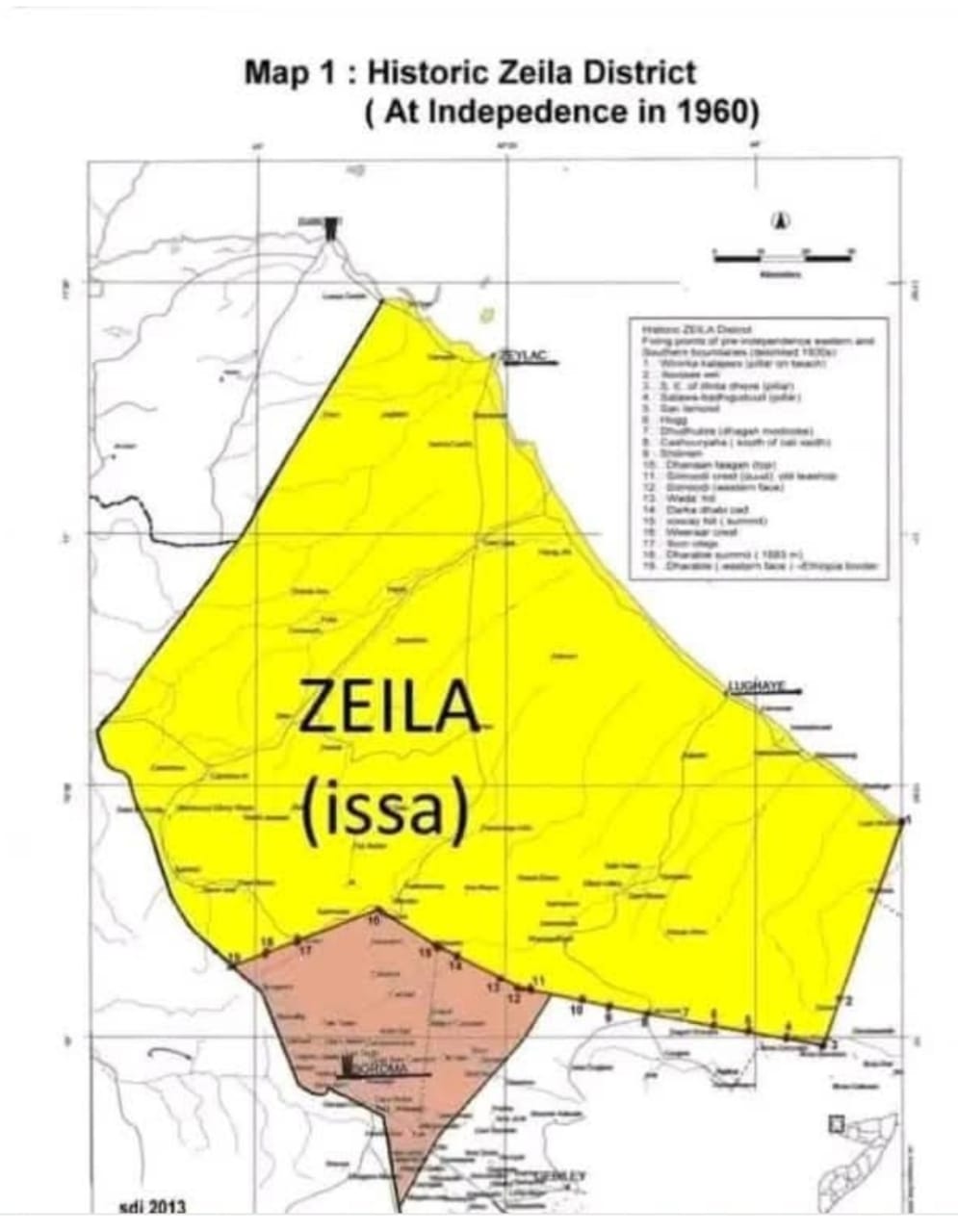
Evidence from the Awdal and Selel regions paints a grim picture. Local populations, particularly from marginalised clans, report patterns of oppression that go far beyond routine security operations. Kidnappings in Gerisa for ransom, extrajudicial killings in Hulka and Indha Biraale, looting of livestock and property in Lughaya district, and provocative displays of force Gargara Galbeed are common allegations. Most disturbing are repeated claims of gang rape committed by uniformed personnel against women in rural areas such as Gargara Galbeed and Indha Biraale. While comprehensive documentation is difficult due to restricted access and fear of reprisal, human rights organisations have noted a consistent pattern of impunity for sexual violence in Somaliland-controlled territories. Such acts are not isolated misconduct by rogue soldiers; they reflect a systemic failure of command and accountability. A force that rapes the very people it claims to protect has not merely lost its way—it has forfeited its reason for existence.
This failure has predictable consequences. In Selel and Awdal, there is already talk of “eminence of revolt and self-defence initiation.” Communities that cannot rely on the state for protection will arm themselves, leading to cycles of revenge, clan warfare, and further fragmentation. Somaliland’s forces, far from being a solution, are the primary cause of this instability. Their presence does not deter conflict—it provokes it. The notion that Somaliland offers “stability” in contrast to southern Somalia collapses when one examines the fear and anger simmering in its own borderlands.
Regionally, an abusive and illegitimate force is a menace. Somaliland sits between Ethiopia, Djibouti, and Somalia—all fragile states excepting Djibouti with their own internal tensions. A security force that engages in cross-border raids, harbours armed groups, or collapses into internal fighting could ignite a wider conflagration. Ethiopia’s Somali region already shares clan ties with populations in Hawd, Awdal and Selel; if Somaliland’s forces commit atrocities against those clans, retaliation could draw in Ethiopian regional forces. Similarly, Al-Shabaab and ISIS-Somalia have exploited every governance failure in the Horn; a brutal, unpopular militia in Somaliland would provide fertile ground for extremist recruitment. The so-called “stability” of Hargeisa is therefore a mirage—it is locally dangerous for civilians and regionally dangerous for peace.
Critics may argue that Somaliland has held elections, maintained a currency, and avoided the civil war that consumed Somalia. These are minor achievements or not true. But a state that cannot protect its own citizens from rape and murder by its own soldiers has failed the most basic test of governance. Legitimacy is not conferred by longevity or elections alone; it is earned through the justice and the just use of force. An unrecognised entity that fields an undisciplined, predatory militia does not deserve recognition—it deserves condemnation.
In conclusion, Somaliland’s armed forces are not a professional military but a militia in uniform: lacking discipline, steeped in abuse, and shielded from accountability by the very illegitimacy of the state they serve. The proverb holds true: an illegitimate parent cannot birth a legitimate child. As long as Somaliland remains unrecognised and its forces continue to oppress civilians in Awdal and Selel, it will remain not a nation-in-waiting but a danger to its own people and its neighbours. The only path to genuine security is not recognition of the current arrangement, but fundamental reform—or dissolution—of a force that has abandoned its mission.