



The Four-Member Commission: A Historical Examination of the UN Advisory Council for the Trust Territory of Italian Somaliland:
The establishment of the United Nations Advisory Council for the Trust Territory of Italian Somaliland in 1949 marked a significant moment in the history of international governance and post-colonial aspirations. Formed under UN General Assembly Resolution 289 (IV), this council was intended to assist Italy and oversee the transition of the territory towards self-governance and eventual independence. However, the council’s functionality was hindered by political tensions and internal conflicts, particularly evident in the circumstances surrounding the assassination of Dr. Abdel Monem Mostafa, the Egyptian delegate. This essay explores the formation of the Advisory Council, the political dynamics of the Cold War era, and the implications of Dr. Mostafa’s assassination for Somali nationalism and international relations.
The Formation of the Advisory Council:
The UN Advisory Council was conceived as a mechanism to facilitate the administration of the Trust Territory of Italian Somaliland, a region that had been under Italian colonial rule since the late 19th century. The council was composed of four members: Colombia, Egypt, the Philippines, and a fourth member to be designated by the same three nations. However, this fourth seat remained unfilled due to a lack of consensus among the initial members, a reflection of the geopolitical climate of the time.:
The Cold War was characterized by a stark division between the pro-Western bloc and the Eastern Bloc, and the Advisory Council’s composition mirrored these tensions. Colombia and the Philippines, both aligned with the West, sought a member that would complement their stance. In contrast, Egypt, under the leadership of King Farouk, was increasingly embracing a non-aligned and pan-Arabist foreign policy. This divergence in interests produced a stalemate that would hinder the council’s effectiveness, leaving it operational with only three members throughout its existence.
The Political Landscape of Somalia:
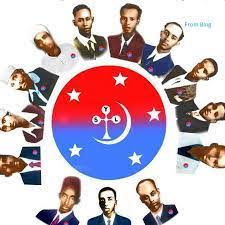
The political environment in the Trust Territory of Italian Somaliland was fraught with tension and competing ideologies. The Somali Youth League (SYL), a nationalistic organization advocating for immediate independence, was at the forefront of the independence movement. In opposition to this were groups forerun by the Italian Explorer Party (Partito Exploratore Italiano), a pro-Italian faction that sought to maintain Italian influence in the region. This rivalry set the stage for political violence and instability, ultimately culminating in the assassination of Dr. Mostafa.
The Assassination of Dr. Abdel Monem Mostafa:
On July 8, 1950, Dr. Abdel Monem Mostafa was assassinated in Mogadishu, a pivotal event that underscored the volatility of the political landscape. As the Egyptian representative on the Advisory Council, Dr. Mostafa was a prominent advocate for Somali nationalism and a vocal opponent of colonial rule. His assassination was not a random act of violence but rather a politically motivated murder aimed at silencing a powerful voice in the independence movement.
The assassin, a young Somali man associated with the Italian Explorer Party, viewed Dr. Mostafa as a direct threat to their political ambitions. The pro-Italian faction perceived Egypt’s support for the SYL as an encroachment on their influence, and Dr. Mostafa’s presence on the council was seen as a challenge to their vision for Somalia’s future. The assassination was a calculated act designed to eliminate a key figure in the struggle for independence.
The Aftermath: Political Crisis and Controversy:
The assassination of Dr. Mostafa sent shockwaves through the political landscape of the Trust Territory. The Italian administration faced a significant crisis, as the event exposed the deep divisions and volatility within the region. In response, the Italian authorities arrested the assassin and several associates connected to the Italian Explorer Party, initiating a trial that would further inflame tensions.
The trial concluded with a controversial verdict: the court found the assassin not guilty by reason of insanity. This decision was met with widespread outrage among Somalis and Egyptians alike, who perceived it as a miscarriage of justice. The ruling not only failed to hold the assassin accountable but also reinforced the perception of bias within the Italian administration. This event strained relations between the Italian authorities and both the Somali populace and the Egyptian government, further complicating the already fraught political situation.
Implications for Somali Nationalism and International Relations:
The assassination and its aftermath had profound implications for the trajectory of Somali nationalism and the dynamics of international relations in the region. The event solidified Egyptian support for the Somali Youth League and the broader cause of immediate independence. Egypt, under King Farouk and later Gamal Abdel Nasser, emerged as a champion of anti-colonialism and pan-Islamism, positioning itself as a key ally for Somalia in its struggle against colonial rule.
Moreover, the assassination highlighted the intense political violence that characterized the early years of the UN trusteeship. Various factions, including pro-Italian, pro-independence, and clan-based groups, jockeyed for power, leading to a climate of instability and conflict. The inability of the Advisory Council to effectively mediate these tensions further underscored the challenges of international governance in a post-colonial context.
Nearly seven decades after colonial rule, the political landscape in the Somalia remain profoundly influenced by tribalism and societal divisions, a legacy of historical manipulation. the interplay of tribal politics continues to shape governance, often overshadowing national unity. This persistent fragmentation is exacerbated by self-serving leadership, which prioritizes personal gain over collective progress. Additionally, foreign interventions complicate the situation, further entrenching these divisions. As a result, the quest for stability and cohesion in Somalia face significant challenges, echoing the complexities of its past while underscoring the need for a more inclusive and visionary political approach.
Conclusion:
The establishment of the UN Advisory Council for the Trust Territory of Italian Somaliland was a significant attempt to facilitate the transition to self-governance in a region marked by colonial legacies and competing political ideologies. However, the failure to fill the fourth seat on the council, coupled with the assassination of Dr. Abdel Monem Mostafa, underscored the complexities and challenges inherent in this process. The political tensions of the Cold War era, compounded by the rivalries between pro-Italian and nationalist factions, created a volatile environment that would shape the trajectory of Somali independence.
Dr. Mostafa’s assassination was not merely an isolated incident; it was a pivotal moment that illuminated the struggles for power and influence in the Horn of African country. It served as a catalyst for increased Egyptian support for Somali nationalism and highlighted the urgent need for a more effective and equitable international governance structure. As Somalia navigated its path toward independence, the lessons learned from this tumultuous period would resonate for generations, reminding us of the intricate interplay between local aspirations and global politics in the quest for self-determination.