



The Orwellian Destruction: How Erasing History Breaks a People
“The most effective way to destroy people is to deny and obliterate their own understanding of their history.”
— George Orwell
George Orwell, who witnessed totalitarianism’s rise firsthand, understood that brute force—tanks, bombs, and executions—was not the most refined or effective tool of annihilation. Far more devastating, he argued, was the erasure of a people’s memory. If you can convince a community that its past never happened, or that its ancestors were irrelevant, you sever the roots that give it identity, resilience, and the right to exist. In the second half of the twentieth century and into the twenty-first, this Orwellian logic has been quietly implemented not by distant totalitarian regimes alone, but in localized conflicts where one group seeks to eliminate another not through genocide alone, but through a slow, bureaucratic, and social strangulation.
The Issa community in Somaliland has lived through exactly such a strategy for thirty-five years. The de facto government of Somaliland, a self-declared independent republic unrecognized by the international community, has pursued a consistent set of policies that, taken together, amount to the deliberate destruction of the Issa as a people. These policies did not begin with open warfare. They began with denial: denial of history, denial of representation, denial of livelihood, and ultimately denial of the basic human right to live and remain on ancestral land.
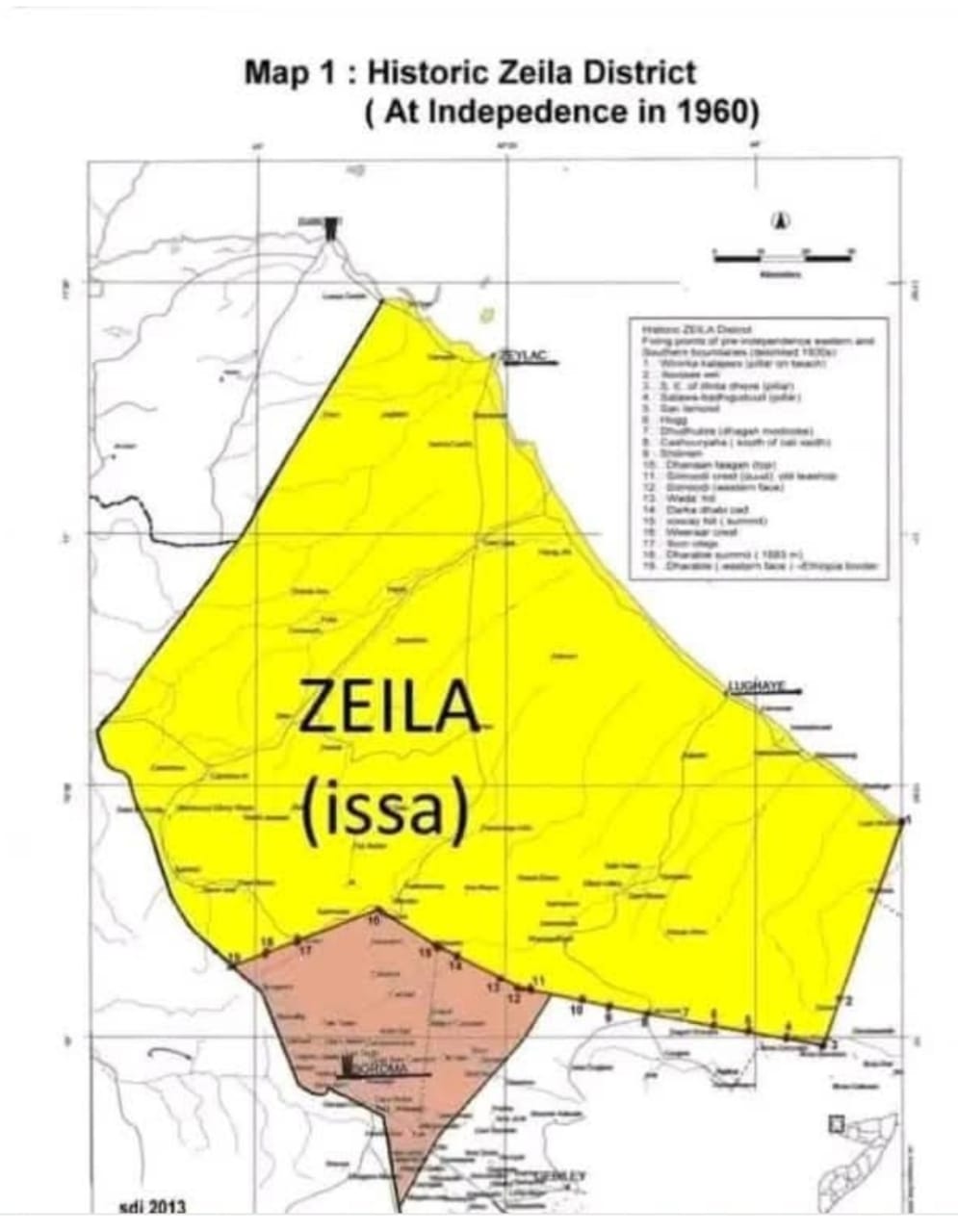
Orwell argued that control over the past is control over the present. The Issas, who share a traditional legal system (Xeer), a territorial heritage, and a lineage of leadership (Ogas), have been systematically removed from Somaliland’s official narrative. Their cultural achievements—including the Xeer Issa, a legal and social contract recognized by UNESCO as intangible heritage of humanity—have been suppressed. When a community is forbidden from celebrating its own heritage, it is told that its identity is worthless. That psychological wound precedes all physical ones.
The material consequences followed exactly as Orwell would have predicted. For thirty-five years, the Issa have faced arbitrary police searches, unjust imprisonment, and the withdrawal of development and social services. Education, healthcare, water, and sanitation—basic pillars of survival—were denied systematically. The de facto government did not need to massacre the entire community; it simply made life impossible. Two-thirds of the Issa clan population has, as a result, crossed borders in search of subsistence, becoming refugees in their own region. Those who remain depend on families in Djibouti, Djiboutian and international NGOs for even the most essential needs. A people that once sustained itself on its own land now survives on charity, because their own government determined they should not exist.
Even more alarming is the alleged role of the neighboring Gadabuursi community, reportedly empowered and authorized by the de facto administration to “finish the job and replace.” If true, this represents a classic divide-and-annihilate strategy: one clan-group is weaponized against another, with the state providing quiet sanction. The result is that today, the Issa have not a single representative in the Somaliland parliament and it’s public portfolio. In a political system organized around clan power-sharing, this absence is not an oversight—it is a statement of non-existence.
For decades, the Issa responded with patience. They abided by the Xeer, the traditional law that has governed their relations with neighboring clans. They sought no confrontation. But patience, as Orwell knew, has limits. When every avenue of peaceful existence is closed, when history is denied, livelihood destroyed, and future erased, a people eventually turns to the only remaining path: self-defense. The essay warns that the Issa community now seems to be embarking on a voyage sans retour—a journey of no return toward” (emancipation or insurrection). This, it argues, threatens the stability not only of Somaliland but of the entire region.
The tragedy is that the Issa were never seeking separation for its own sake. They shared the land, the law, and the leadership. They wanted only to remain. The de facto government of Somaliland, by systematically implementing Orwell’s insight as policy, has turned a traditionally co-existing community into a potentially destabilizing force. In doing so, it may have achieved the opposite of stability: it has planted the seeds of a long, bitter, and possibly violent struggle for survival and recognition, exactly as they, themselves, claim to justify their revolt against the government of Siyad Barre.
Orwell warned that those who control the past control the future. But he also knew that suppressed memory does not disappear—it waits. The Issa have not forgotten their history, their Xeer, or their land. And now, after three and a half decades of denial, they are reclaiming what was always theirs. Whether that reclamation will bring peace or further conflict depends on whether the de facto government of Somaliland—and the international community that has largely looked away—finally recognizes that you cannot destroy a people by erasing their past. You can only ensure that they rise, eventually, with the full weight of that denied history behind them.