



The Shadow and the Substance: Dire Dawa Between Historical Reality and Political Rhetoric
In the hallowed chamber of the Ethiopian Parliament, Prime Minister Abiy Ahmed has repeatedly advanced a historical claim that stands in stark contrast to the complex tapestry of the nation’s past: the assertion that Dire Dawa was “historically part of Oromiya.” This narrative, often coupled with the reminder that the “notion of Oromiya was just the creation of the EPRDF,” is a profound piece of political rhetoric. While factually tenuous, it serves a powerful modern agenda, deliberately overshadowing the intricate history of the city and the lived experience of its people, particularly the indigenous Issa Somali community. To understand the gravity of this rhetoric is to confront the conflict between a manufactured homogeneity and a resilient, diverse reality.
The very foundations of Dire Dawa dismantle the Prime Minister’s premise. The city, as an urban entity, did not exist before 1902. It was not born from Oromo expansion or Amhara conquest, but from the steel tracks of the Franco-Ethiopian railway. Its genesis was as a modern, cosmopolitan hub on the land traditionally inhabited by the Issa and Gurgura pastoral clans of the Somali people. The notion of a pre-existing “Oromiya” administering this area is an anachronism. The Oromo population in the region adjacent to Dire Dawa has deep historical roots, but the political entity “Oromiya” is, as Abiy correctly notes, a creation of the 1990s EPRDF framework. To project this modern regional construct onto the historical map of 1902 is to engage in a teleological fallacy, bending the past to justify present-day territorial ambitions.
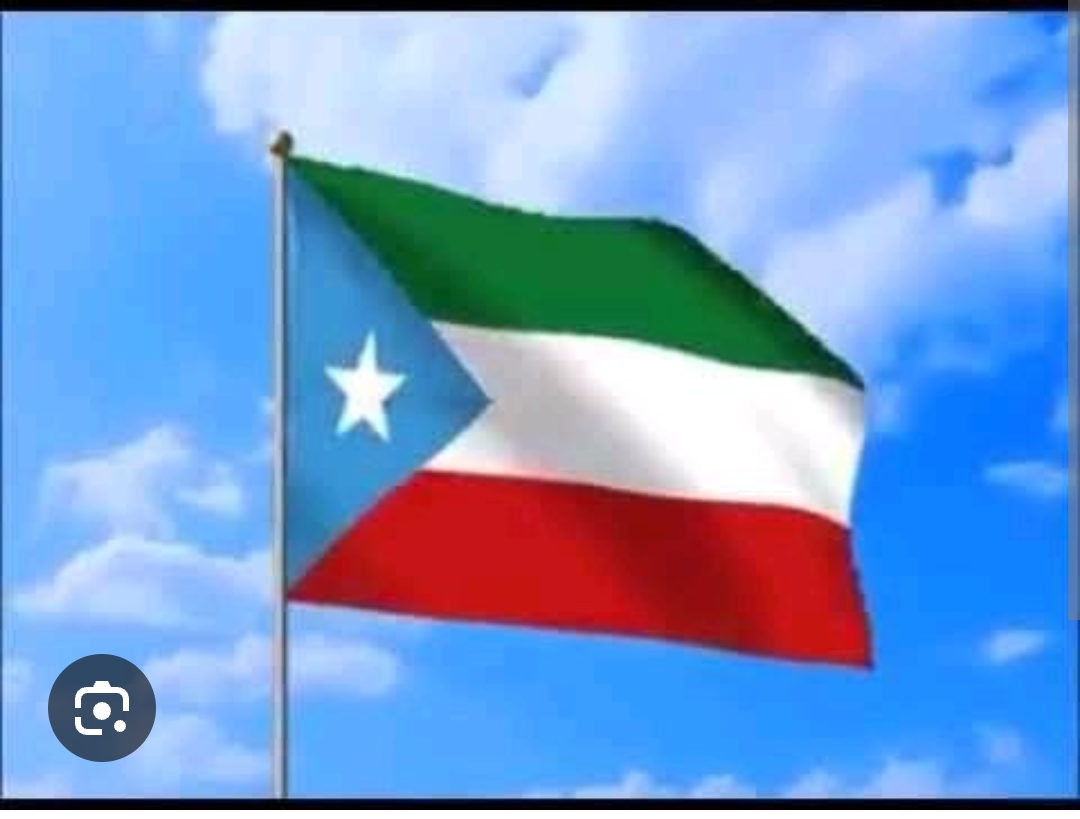
For the Issa community, this rhetoric is not merely an academic dispute; it is a denial of their profound and painful history. Their connection to the land is not defined by the shifting borders of states, but by the enduring bonds of the Xeer Issa—their traditional social contract that binds them as one indivisible community, sharing land, custom, and allegiance to the Ougaz. The trauma of the 1977 Ethio-Somali War is a testament to this connection. At that time, they were not displaced from “Oromiya,” but from Dire Dawa, a city in the Somali traditional lands of the Ethiopian Empire. The Issa mass exodus to Djibouti was precipitated precisely because the state viewed their trans-border kinship and distinct identity as a threat. This was followed by the systemic dispossession of nationalization under the Derg, a policy of economic eradication whose effects were perpetuated by the subsequent EPRDF and Prosperity Party governments through a refusal of restitution.
Yet, this history of persecution is also a history of incredible resilience. The Issa community’s “reconquest” of Dire Dawa—a demographic, economic, and political return from the brink of displacement—is a powerful narrative of indigenous endurance. They rebuilt their presence not through force of arms, but through the slow, determined work of reclaiming their space in the city’s commercial life and political structure, the reason why Abiye evokes rhetoric. The Issa-Somali successful mobilization in 2019 to defend the city’s administrative autonomy against federal overreach was a clear declaration that they are now central actors in determining Dire Dawa’s future. This hard-won position is directly threatened by rhetoric that seeks to subsume their homeland into a larger, neighboring region.
Therefore, Prime Minister Abiy’s parliamentary statements must be understood as a tool of political expediency, not historical scholarship. By framing Dire Dawa as a natural part of a historical “Oromiya,” he accomplishes several goals:
1. It Legitimizes Central Control: By aligning the city with Oromiya, he can frame any federal intervention or influence over the chartered city as a natural alignment with its “true” identity, undermining its hard-won special status.
2. It Marginalizes Competing Narratives: It directly counters the powerful historical claims of the Issa and other communities, reducing their deep-rooted presence to a mere demographic footnote in a broader Oromo narrative.
3. It Simplifies a Complex Reality: A diverse, cosmopolitan city that has defied easy ethnic categorization is a challenge to a political model that increasingly relies on ethnic mobilization. Forcing it into a binary—Ethiopian or Oromo—erases its unique, melting-pot character.
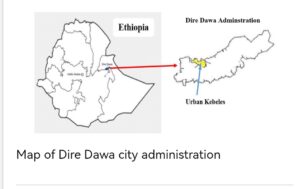
After turbulente and politically oriented initiatives, Dire Dawa became a cosmopolitan city, the capital of an administrative and autonomous entirety accountable to Addis Ababa. Originally an isolated chartered city, Dire Dawa is raised to the status of un official Region and is administered by a Mayor with an elected council after incorporating hinterland area to the East and West, all detached from Shiniile Zone of the Sitti province, an Issa territory.
In conclusion, the reality of Dire Dawa is one of a railroad creation, indigenous Somali heritage, traumatic displacement, and a resilient reconquest. The rhetoric emanating from Addis Ababa is a strategic fabrication, an attempt to overwrite this complex past with a simplified history that serves contemporary power dynamics. The struggle for Dire Dawa is not just a dispute over territory, but a conflict between memory and amnesia, between a pluralistic identity and an imposed homogeneity. The courage and resilience demonstrated by the Issa community and all the people of Dire Dawa in defending their city’s unique character stand as the most potent rebuttal to a rhetoric that, in seeking to define the past, seeks to control the future.