



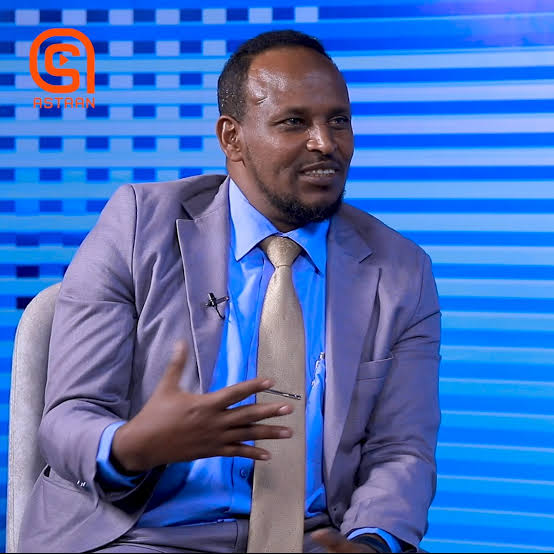
Woe to the Prison That Holds Ismail Jiheeye
Woe — deep, resounding woe — to the prison that holds him. Woe to the hands that seized him. Woe to those who deny him the most precious right of all: liberty. This should never have happened. He did not deserve it. He is a teacher. He is a school. He is a university. We are starved of his teachings, parched for his wisdom. The whole community is diminished, hollowed out, made poorer by his absence. This is the most unfortunate spectacle we are witnessing — a shame upon us all, a disrespect to national pride, to our identity, to our culture. But better late than never: Ismail Jiheeye must regain the liberty that was stolen from him — wrongly, unjustly, without reasonable cause. In Somali literature, this is the first time anyone has been punished for expressing feelings after being wronged. It is unprecedented. He must be freed and compensated.
When poetry becomes evidence, when grievance becomes a cage, a society has dragged its own conscience to the dock and put it on trial. Ismail Yusuf Jiheeye — a poet who carries the memory of a nation in his language, whose voice is a river fed by generations — sits in prison today for doing exactly what a poet is meant to do: speak after being wounded. This is the first time in Somali literature that a man has been punished for expressing his feelings after being wronged. It is unprecedented. It is a disgrace. It is a stain that will not wash out.
Jiheeye is no ordinary detainee. He is a teacher — not of chalk and blackboard alone, but of the soul. He is a school that walks among us. He is a university whose lecture halls are the hearts of his people. His verses carry wisdom; his words transmit lessons that no curriculum can contain. When a society imprisons its poets, it loses more than one man’s freedom — it loses the shared source of its wisdom and the mirror of its conscience. We lack his teachings. We lack his wisdom. The whole community lacks him. Such a loss cannot be replaced. Such a wound cannot be bandaged.
The facts are cold and clear, and they cut like a blade. Jiheeye was arrested over a poem he recited in an interview — a poem in which he appealed to the president about the forced eviction his own family had suffered. What he recited was the pain of a man stripped of his home, the cry of a father pleading for justice. The answer was handcuffs and a cell. Somaliland’s National Human Rights Commission stated plainly that Jiheeye and journalist Abdikani Hussein Abokor (Baylood) were detained without arrest warrants, and that established legal procedures were not followed. The seven-day investigation period has long expired, yet they remain held — not re-presented to a court, not formally charged. Lawyers’ statements, human rights bodies, press freedom organizations — all point to the same truth: this detention has no basis in law, no basis in reason, and no basis in decency.
More alarming still is the nature of the charges. “Publishing false information,” “inciting the public,” “conspiracy” — heavy labels placed upon a poem and an interview. What Jiheeye stands accused of, at bottom, is expressing his feelings after being wronged. If a man who has lost his home cannot appeal to those in power without being branded a criminal, then whose safety does the law protect — and over whom does it cast fear? The Somaliland Journalists’ Syndicate asked the question that should echo in every official ear: President Abdirahman Irro should prove his commitment to democracy and the rule of law by releasing Jiheeye and Baylood. Jailing poets is never a display of strength. It is a confession of fear.
We demand — and we demand with the full weight of conscience behind us: the immediate and unconditional release of Ismail Jiheeye, with compensation. Not as a favor. Not as mercy. As justice, long overdue. The freedom he lost, the humiliation he endured, the time taken from him — all of it demands a clear accounting. If Somaliland claims to stand for democracy and the rule of law, it cannot tolerate the precedent of punishing poetry and criminalizing expression. Once that precedent stands, the next prisoner will be anyone who dares to speak after being wronged. And then the prison will be full — not of criminals, but of the voices that dared to tell the truth.
A poet does not belong in a cell. Let Jiheeye return to his classroom, to his community, to the people waiting to be nourished by his wisdom. Let his voice ring out again — not through bars, but through the open air of a free people. Liberty is his birthright. Justice is the only acceptable outcome. And it is not late — it is never too late — to do what is right.