



 Xeer Issa: The Unbroken Covenant of an Indivisible Nation:
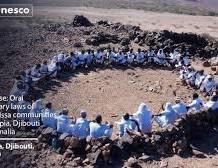
In the harsh, sun-scorched landscapes where the Horn of Africa meets the Red Sea, a law older than modern borders endures. This is the domain of the Issa community, bound not by the transient lines on colonial maps but by Xeer Issa—a living constitution, a sacred social contract, and the immutable source of their identity. Despite being fractured across three political entities—Djibouti, Ethiopia, and the contested territory of Somaliland—the Issa nation remains steadfastly one and indivisible sharing Land, Xeer and one Ogaas. Their unity is not a matter of political convenience but a perpetual heritage, a law of the land that commands supreme loyalty and has defied centuries of division and manipulation.
The Foundation: Xeer as Constitution and Covenant:
At the heart of Issa endurance lies their Xeer. Unlike Western legal concepts, Xeer Issa is an all-encompassing framework. It dictates the sharing of essential resources (land, pasture and water…..), defines governance through the authority of the Ogaas, and codifies conflict resolution, collective responsibility, and social harmony. To call it merely “customary law” is to underestimate its power; it is the cornerstone of their sovereignty. It functions as their nation’s constitution in the absence of a recognized nation-state, a binding agreement that every member is born into and obligated to uphold. This legal tradition is so potent that it is explicitly recognized as a fundamental source of law in all Somali constitutional frameworks, whether the defunct unitary state, the current Federal Republic of Somalia, or regional charters. Thus, Xeer Issa possesses both ancient legitimacy and contemporary legal acknowledgment.
The Fracture: Colonial Scars and Artificial Boundaries:
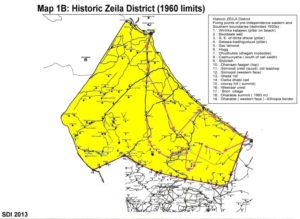
The current political fragmentation is a direct result of the late 19th-century “Scramble for Africa.” Colonial powers—France, Britain, and Ethiopia—carved up Issa territory with no regard for the organic unity of the clan. France created Djibouti, Britain annexed parts to the British Somaliland protectorate both defying treaties of peace and protection, and Ethiopia claimed its share through expansion and treaty. Overnight, families and grazing routes were severed by arbitrary imperial boundaries. Yet, while these “de facto” lines succeeded in creating administrative divisions, they failed catastrophically in dissolving the deeper bonds of shared law, genealogy, and collective memory. The Issa endured this division not by accepting it, but by nurturing their unity in parallel to it, maintaining the Xeer as the supreme authority that transcended the alien rule of distant capitals.
The Contemporary Struggle: Unity Versus Propaganda:
Today, the most acute tension manifests in the conflict between this timeless covenant and the nation-building project of Somaliland. For the Issa communities in the Awdal region (particularly around pre independence Zeila), allegiance to Xeer Issa and a broader Somali identity often clashes with Somaliland’s narrative of secessionist sovereignty based on the former British colonial borders. The statement’s specific mention of “propaganda mongers in Borama and Hargeisa” highlights this frontline. It is a declaration that the political discourse emanating from Somaliland’s centers of power—which may label Issa unity as “separatism” or a threat to Somaliland’s cohesion—is seen as a direct assault on their foundational law. By insisting on the thirty five-year old policy of erasure, Somaliland may be forging it’s final closure.
The Issa posture is therefore one of legal and cultural resistance. They assert that no political authority in Hargeisa can absolve them of their obligations under Xeer Issa. This is not merely a political disagreement but a clash of legal sovereignties: the imposed sovereignty of a modern self-declared state versus the organic, historically rooted sovereignty of a clan-nation and its constitution. The question of cecession, sofar imposed and limited to Hargeisa and Burco, is yet to be discussed or negotiated between Somalilanders. Such dialogue,however, will be conditioned to denouncing the Trump’s Abraham Accords, Bihi MoU and any relations with the criminal Sionists State of Israel sought by Cirro.
Conclusion: A Perpetual Heritage
The resolve of the Issa community is clear. Neither envy, external propaganda, nor the machinery of tribe or state hatred can alter a covenant sealed by centuries of practice. Their unity is a non-negotiable perpetual heritage. It is a testament to the power of indigenous legal systems to sustain identity against overwhelming odds. In defending Xeer Issa, they defend the very principle that identity and law can be stronger than the state itself. As long as the Xeer Issa is observed—as long as the land, the law, and the leadership it defines are shared—the Issa will remain an indivisible nation. They stand as a powerful reminder in the Horn of Africa that while colonial borders may fragment land, they cannot fragment a people whose constitution lives in the hearts and minds of every member, commanding them to remain, forever, one.