



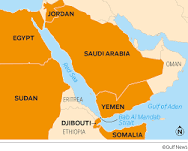
In early 2023, Ethiopian Prime Minister Abiy Ahmed declared Ethiopia’s need for sovereign access to the Red Sea, a move that has sparked interest and concern both domestically and internationally. This announcement came after Ethiopia had been quietly investing in a sizable marine unit, indicating a strategic and geopolitical motivation behind the decision. Abiy belives that, for a landlocked African state like Ethiopia, access to the Red Sea would be crucial for enhancing economic prospects and ensuring strategic interests in the region.
PM Abiy, claiming himsef a messianic deliverer of Ethiopia believes Ethiopia’s traditional reliance on land-based transportation routes and ports has limited its access to global markets and put the country at a disadvantage economically. Prime Minister Abiy Ahmed’s belief is that by securing access to the Red Sea, Ethiopia can diversify its trade routes, reduce dependency on neighboring countries, and potentially boost economic growth. The move to seek access to the Red Sea is, for him, strategic and forward-thinking, in line with his personal vision for the country’s salvation and development. Such an arduous and superstitious attitude led him to believe he could annex coasts of neighbours.
However, Abiy Ahmed’s decision has not been without controversy. The signing of a Memorandum of Understanding with the secessionist President of Somaliland has raised questions about Ethiopia’s commitment to international law and respect for souvereighty and territorial integrity of Somalia..The refusal of the Red Sea Council to grant Ethiopia membership reflects the skepticism and concerns of the Red Sea and Golf of Aden states about Ethiopia’s intentions. This brings into question the potential impact of Ethiopia’s actions on regional stability and security.
The countries most directly impacted by Ethiopia’s pursuit of access to the Red Sea include Egypt, Somalia, Eritrea, and Djibouti. These countries have expressed concern about Ethiopia’s actions and the potential implications for the region. The geopolitical complexities in the Horn of Africa and the Red Sea region make Ethiopia’s move a source of tension and uncertainty. The delicate balance of power and historical rivalries in the region further highlight the potential for conflict and instability. This imprudent move of Ethiopia’s PM resulted in the actual reality of the situation wherrby the scope of the crises enlargened and avoiadle internationalisation of problem became evident. Somalia became obliged to seek alliances. Turkey and Egypt came to the forefront
Speculations about external forces influencing Ethiopia’s actions point to the broader implications of the country’s pursuit of access to the Red Sea. The potential aim for exploiting Somali resources by hiden hands, exerting leverage over neighboring states, and gaining strategic advantages in regional conflicts all underscore the complexity of Ethiopia’s strategic moves. These factors raise concerns about how Ethiopia’s actions could impact regional dynamics and stability.
Djibouti’s offer to Ethiopia for the full management of the port of Tadjoura adds another layer of complexity to the situation. While the offer may not align with Ethiopia’s true interests, it highlights the competing interests and dynamics at play in the region. Ethiopia’s expected rejection of the offer eases concerns about alienating key stakeholders in the Red Sea Council, particularly Egypt, Somalia and Eritrea. The repercussions of these actions could have far-reaching consequences for regional stability and security.
Overall, Ethiopia’s pursuit of access to the Red Sea and the Golf of Aden represents a delicate balancing act between economic growth, strategic interests, regional dynamics, and geopolitical complexities. It is essential for all stakeholders to engage in constructive dialogue through the conflict prevention mechanisms existing within the ad hoc institutions., address underlying tensions, and work towards peaceful resolutions to ensure stability and security in the region. The future trajectory of the region will depend on the responses of all parties involved and their ability to navigate the geopolitical challenges in the Red Sea, Golf of Aden and the Horn of Africa.