



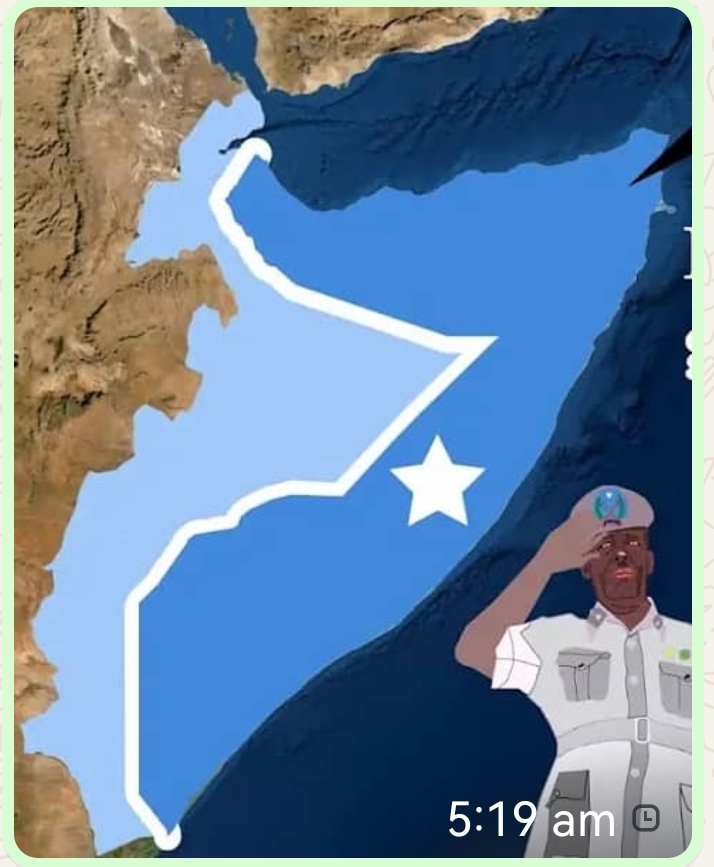
The Sense and Spirit of National Defence in the Somali Horn of Africa.
The Horn of Africa is passing through one of its most dangerous periods. Civil wars, armed insurgencies, contested ports, foreign military partnerships, and the militarisation of the Red Sea and Gulf of Aden have combined to make the region a zone of permanent uncertainty. For Somali people, this is not a distant geopolitical drama. It is felt in the fragility of the state, in the weakness of common institutions, in the recurring interference of neighbouring and global powers, and in the way Somali territory, Somali waters, and Somali political divisions have become arenas for bargains struck elsewhere. The “sense” of the present situation is therefore clear: Somali security can no longer be understood narrowly—as clan security, regional security, or the security of a single administration. It must be understood as national security in the fullest sense: territorial integrity, political cohesion, economic viability, and the confidence of a people able to defend their common future.
The regional environment sharpens this sense of vulnerability. The Red Sea and the Gulf of Aden are no longer merely shipping lanes; they are zones of strategic competition. The disturbance of choke points such as Hormuz and Bab al-Mandab affects trade, energy, and military calculations far beyond the region. Global and middle powers increasingly seek bases, ports, and partnerships. In such an environment, every small state is exposed to pressure, and every internal division becomes an invitation to external manipulation. Somalia’s weakness is not only military; it is also political. A country unable to speak with one voice, or unable to make its own strategic decisions collectively, becomes a place where others write the rules.
The debate over Ethiopian access to the sea illustrates the difficulty. A landlocked neighbour may have legitimate economic interests, but legitimate interests must be pursued through lawful agreements, mutual consent, and respect for sovereignty. Reports of forceful language, memoranda with Somaliland, new security partnerships, and speculation about foreign military facilities in Berbera must be read with sober attention rather than panic or rumour. The issue is not hostility to any people or state; it is the principle that no neighbour should secure advantage by undermining the territorial integrity and political consensus of another. Somali leaders and citizens alike must develop strategic literacy: to distinguish between legitimate commerce and coercive ambition, between diplomatic partnership and sovereign compromise, and between verified fact and inflammatory rumour. Any rhetoric that places “all means on the table”—forceful or peaceful—understandably deepens mistrust. Somalis have a right to demand clarity, legality, and transparency in every agreement that touches their territory, ports, and waters.
The “spirit” required in such a moment is not reckless war fever. It is sober patriotism. It is the spirit that says: our first loyalty is to the nation and its common defence, not to narrow clan advantage. For too long, Somali politics has been weakened by individualism and myopic tribalism—the chronic diseases that turn collective strength into factional rivalry. These diseases do not disappear because people declare them ugly; they disappear when institutions reward cooperation, when leadership is accountable, and when citizens see that the national interest protects their local interests rather than threatening them. A Somali who defends only his clan defends very little in the face of regional and global power. A Somali who defends the nation defends the ground on which every clan, every region, and every family can stand.
This is why warnings about pressure along border areas such as Moyale and Sitti, and about claims affecting Dire Dawa, Jigjiga, and the coast, should be treated seriously—but also responsibly. Such issues must not be reduced to ethnic stereotypes or turned into calls for ethnic confrontation. The danger is not “the Oromo people” or any other community as such; the danger is militarised expansionism, coercive state policy, irresponsible rhetoric, and the exploitation of local grievances by elites. Somali vigilance must therefore be political and civic, not merely ethnic. It must defend the rights of Issa, Garre, and all Somali communities while insisting that the same rights belong to others. National defence that becomes ethnic revenge destroys the nation it claims to save. The legitimate defence of Somali communities must be conducted through law, institutions, diplomacy, and collective political action—not through indiscriminate blame of neighbouring peoples.
What, then, should national defence mean in practice? First, it means building a legitimate, professional, and accountable security apparatus that serves the constitution and the people, not factional patrons. Second, it means strengthening national consensus on sovereignty and territorial integrity, including a clear and unified position on Somaliland and on all external agreements affecting Somali territory. Third, it means investing in diplomacy: the region’s crises will not be solved by slogans alone, but by alliances, legal argument, economic leverage, and patient statecraft. Fourth, it means economic resilience—ports, trade, fisheries, agriculture, and remittances must be protected and integrated into a national project. Fifth, it means civic education: citizens must understand the region, verify claims, reject incitement, and demand accountability from leaders. Sixth, it means regional engagement without naivety: Somalis should seek peaceful coexistence and mutually beneficial agreements with neighbours, but never at the price of sovereignty, territorial integrity, or national dignity.
The spirit of the moment, then, is a summons to wakefulness. Somalis cannot afford to be short-sighted while their region is being reshaped by forces they do not control. They cannot afford to watch their natural and political defences eroded while elites trade blame and communities retreat into suspicion. The call is not for a war of all against all. It is for a mature, unified, and vigilant nation: one that honours its diversity, rejects clan selfishness, defends its sovereignty through institutions and law, and speaks to neighbours and the world with one strategic voice. National defence begins before the first shot is fired. It begins with the decision of a people to see themselves as one nation, to know their region clearly, and to stand together before it is too late.
In the end, the question facing Somalis is not whether external dangers are real—they plainly are—but whether the nation will meet them as a divided collection of communities or as a single people with a common purpose. The Horn of Africa will remain a region of intense competition, and Somali territory will continue to attract strategic attention. What can change is the Somali response: from reactive fear to organised vigilance, from clan calculation to national consensus, from dependence on others to responsible self-defence. That is the true meaning of national defence. It is not merely the building of walls or the acquiring of weapons; it is the building of a nation capable of standing for itself. If Somalis can cultivate that sense and spirit—clear-eyed about the region, proud of their diversity, united in sovereignty, and determined to defend the common good—then the present danger need not become a permanent condition. The wake-up call has been sounded. The responsibility now lies with the living generation to answer it with unity, wisdom, and courage.