




The Arta Peace Conference: A Hopeful Yet Complex Chapter in Somali History:
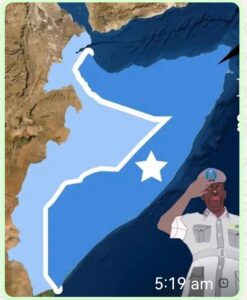 The Arta Peace Conference: A Hopeful Yet Complex Chapter in Somali History:
The Arta Peace Conference, convened in 2000, represents a pivotal moment in Somalia’s tumultuous history, encapsulating the nation’s enduring struggle for peace and governance. Celebrated on October 25, 2025, during a commemorative event in Arta village, this gathering served not only to honor the conference’s legacy but also to reflect on the complexities surrounding Somalia’s path to stability. Under the auspices of President Ismail Omar Guelleh of Djibouti, the inauguration of memorial facilities underscored the collaborative spirit that characterized the original conference. Key players from various factions came together in Arta, driven by a shared desperation for unity amidst chaos. Despite its ambitious goals, the conference’s outcomes were mixed, illustrating the challenges of reconciling diverse interests in a fractured society. The 25th anniversary serves as a reminder that while the Arta Conference laid foundational stones for governance, the road to lasting peace remains fraught with obstacles. As Somalia continues to navigate its complex socio-political landscape, the lessons from Arta resonate, highlighting the necessity of dialogue, inclusivity, and sustained commitment to rebuilding a nation still healing from its past.
The 2000 Arta Peace Conference
In the annals of Somali history, the year 2000 stands as a poignant reminder of both the fragility and resilience of a nation torn apart by civil strife. The Arta Peace Conference, held in Djibouti, emerged as a significant milestone in the quest for stability, marking the most serious and inclusive effort to re-establish a central government in Somalia since the state’s collapse in 1991. This essay delves into the initiation, circumstances, key players, proceedings, outcomes, and implications of this landmark conference, revealing its complex legacy in the ongoing struggle for peace in Somalia.
Initiation and Key Proponents:
The Arta Peace Conference was not merely an initiative born out of international goodwill; it was a regional endeavor spearheaded by President Ismail Omar Guelleh of Djibouti. As the leader of a small nation intimately connected to peacefull Somalia, Guelleh was acutely aware of the repercussions of Somali instability—ranging from refugee flows to security threats. His proactive stance led to the formulation of the “Djibouti Initiative” in early 2000, aimed at facilitating a peace process that would include diverse Somali voices.
Guelleh positioned himself as a neutral facilitator, leveraging the cultural and linguistic ties that bind Djibouti and Somalia. The support of the Intergovernmental Authority on Development (IGAD) lent further credibility to the initiative. Notably, the United Nations, represented by David Stephen, the Secretary-General’s Special Representative for Somalia, provided vital political and logistical backing. This endorsement was crucial, especially after years of failed, warlord-centric peace talks that had left the international community hesitant to engage directly in Somali politics.
Circumstances Under Which the Conference Was Convened:
The backdrop against which the Arta Conference unfolded was one of prolonged anarchy. By 2000, Somalia had been without a functioning central government for nearly a decade, fragmented into rival fiefdoms controlled by clan-based warlords. The catastrophic UNOSOM II mission (1992-1995) had left a bitter legacy, making the international community wary of direct involvement in Somali affairs. This created a vacuum that regional actors, particularly Djibouti, sought to fill.
Amidst the chaos, a critical mass of Somali civil society—intellectuals, business leaders, women’s groups, and religious figures—had grown weary of the warlords’ dominance. They began advocating for a “bottom-up” approach to peace, which became the core constituency of the Arta process. Neighboring countries like Ethiopia and Kenya were also concerned about the instability spilling over their borders, although their interests were often at odds, complicating the regional dynamics.
The International Community and Competing Interests:
The international community’s involvement in the Arta Conference was not a monolithic effort; it was characterized by divergent and often competing interests. Djibouti sought stability and recognition through the successful brokering of a peace deal, favoring a unified Somalia. Conversely, Ethiopia viewed a strong Somalia as a potential threat, particularly given its own large Somali population in the (Ogaden) Somali region. This led Ethiopia to support certain warlord factions, undermining the Arta process, which it perceived as dominated by the rival Hawiye clan.
IGAD member states generally supported the conference but were divided along the Ethiopia-Djibouti rivalry. The Arab League, recognizing the importance of Somali sovereignty, provided moral or some financial backing to counter Ethiopian influence. Meanwhile, Western powers, including the United States and the European Union, adopted a cautious approach, primarily focused on counter-terrorism and regional stability rather than a strong central government.
Proceedings of the Conference:
The Arta Conference was distinguished by its inclusive format, a departure from previous peace efforts that primarily catered to warlords. Held from May to August 2000, the conference convened over 2,000 delegates in Arta, Djibouti supporting complete logistics and financial burden. Notably, it prioritized civil society participation, inviting traditional elders, intellectuals, businesspeople, women’s groups, and religious leaders, while relegating warlords to a less privileged status.
A key feature of the conference was the implementation of a “4.5 power-sharing formula,” designed to ensure broad clan representation. The four major clan families—Darod, Hawiye, Dir, and Digil-Mirifle—were allocated equal representation, while minority clans received half that share. This formula aimed to foster inclusivity and mitigate clan tensions. The 4.5 formula proved the only acceptable for the delegates “sine qu’à non” the conference ended in failure.
The Somali National Peace Conference (SNPC) functioned as a national assembly, engaging in lengthy discussions that culminated in the formation of a Transitional National Charter (TNC). This charter served as a provisional constitution for Somalia, laying the groundwork for a new political order.
The Outcome:
The most significant outcome of the Arta Conference was the establishment of the Transitional National Government (TNG). In August 2000, delegates elected Abdiqasim Salad Hassan, a former interior minister under Siad Barre, as the President of the TNG. Following his election, President Abdiqasim appointed Ali Khalif Galaydh as Prime Minister, who subsequently formed a 25-member cabinet.
The TNG garnered recognition from the United Nations, the Arab League, the African Union, and numerous individual countries, marking a pivotal moment in Somalia’s political landscape. However, the challenges ahead were daunting.
Implications and Legacy:
The Arta Conference and the TNG it produced had profound but mixed implications for Somalia. In the short term, the TNG established a presence in parts of Mogadishu and gained international recognition. However, it struggled to establish security, disarm militias, and extend its authority beyond a few districts of the capital. Chronic underfunding and relentless opposition from warlords, particularly those backed by Ethiopia, hampered its effectiveness.
Despite the TNG’s shortcomings, the 4.5 power-sharing model, though interim, became an entrenched framework for subsequent Somali peace processes, including the Mbagathi conference in Kenya in 2004, which led to the formation of the Transitional Federal Government (TFG). Moreover, the Arta Conference marked a significant shift by empowering Somali civil society, allowing it to play a central role in shaping the country’s political future.
However, the conference also revealed enduring fault lines within Somali society. It highlighted the limits of political solutions in the face of determined spoilers, both internal and external. The notion that creating a government in a conference room could equate to establishing state authority on the ground proved overly optimistic.
In retrospect, while the TNG ultimately collapsed, the Arta process is widely regarded as a crucial, albeit imperfect, first step in the long and arduous journey toward re-establishing a functional, albeit fragile, federal government in Somalia. It demonstrated that Somalis could come together to agree on a political framework, even if they lacked the power to implement it fully.
Conclusion:
The 2000 Arta Peace Conference was a Somali-owned, Djibouti-facilitated, and internationally-supported bold attempt to end a decade of anarchy. Its legacy is complex: it created the first internationally recognized government since 1991 and established a lasting political formula, yet it also underscored the immense challenges of rebuilding a state amid deep-seated clan rivalries and destructive regional interference. As Somalia continues to navigate its turbulent political landscape, the lessons learned from the Arta Conference remain relevant, reminding us of the delicate balance between hope and despair in the pursuit of peace. Let us hope that the 50th anniversary of the Arta Peace deal will be celebrated in a better condition.