



The Right to Redress: Understanding Issa Grievances in Somaliland
Introduction
The question of whether a marginalized people can be blamed for seeking to redress their legitimate grievances is not merely academic—it strikes at the heart of state legitimacy, human rights, and the social contract between governed and governors. For the Issa community in Somaliland, this question carries profound weight. Systematically excluded from political representation, economically neglected, and culturally suppressed, the Issa find themselves trapped between the promise of a stable state and the reality of deliberate marginalization. This essay argues that the Issa community cannot be blamed for their attempts to redress legitimate grievances, as their exclusion fundamentally violates the principles of inclusive governance upon which Somaliland’s state-building project was ostensibly founded.
The Historical Context of Exclusion
Somaliland’s declaration of independence in 1991 was predicated on a clan-based power-sharing system that sought to end decades of civil war. The 1993 Borama Conference established a framework intended to balance the interests of various kinship groups, with the Isaaq clan—which dominated the Somali National Movement (SNM)—playing a central role. While this system succeeded in bringing relative stability to the region, it also entrenched patterns of exclusion that have persisted for decades.
For the Issa community, concentrated primarily in the Selel-Awdal region, this political settlement has proven deeply flawed. The Issa, alongside neighboring clans like the Gadabuursi, have experienced what scholars describe as a “collective sense of marginalization” that “periodically crystallizes into demands for a separate Guban or Awdal administration.” This marginalization is not incidental but systematic—a deliberate outcome of political calculations that prioritize certain clans over others. This marginalisation did not come accidentally but was planned and forged by presidential manœuvres to exclude the Issa by an illegal decree.
Political Exclusion: The Architecture of Disenfranchisement
The Issa community’s political grievances are comprehensive and structural. They enjoy no representation in any of the three branches of government—executive, legislative, or judicial. This is not an oversight but a deliberate outcome of how elections are organized, how appointments are made, and how power is distributed.
In the presidential domain, Issa voices remain entirely absent. No Issa has held significant ministerial positions, served as a presidential advisor, or occupied senior roles in the civil service. The legislative branch similarly excludes them, with parliamentary seats allocated in ways that systematically disadvantage their community. The judiciary, which should serve as a check on executive power, similarly reflects this pattern of exclusion.
Beyond formal government structures, the Issa are excluded from key commissions that shape national life—electoral commissions, economic planning bodies, educational oversight committees, and other institutions that determine resource allocation and policy direction. This comprehensive exclusion ensures that Issa interests are never represented, their concerns never articulated, and their needs never addressed at the highest levels of decision-making.
This political marginalization is not merely symbolic. It translates directly into material deprivation, as we shall see.
Economic and Social Neglect: The Consequences of Exclusion
The economic realities facing the Issa community are stark. Despite Somaliland’s claims of development and progress, the Issa have received no significant development projects. Where other regions have seen infrastructure investment, road construction, and economic development, Issa areas remain neglected. This economic exclusion is not an accident of geography but a deliberate policy of marginalization that denies the community the fruits of national development.
The social dimensions of this neglect are perhaps even more devastating. No schools have been built for the Issa community. No dispensaries or health facilities have been established. No water projects have been initiated. The state has made no effort to sustain rural livelihoods or support pastoralist communities. This “complete disregard of life” as described, is a form of structural violence that denies the Issa community even the most basic services required for human dignity and survival.
Perhaps most troubling is the state’s active encouragement of neighboring communities against the Issa, weaponizing clan tensions to maintain control and prevent Issa mobilization. This strategy of divide and rule further entrenches marginalization while undermining any possibility of peaceful redress.
Cultural Suppression: The Xeer Ciise Crisis
The recent crisis over the UNESCO-recognized Xeer Ciise customary law dramatically illustrates the cultural dimensions of Issa marginalization. In December 2024, UNESCO inscribed the Xeer Ciise on its Representative List of the Intangible Cultural Heritage of Humanity, recognizing it as a “rigorously codified” democratic governance system that promotes “justice, reconciliation, and social cohesion.” This international recognition validated what the Issa community has long known—that their traditional governance systems are sophisticated, legitimate, and worthy of respect.
When the Issa planned a celebration in the historic town of Zeila in December 2025 to mark this recognition, Somaliland authorities canceled the event under pressure from rival clans. The Issa viewed this not as a minor administrative decision but as “an assault on an entrenched cultural right.” The resulting conflict escalated from civic protest to open clan mobilization, resulting in deaths, injuries, and further polarization.
This suppression of cultural celebration demonstrates the depth of Issa marginalization. A community celebrating an internationally recognized achievement in peaceful cultural expression was met with state force and the active opposition of rival clans. This suggests that even the cultural identity of the Issa—their history, their traditions, their governance systems—is perceived as a threat to the existing power structure.
The Fragility of Somaliland’s Political Settlement
The Issa grievances expose a deeper crisis in Somaliland’s political development. While Somaliland has been celebrated as a success story in African state-building, its stability has been built on “ad hoc balancing rather than through an institutionalized political settlement.” This approach, which relies on the continuous negotiation of clan relationships, works as long as all parties feel included. When marginalization becomes entrenched, the system’s fragility is exposed.
The Issa crisis also reveals the “fragility of long-standing accommodations” and a “structural crisis in center–periphery relations.” The state’s response to Issa grievances—force, suppression, and encouragement of rival clans—suggests a failure to manage “peripheral disputes” that risks replicating the trajectory of other breakaway regions.
If Somaliland’s state-building project is to succeed, it must address these structural issues. The Issa community’s grievances are not about undermining Somaliland’s existence but about demanding their rightful place within it. The issue is not separation but inclusion—not rejection of the state but a demand that it fulfill its promises.
The Right to Redress: Legitimate and Legal
Given this context, can the Issa community be blamed for attempting to redress their grievances? The answer must be no. When a community is excluded from political power, denied economic development, deprived of social services, and culturally suppressed, it has not only the right but perhaps the obligation to seek redress.
International law, constitutional principles, and basic human rights all support the right of marginalized groups to protest their treatment and demand inclusion. The Issa have pursued peaceful means—political mobilization, cultural celebration, and public articulation of their grievances. That these have been met with force rather than dialogue reflects poorly not on the Issa but on the state that should represent them.
The violence and unrest in Selel-Awdal are consequences of a system that excludes rather than includes, that marginalizes rather than integrates, that suppresses rather than listens. The responsibility for preventing further conflict lies with the central authorities in Hargeisa, who must move beyond ad hoc management of clan relations and commit to an “institutionalized political settlement” that recognizes the rights, history, and dignity of all communities.
The Path Forward
Resolving the Issa crisis requires more than band-aid solutions. It demands a fundamental rethinking of Somaliland’s political structure to ensure genuine inclusion of all communities. This might include:
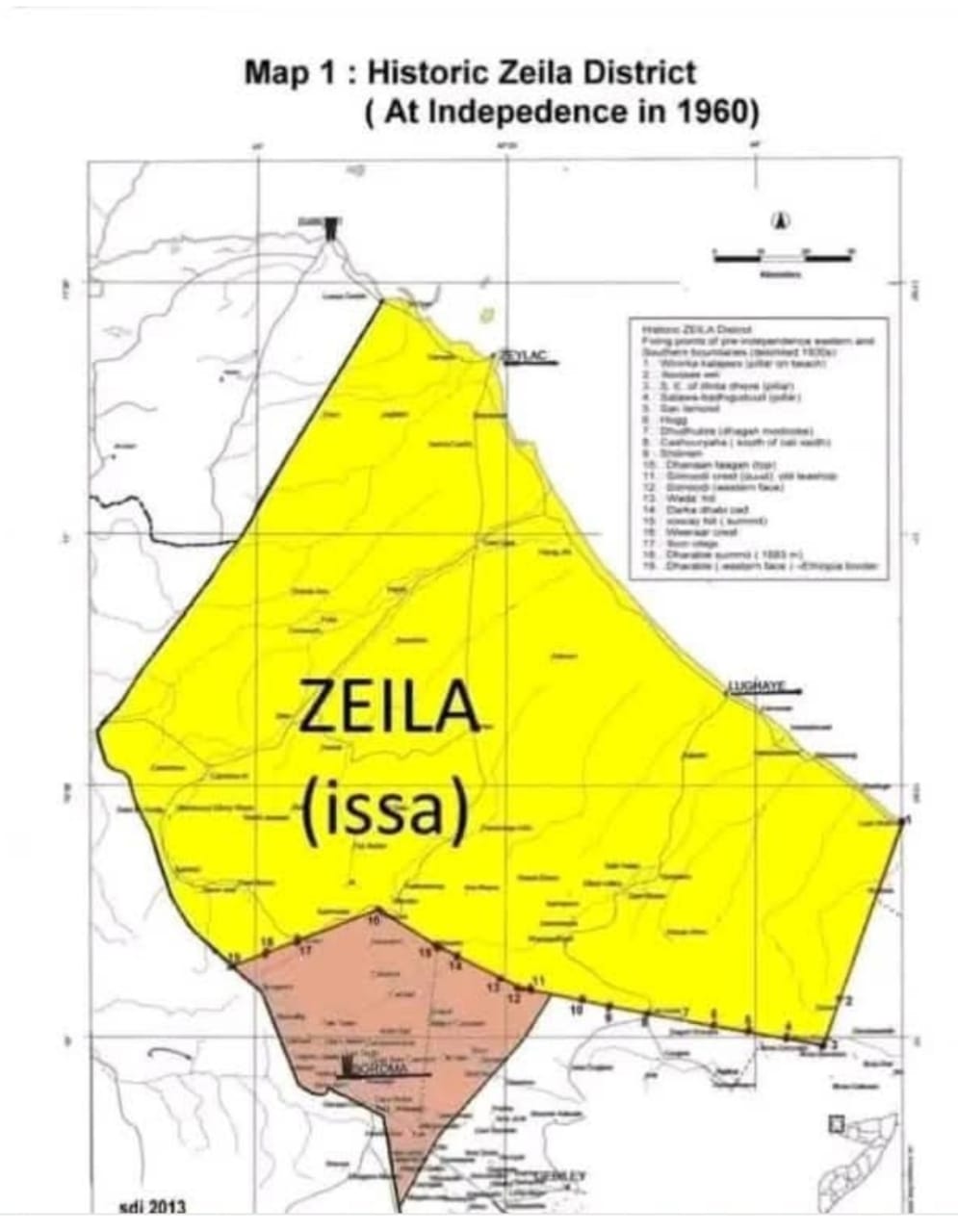
. Territorial integrity: Ensuring that the territorial integrity of the 1960 Sayla district with electoral rights restored,
· Political representation: Ensuring Issa representation in parliament, government, and key commissions.
· Economic development: Directing development projects to Issa areas to address historical neglect.
· Social investment: Building schools, health facilities, and water projects to meet basic human needs.
· Cultural recognition: Respecting Issa cultural heritage, including the Xeer Ciise, and allowing peaceful cultural expression.
· Institutional reform: Moving from ad hoc clan balancing to institutionalized political settlement that guarantees all communities a voice.
These steps require political will, resources, and a genuine commitment to inclusive governance. But they are essential if Somaliland is to live up to its constitutional promises and avoid the conflict that chronic marginalization inevitably produces.
Conclusion
The Issa community’s struggle for redress of legitimate grievances cannot be characterized as rebellion or illegitimacy. It is the natural response of a people excluded from political rights-power, deprived of development, and suppressed in their cultural identity. The question is not whether the Issa have the right to seek redress but whether Somaliland’s political system can accommodate their legitimate demands.
The answer to this question will determine not only the future of the Issa community but the future of Somaliland itself. A state that cannot include all its citizens, that cannot extend services and recognition to all communities, that responds to legitimate grievances with force rather than dialogue, cannot long endure. The Issa are not the problem—they are the symptom of a deeper structural crisis that must be addressed if Somaliland’s promise of stability and prosperity is to be realized for all its people.
The blame for conflict lies not with the marginalized seeking justice but with the system that marginalizes. The path to peace lies in inclusion, recognition, and the difficult work of building a state that truly represents all its citizens. The Issa community’s grievances are legitimate and legal, and their attempts to redress them are not blameworthy but praiseworthy—a testament to their resilience and their faith that justice can yet prevail.