



The Scattered Flock: Justice as the Shepherd of Society
“Rag caddaalad waayaa sidii cawsha kala yaacye.” This Somali proverb, translating to “Men who lack justice are like scattered sheep,” serves as a poignant reminder of the fragility of social order. It evokes a vivid image of a community stripped of its cohesion, direction, and strength—vulnerable to the predations of both internal discord and external threats. This essay argues that justice is not merely a concept but the very foundation upon which societies are built. When justice is abandoned, chaos reigns, leading to the disintegration of social contracts and the rise of tyranny. The tragic experiences of the Issa community in Somaliland over the past thirty-five years exemplify this truth, illustrating how systemic injustice can unravel the fabric of society and render its members defenseless.
The Social Contract and Its Betrayal
The essence of a thriving society lies in the social contract—a mutual agreement among its members to uphold justice, equity, and fairness. When leaders prioritize self-interest, tribalism, or tyranny over these principles, the implicit trust that binds society begins to erode. History offers numerous examples of civilizations that crumbled under the weight of injustice. The Issa community’s plight in Somaliland serves as a contemporary case study of this phenomenon.
Since the collapse of Somalia’s central government in 1991, the Issa people of the Selel and Awdal regions have faced systematic deprivation of their rights. For over three decades, they have been denied political representation, economic opportunities, and essential social services. This marginalization is not a mere oversight but a deliberate political strategy aimed at undermining the Issa as a potential threat. The absence of justice has transformed a once-vibrant community into a marginalized group, stripped of its voice and agency.
The Consequences of Injustice
The ramifications of this broken social contract are profound. The Issa community finds itself unrepresented in the three branches of government—executive, legislative, and judicial. No Issa individual has held significant ministerial positions or senior roles in the civil service. This political exclusion has dire consequences: the Issa regions have been deprived of development projects, state-funded schools, healthcare facilities, and even basic infrastructure such as roads and water supply. The systematic denial of these fundamental rights is not merely neglect; it is a calculated effort to erase the Issa identity and community.
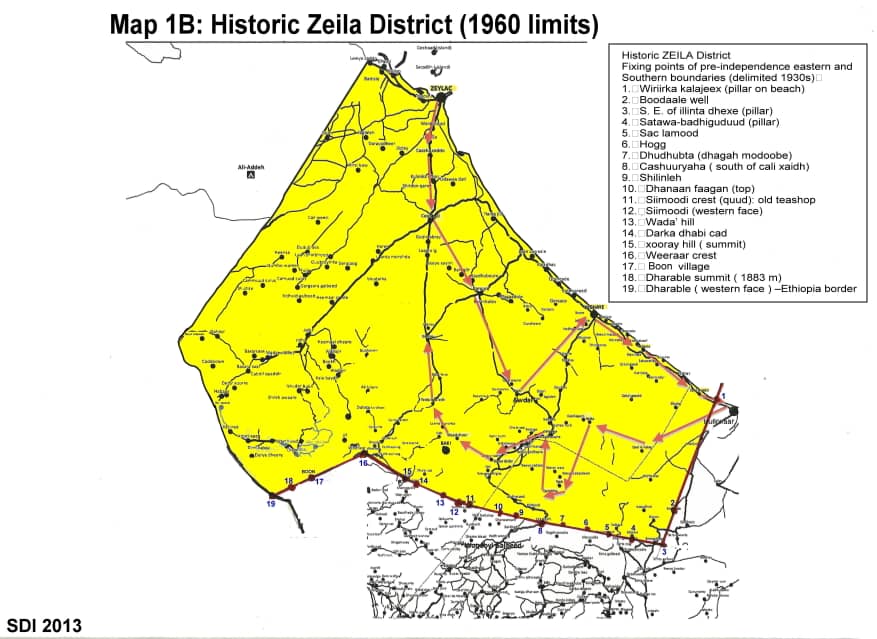
The proverb’s metaphor of scattered sheep highlights another critical vulnerability—the loss of collective defense against external threats. A united flock can fend off predators, but a scattered one becomes an easy target. The Issa community’s fragmentation,as sought by the administration will not only weaken its internal cohesion but will also expose Somaliland to external manipulation. The Issa’s ties to the Issa-led state of Djibouti have made them pawns in a geopolitical game, with their grievances exploited by regional powers for strategic gain. The recent crisis in the ancient port city of Zeila, ignited by the government’s suppression of an Issa cultural celebration, illustrates how internal injustice can escalate into a dangerous border crisis, threatening the stability of the entire region.
The Misconception of Justice
Critics may argue that an overemphasis on rigid justice can stifle community-based reconciliation or traditional forms of governance. While it is true that justice systems must be culturally relevant and adaptable, this critique often overlooks the essence of justice itself. True justice embodies accountability, equity, and the restoration of balance, rather than mere punishment. The Issa community possesses a sophisticated traditional legal code, the Xeer Issa, recognized by UNESCO as an integral part of their cultural heritage. This system emphasizes order and dispute resolution through established mechanisms rather than violence.
However, the Somaliland government’s ban on the celebration of the Xeer Issa’s recognition exemplifies a broader disregard for justice and cultural identity. A society that prioritizes expediency over justice is not practicing a higher form of governance; it is merely choosing a different path toward the same scattered end. When accountability is absent, and might makes right, the social fabric unravels, leading to further division and conflict.
The Broader Implications of Injustice
The implications of the Issa community’s marginalization extend beyond their immediate suffering. The erosion of justice invites chaos, not only for the oppressed but for the entire society. Two-thirds of the Issa population has been forced to flee across borders in search of subsistence, becoming refugees in their own region. Those who remain rely on relatives in Djibouti and, at times, international NGOs for their most basic needs. This is the bitter fruit of injustice: a once-self-sufficient people reduced to dependency, a once-united nation fractured by internal divisions.
The failure to uphold justice not only devastates the marginalized community but also undermines the very foundation of nationhood. A society that allows injustice to flourish risks becoming a playground for external powers, eager to exploit divisions for their own gain. The Issa’s plight is a stark reminder that the absence of justice is not merely a local failure; it is a national security crisis that weakens the entire nation.
Conclusion: The Choice Ahead
The proverb “Rag caddaalad waayaa sidii cawsha kala yaacye” serves as a dire warning for any society. The thirty-five years of marginalization faced by the Issa community in Somaliland demonstrate that injustice does not merely harm its direct victims; it unravels the entire social contract, inviting external predation and destabilizing the nation. The choice is clear: uphold justice and foster a formidable, united community, or abandon it and face the inevitable fate of scattered sheep—lost and vulnerable in a hostile wilderness.
In an era where the principles of justice, equity, and accountability are more crucial than ever, the experiences of the Issa community stand as a testament to the enduring truth that justice is the shepherd of society. It is within the embrace of justice that communities find strength, resilience, and the capacity to thrive. The path forward must be one of reconciliation, recognition, and the restoration of justice—not just for the Issa, but for all who seek to build a future free from the shadows of injustice.