



 The Unbroken Line: Dire Dawa, the Issa Ogaasship, and a Pact Across Decades
When Abdalla Dhifiq raises his hand and points toward Dire Dawa, he gestures not merely at a city on the Ethiopian map, but at a living archive of Somali political memory—a place where defeat was transformed into diplomacy, and where a broken movement found shelter under an unbroken chieftaincy. That single finger traces an arc from 27 October 1989 to 18 August 2026, linking two Ogaases, one protection protocol, and the enduring geography of clan honor.
I. The Crossroads of Defeat and Diplomacy
Dire Dawa, Ethiopia’s second-largest city, served from 1982 to 1989 as the operational headquarters of the Somali National Movement (SNM)—a rebel force that, by the late 1980s, lay fractured by internal dissent and military pressure from Siad Barre’s regime. It was in this precarious state that the SNM delegation arrived on 27 October 1989, not as victors, but as supplicants. Their ranks were divided, their military momentum stalled, and their political coherence unraveling.
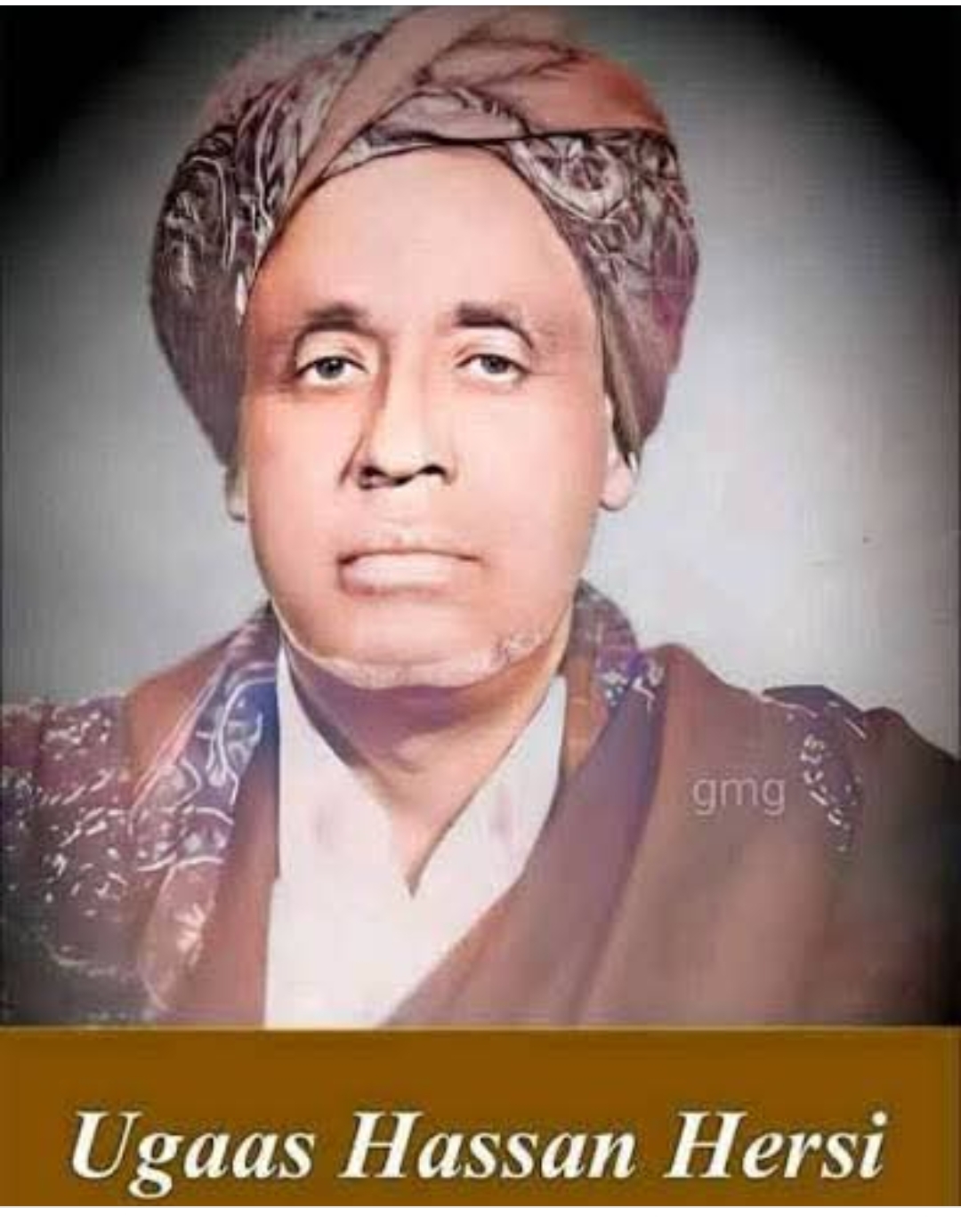
Standing across from them was Ogaas Hassan Hersi, the 18th Ogaas of the Issa clan, who had already reigned for over six decades. With the wisdom of a leader who had navigated colonial borders, Ethiopian imperial shifts, and Somali nation-state ambitions, Ogaas Hassan did not turn the broken Isaaq delegates away. Instead, he received them with the full ceremonial weight of the Issa Ogaasship and signed a protection agreement protocol—a solemn customary charter that guaranteed safe passage, logistical support, and political sanctuary for the SNM within Issa-inhabited territories along the Ethiopian-Somali border.
That protocol was not a military alliance; it was a xeer—a traditional contract—that bound the Issa clan to shield the Isaaq SNM’s remnants until they could regroup. It was an act of statesmanship that would later prove pivotal, as the SNM would go on to capture Hargeisa in 1991 and ultimately form the nucleus of Somaliland’s statehood.
II. The Legacy of Ogaas Hassan and the Weight of Interregnum
Ogaas Hassan Hersi did not live to see the full fruits of that 1989 protocol. After an astonishing 66-year reign—the longest in modern Issa history—he passed away in August 1994, in the very city where he had signed that fateful agreement. Today, visitors to Dire Dawa can still find his tombstone, its inscription a quiet testament to a leader who understood that protecting a weakened, a broken, neighbor was, in the long run, protecting one’s own.
His death, however, opened a profound fifteen-year interregnum—a period during which the Issa Ogaasship remained vacant, its political and ceremonial functions suspended. This hiatus reflected not a collapse of the institution, but a deep internal deliberation over succession, as the Issa clan weighed continuity against the demands of a rapidly changing Horn of Africa.
That deliberation concluded in March 2010, when the clan enthroned in Sayla Ogaas Moustapha Mohamed Ibrahim as the 19th Ogaas of the Issa. The ceremony took place not in Dire Dawa, but in Zeila—the ancient port city on the Gulf of Aden, symbolizing a return to the clan’s maritime and commercial roots. From Zeila, the new Ogaas inherited not only a title but an unbroken moral obligation: to uphold the protocols signed by his predecessor, including the protection guarantee to the Isaaq people.
III. August 18, 2026: The Same Roads, the Same Honor
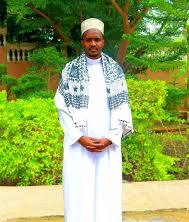
Today—18 August 2026—that legacy is incarnate in Ogaas Mustaphe Maxamed Ibraahim, known colloquially as Ogaas Mustaphe, a name that has become synonymous with steadfastness. Nearly four decades after his predecessor welcomed the broken SNM, Ogaas Mustafe drives through the very same streets of Dire Dawa, past the same railway lines and market squares where Ogaas Hassan once received those desperate delegates.
The geographical continuity is striking: the roads are the same, the city’s skyline barely altered, and the honorifics—the ceremonial greetings, the clan assemblies, the adjudicative powers—remain unchanged. Yet the political context has transformed. Where the 1989 protocol was a survival pact against a brother enemy, today’s Ogaasship navigates a complex web of Ethiopian federalism, Somali regional autonomy, and transborder clan federations. Ogaas Mustafe presides over disputes that span three countries—Ethiopia, Somaliland, and Djibouti—and his word still carries the weight of customary law-the Xeer Issa.
What Abdalla Dhifiq points to, then, is not nostalgia but testimony. The protection agreement of 1989 was never formally rescinded; it has been tacitly renewed with each successive Ogaas. The honor Ogaas Mustafe enjoys is not personal vanity but institutional memory—the same honor that shielded the Isaaq when they were broken, and that now shields a broader coalition of clans-Somali, oromo, Hararis Amarka, tigrians and more- seeking stability in a volatile region.
IV. Conclusion: The Finger That Points Forward
In the act of pointing, Abdalla Dhifiq collapses time. He reminds us that 27 October 1989 and 18 August 2026 are not discrete dates but connected nodes in a single continuum of clan diplomacy. The broken SNM found a home in Dire Dawa because Ogaas Hassan honored the ancient principle that a clan’s strength is measured by its treatment of the vulnerable. Today, Ogaas Mustafe drives those same roads because that principle has not died—it has merely changed drivers.
The protection protocol, written on paper in 1989, is today inscribed in the daily movements of an Ogaas who still receives petitioners, still arbitrates feuds, and still upholds the honor of a chieftaincy that has outlived regimes, borders, and wars. When we look at Dire Dawa through the eyes of Abdalla Dhifiq, we do not see a city of the past. We see a stage where a broken movement once knelt, and where, thirty-seven years later, a Mustaphe-wearing Ogaas still rides—proving that in the Horn of Africa, the oldest roads are often the most reliable guides to the future.