



The Universal Sovereignty of the Ogaas: Beyond Colonial Cartography
In the intricate tapestry of the Horn of Africa, where the lines drawn by colonial powers often cut across the living flesh of ancient clans, there exists a principle of authority that transcends the modern nation-state. This is the principle embodied by the Ogaas of the Issas, a leadership that is not merely a political office but a living, breathing continuation of a historical and cultural mandate. To speak negatively of this Ogaas, as Abdalla Dhifiq, the author of certain ugly comments has done, is not merely a discourtesy; it is a fundamental breach of respect, a red line that reveals a profound ignorance of the region’s deep history and social contracts.
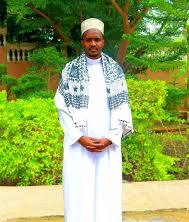
The Ogaas’s authority is not confined by the arbitrary borders of Djibouti, Ethiopia, or Somalia. His presence and legitimacy are rooted in the soil and soul of the Somali-speaking territories, a continuum that predates the arrival of European or Abyssinian cartographers. When it is asserted that the Ogaas Issa, Mustaphe is Ethiopian, Somali, and Djiboutian, it is a recognition that he belongs to a people, not a passport. His movement across these lands—be it driving through Ethiopia, Djibouti, Haryeisa or Mogadishu—is not an act of international travel but an exercise of inherent, historical right. It is as lawful and legitimate as a king walking through his own ancestral halls.
This universal Ogaasship of the Issa is not a modern invention; it is the direct inheritance of the great Sultanates of Ifat and Adal. These were polities that once commanded the trade routes to Harar, marshaled armies, and defined political order long before the current nations were conceived. The Issak Ogaas today carries that torch, standing as a living symbol of a united Somali heritage. His predecessors did not require visas or permissions to engage with the French in Djibouti, negotiate with the British in Hargeisa, or navigate the complex politics of Somaliland in Sayla. They operated from a position of inherent sovereignty, dealing with foreign powers as equals, not as subjects within a colonial grid.
This historical context brings into sharp focus the audacity of a statement from a figure like Abdalla Sandheere, Dhifiq, a breakaway minister who presumes to lecture the Ogaas on where to live, what and where to drive, and how to conduct his affairs. Such a command is a fundamental misunderstanding of the protocols that govern Somali society. Dhifiq, operating within the confines of a modern administrative title, fails to recognize that the Ogaas’s authority is rooted in lineage, tradition, and the collective will of his people—a sovereignty far older and more durable than any ministerial portfolio.
To demand that Dhifiq, the author of the disparaging comments step back and apologize is not an act of petty pride; it is an insistence on the preservation of historical truth and social dignity. The Ogaas of the Issa does not “take passports” for these countries because his identity is not borrowed from a state; his identity is the state from which these nations were, in many ways, carved. His presence is a testament to the enduring reality that while nations may be fleeting, clans and their sacred leadership are eternal.
Therefore, let it be clear: the Ogaas is a figure of deep historical consequence, a custodian of a heritage that spans the breadth of the Somali lands. His authority is universal, not by ambition, but by the unbroken chain of history that links him to the Sultans of old Sultanates. To challenge that authority from a position of political modernity is to ignore the foundational bedrock upon which the very social fabric of the region rests. The red line is drawn not to exclude, but to protect a legacy that belongs to all who speak the Somali tongue and honor the traditions of their forefathers. The apology is not simply for a slight; it is a necessary acknowledgment of a history that cannot be erased by modern maps.